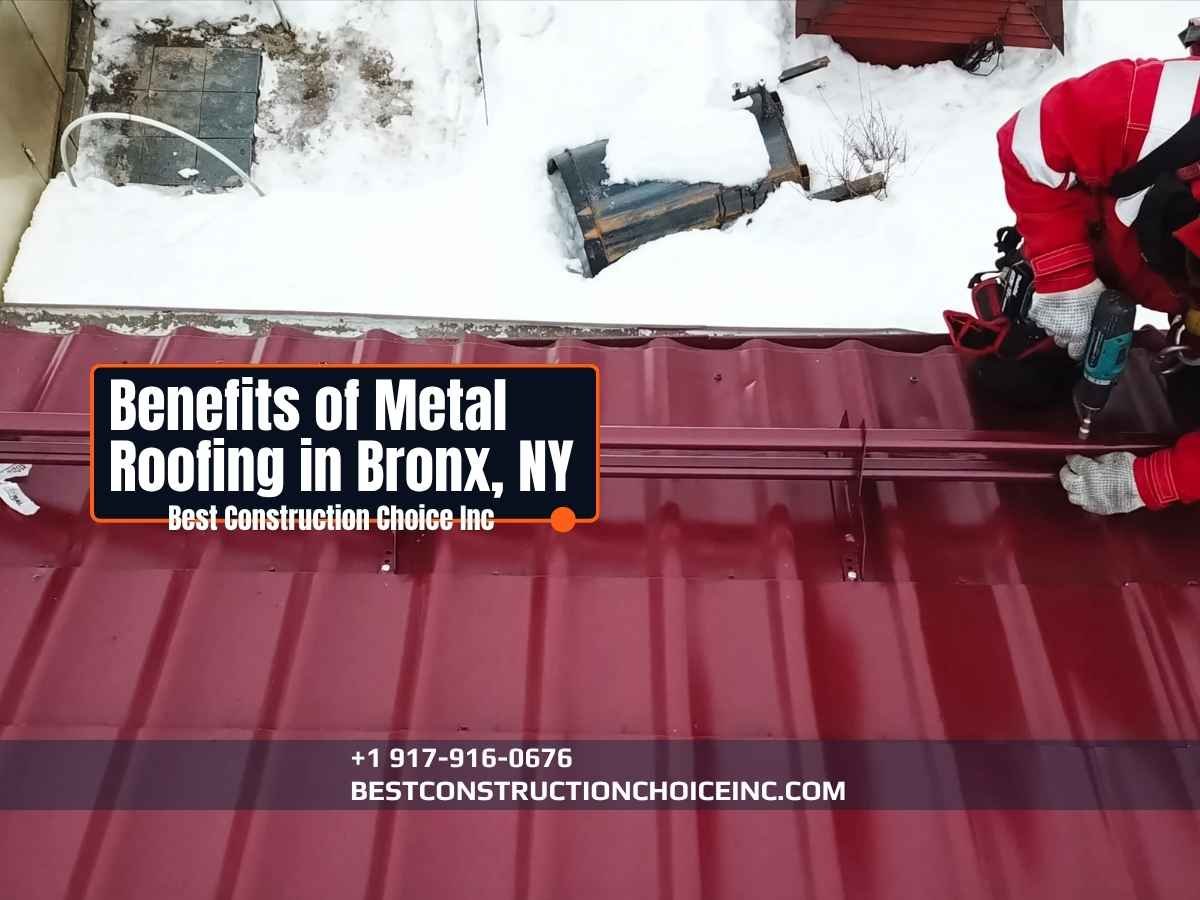
If you’re comparing roofing materials for an upcoming replacement, you’ve probably come across metal roofing. You’re likely wondering whether it’s worth the higher upfront cost. Here’s the short answer: the benefits of metal roofing in Bronx come down to three things. It holds up well against New York’s freeze-thaw winters and heavy storms. It lasts significantly longer than asphalt shingles. And it needs less ongoing maintenance over its lifespan. Whether that trade-off makes sense for your home depends on your budget, how long you plan to stay in the property, and your roof structure.
This guide walks through how metal roofing performs in Bronx weather. We’ll cover what it actually costs compared to other materials, how much maintenance it really needs, and how to decide if it fits your home. We’ll also address common misconceptions — like the idea that metal roofs are always noisy or attract lightning. And we’ll be upfront about situations where metal roofing isn’t the best choice.
Benefits of Metal Roofing in Bronx: The Short Version
Homeowners typically consider metal roofing for one of four reasons: durability, longevity, storm performance, or energy efficiency. Here’s a quick summary before we go deeper into each:
| Benefit | Why It Matters in the Bronx |
|---|---|
| Long lifespan | Metal roofs generally outlast asphalt shingles by decades, reducing how often you need a full replacement |
| Weather resistance | Performs well against wind, heavy rain, and snow load compared to lighter materials |
| Low maintenance | Fewer granule losses, fewer repairs, and better resistance to freeze-thaw cracking |
| Energy efficiency | Reflective coatings reduce heat absorption, which can help with summer cooling costs |
| Fire resistance | Metal is non-combustible, which some homeowners value for insurance and safety reasons |
None of this makes metal roofing the automatic right choice for every Bronx home. It’s a bigger upfront investment. There are situations, covered later, where another material may make more sense.
How Long Does a Metal Roof Last?
Homeowners often ask a simple question first: is it actually worth it long-term? Metal roofing has a long service life compared to most residential roofing materials. It often outlasts asphalt shingles by two to three times, depending on the metal type, coating, and installation quality. Standing seam systems use fewer exposed fasteners. That design reduces one of the more common points of failure over time.
Manufacturer “lifespan” numbers typically assume ideal conditions. Real-world lifespan depends on several factors:
- The specific metal used (steel, aluminum, or copper all perform somewhat differently)
- The quality of the protective coating or finish
- How well the roof was installed, including flashing and seam work
- Local weather exposure, including salt air, storms, and temperature swings
- Ongoing maintenance, even though metal roofs need less of it than shingles
These factors vary by home. Treat manufacturer lifespan estimates as a general reference point, not a guarantee for your specific roof.
Durability: Resistance to Cracking, Warping, and Corrosion
Asphalt shingles wear in a specific way. They crack, curl, and lose protective granules as they age, especially under repeated freeze-thaw cycles. Metal roofing responds differently to the same conditions:
- Resistance to cracking and warping. Metal panels don’t dry out or become brittle the way asphalt does. They’re less prone to cracking during cold snaps.
- Corrosion resistance. Modern metal roofing systems use coatings and metal types, like galvanized steel or aluminum, designed to resist rust. Coating quality varies by product and manufacturer.
- Impact resistance. Metal roofing generally handles hail and falling debris better than shingles. Very large impacts can still dent certain panel types.
- Wind resistance. Properly installed metal roofing, especially standing seam systems, tends to perform well in high wind. The panels interlock instead of relying on individual shingle adhesion.
No roofing material is entirely maintenance-free or damage-proof. Metal roofing simply shifts which issues you’re likely to deal with, and it generally reduces how often you’ll deal with them.
Metal Roofing and New York Weather
Bronx homeowners deal with a real mix of weather: humid summers, freeze-thaw winters, and occasional severe storms. Here’s how metal roofing performs across each condition.
Snow and Ice
Metal’s smooth surface lets snow slide off more readily than it does on shingles. That can reduce the sustained snow load a roof carries through the winter. This same quality means homeowners should watch for snow sliding off suddenly near walkways or entrances. Contractors sometimes install snow guards to manage where and how snow releases from the roof.
Freeze-Thaw Cycles
Metal doesn’t absorb water and expand the way some materials do. It’s generally less susceptible to the freeze-thaw cracking that affects aging shingles and masonry. This is one of the more relevant advantages for a region like the Bronx, where temperatures frequently swing above and below freezing all winter.
Heavy Rain
Metal roofing sheds water quickly thanks to its smooth, non-porous surface and interlocking seams. This reduces the chance of water pooling or working its way under the roofing material — a common cause of leaks with other materials. Our guide on why roofs leak after heavy rain in the Bronx covers this in more detail.
High Winds and Storms
Standing seam metal roofing panels interlock along raised seams. That design generally improves wind uplift resistance compared to shingles, which can lift at the edges. Exposed-fastener metal systems can also perform well, though they rely more heavily on properly installed and maintained fasteners over time.
Is Metal Roofing Energy Efficient?
Metal roofing can contribute to energy efficiency, mainly through reflectivity rather than insulation value on its own. Many metal roofing products come with reflective coatings. These coatings reduce how much heat the roof absorbs from direct sunlight, which can help lower cooling demand during hot summer months. Some products also qualify for cool-roof ratings. Specific certifications and requirements vary by manufacturer, so verify them directly with the product documentation rather than assuming.
The roofing material is only one factor in a home’s overall energy performance. Attic insulation and ventilation matter too. A well-insulated home with asphalt shingles can still outperform a poorly insulated home with metal roofing on energy costs.
Metal Roof Maintenance: What to Expect
Metal roofing generally needs less frequent maintenance than shingles. But “less maintenance” doesn’t mean “no maintenance.” A reasonable maintenance routine includes:
- Routine visual inspections, once or twice a year, checking for loose fasteners, minor dents, or coating wear
- Checking seams and flashing, particularly around chimneys, vents, and roof-wall intersections, since these remain common leak points regardless of material
- Clearing debris, like leaves and branches, which can trap moisture against the surface over time
- Watching for early rust or coating breakdown, especially where the protective finish may have been scratched during installation or repairs
Metal roofing typically needs fewer repairs tied to material breakdown, like granule loss or curling, than shingle roofs do. Still, check fastener and seam condition periodically, especially after major storms.
What Does Metal Roofing Cost in the Bronx?
Metal roofing generally costs more upfront than asphalt shingles. Pricing varies significantly based on the specific system:
- Exposed-fastener metal panels tend to be the more budget-friendly metal option, though they typically need more attention to fastener maintenance over time.
- Standing seam metal roofing usually costs more due to material quality and installation complexity. It often comes with a longer expected service life and fewer visible fasteners.
- Material choice matters too. Steel, aluminum, and copper all affect cost significantly, with copper generally the most expensive.
Pricing depends heavily on roof size, pitch, existing roof condition, and the specific product chosen. That means it’s not something a general number can reliably estimate. A written, itemized estimate from a licensed contractor is the most reliable way to understand actual cost for your home. If you’re comparing overall roofing costs across materials, our pricing guide for new roofs in Bronx, NY shows how material choice affects total project cost.
Metal Roofing vs. Other Roofing Materials
| Factor | Metal Roofing | Asphalt Shingles | Flat Roof Membranes (EPDM/TPO) |
|---|---|---|---|
| Typical lifespan | Long (often decades) | Shorter | Moderate |
| Upfront cost | Higher | Lower | Moderate |
| Maintenance needs | Lower, but not zero | Moderate | Moderate to high, especially drainage |
| Weather performance | Strong against wind, snow shedding, freeze-thaw | Vulnerable to cracking and granule loss over time | Vulnerable to ponding water |
| Best suited for | Steep-slope residential and commercial roofs | Most standard residential roofs | Flat or low-slope roof sections |
If you’re weighing metal against other materials more broadly, our guide to the best roofing materials for Bronx homes compares options in more depth. It covers how each material performs for different building types across the Bronx.
Bronx-Specific Considerations
Keep a few local factors in mind if you’re considering metal roofing for a Bronx property:
- Older housing stock. Many Bronx homes have roof structures originally designed for lighter materials like asphalt shingles. A qualified contractor should evaluate whether the existing structure and roof deck suit the metal system you’re considering.
- Multifamily and commercial buildings. Metal roofing is common on commercial and larger multifamily properties in the Bronx, largely for its durability and lower long-term maintenance needs.
- NYC building requirements. Roofing projects, including material changes, fall under New York City Department of Buildings requirements and permitting. Confirm compliance details with your contractor before starting a project.
- Roof access and installation logistics. Metal roofing installation, especially standing seam systems, benefits from experienced installation crews. Seam quality and flashing details significantly affect long-term performance.
- Snow and drainage. Metal roofing sheds snow more readily than shingles. Discuss snow management, like snow guards, with your contractor if your roof overhangs walkways, driveways, or entrances.
Metal Roofing: DIY vs. Professional Installation
Reasonable for a homeowner to handle:
- Basic visual inspections from the ground or attic
- Clearing debris that has accumulated on lower, easily reachable roof sections
- Monitoring for visible rust spots or coating damage after storms
Best left to a professional:
- Metal roof installation, which requires specific tools, techniques, and experience with seam and fastener work
- Diagnosing leaks, since metal roofing failure points (seams, flashing, fasteners) can be harder to identify without training
- Repairs involving flashing, seams, or panel replacement
- Structural evaluation of whether your existing roof deck can support a metal roofing system
Metal roofing installation is generally more specialized than asphalt shingle installation. Confirm a contractor’s experience with metal systems specifically during the hiring process. Our guide on choosing the best roofing contractor in the Bronx covers questions worth asking before you commit to a contractor for a metal roofing project.
Common Misconceptions About Metal Roofing
- “Metal roofs are always loud in the rain.” With proper installation, including solid decking and underlayment, metal roofs aren’t necessarily louder than other roofing materials during rain.
- “Metal roofs attract lightning.” Metal roofing doesn’t attract lightning any more than other roofing materials. If lightning does strike a metal roof, its non-combustible nature can actually reduce fire risk compared to combustible materials.
- “Metal roofing is maintenance-free.” As covered above, metal roofing needs less maintenance than shingles. Periodic inspection and occasional fastener or seam attention are still part of ownership.
- “All metal roofs look industrial.” Modern metal roofing comes in a range of colors, finishes, and profiles. Some styles are designed to resemble traditional shingle or shake appearances.
When Metal Roofing May Not Be the Best Fit
Metal roofing isn’t automatically the right choice for every home or budget. Consider other materials if:
- Your budget is limited and a longer-term investment doesn’t align with your near-term plans for the property
- You’re planning to sell soon and want to prioritize immediate cost recovery over long-term durability
- Your existing roof structure isn’t well-suited to a metal system without additional reinforcement
- You have aesthetic preferences that shingles, slate, or another material match better
A licensed roofing contractor can help evaluate whether the trade-offs make sense for your specific home and goals. This works best as part of a broader conversation about repair vs. replacement if your current roof still has some usable life left.
Frequently Asked Questions
Metal roofing can be a strong option for Bronx homes, particularly for its durability against freeze-thaw cycles, storms, and heavy snow. Whether it’s the right choice depends on your budget, roof structure, and how long you plan to own the property.
Metal roofing generally lasts significantly longer than asphalt shingles. The exact lifespan depends on the specific metal, coating, installation quality, and ongoing maintenance.
Yes, generally. Metal’s smooth surface lets snow shed more readily than it does on shingles, which can reduce sustained snow load. Discuss snow management near walkways and entrances with your contractor.
Yes, metal roofing typically costs more upfront than asphalt shingles. It often comes with a longer lifespan and lower long-term maintenance needs, which can offset the initial investment over time.
Metal roofing generally needs less maintenance than shingles. It still benefits from periodic inspections, seam and flashing checks, and prompt attention to any coating damage.
Metal roofing, especially standing seam systems, generally performs well in high winds due to interlocking panel design. Proper installation is essential for that performance to hold up over time.
No roofing material is entirely leak-proof. Metal roofing’s smooth surface and interlocking seams reduce common failure points compared to some other materials, provided installation and flashing work are done correctly.
Final Thoughts
The benefits of metal roofing in Bronx homes center on durability, weather resistance, and a longer service life compared to more common materials like asphalt shingles. It’s a bigger upfront investment, and it isn’t automatically the right fit for every home or budget. But for homeowners planning to stay long-term, or dealing with a roof that takes a real beating from Bronx winters and storms, it’s worth serious consideration.
If you’re weighing metal roofing against other materials for an upcoming project, Best Construction Choice Inc offers roof installation and roof replacement services throughout the Bronx and nearby areas. We can walk through which material makes sense for your specific roof and budget. Call +1 917-916-0676 or +1 203-391-4261, visit bestconstructionchoiceinc.com, or find us on Google Maps to request a free estimate or schedule an inspection — no pressure, just a clear answer on what fits your home.