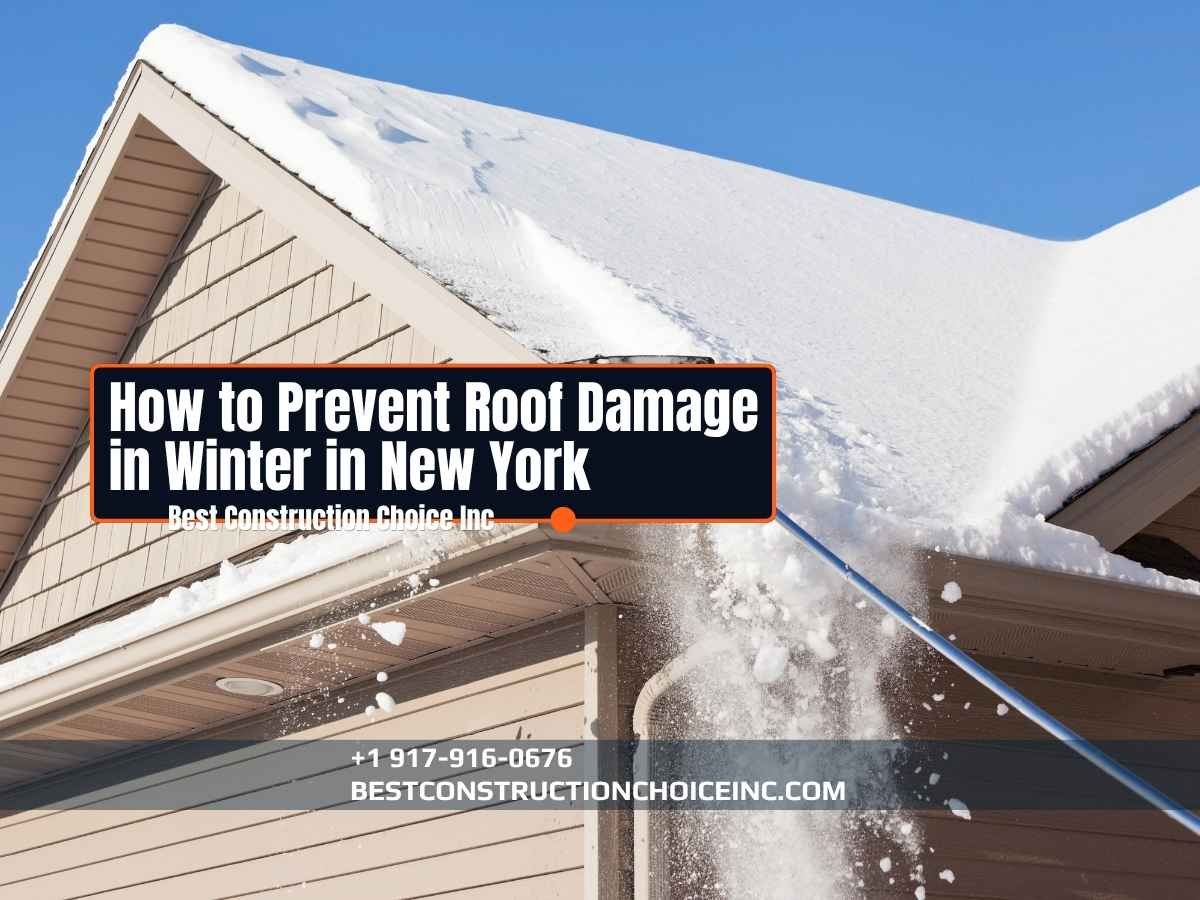
New York winters put a roof through more stress than almost any other season — heavy snow loads, freeze-thaw cycles, ice dams, and freezing rain all test the same weak points that summer storms do, just in a different way. If you’re wondering how to prevent roof damage in winter, the good news is that most winter roof problems are preventable with a combination of a pre-season inspection, proper attic insulation and ventilation, clear gutters, and prompt attention after a storm.
This guide walks through what actually causes winter roof damage in the Bronx, how to prepare your roof before the cold sets in, how to protect it during snow and ice events, and what to check once a storm has passed. We’ll also cover which steps are reasonable to handle yourself and which ones are safer left to a professional.
Why Winter Is So Hard on Roofs
Winter doesn’t just bring snow — it brings a cycle of freezing, thawing, and refreezing that mechanically stresses roofing materials in a way that summer weather doesn’t. A few specific conditions make winter uniquely damaging:
- Freeze-thaw cycles. Water that seeps into small cracks expands as it freezes, widening those cracks each time the temperature swings above and below freezing — a pattern the Bronx sees repeatedly throughout the season.
- Heavy snow loads. Accumulated snow adds significant weight to a roof structure, especially on flat or low-slope sections where snow doesn’t slide off naturally.
- Ice dams. When heat escapes from the attic and melts snow on the upper roof, that water refreezes at the colder eaves, forming a dam that traps more water behind it.
- Freezing rain. Rain that freezes on contact can coat shingles, flashing, and gutters in ice, adding weight and stress to areas already vulnerable to leaks.
- High winds during winter storms. Nor’easters and winter storm systems often combine heavy precipitation with strong, sustained wind, which can lift shingles or drive moisture into flashing joints.
Understanding these mechanics helps explain why a roof that performed fine all summer can suddenly develop a leak in January or February — it’s not necessarily new damage, but existing weak points finally being tested by conditions summer never created. The same underlying idea applies year-round: our guide on why roofs leak after heavy rain in the Bronx covers how storms of any kind tend to expose problems that were already there rather than create new ones.
Pre-Winter Roof Inspection: What to Check Before the Cold Sets In
The single most effective way to prevent roof damage in winter is catching small problems before the first heavy snowfall. A pre-winter inspection should look at:
- Shingles — cracked, curled, or missing shingles let water in once snow melts or freezing rain hits.
- Flashing and penetrations — chimneys, vents, and skylights are common leak points that should be checked for gaps or deteriorated sealant.
- Existing seals — sealant around vent boots and fasteners dries out and cracks with age, and winter moisture will find any gap.
- Gutters and downspouts — clogged gutters are one of the leading contributors to ice dams (more on that below).
- Flat-roof drains — debris or standing water in drains can freeze solid, blocking drainage for the rest of the season.
- Existing leaks — any leak present before winter will almost always get worse once ice and snow are added to the equation.
If you already suspect a weak spot from a previous rainy season, this is the time to address it. A pre-winter roof inspection is generally far less expensive than dealing with an active leak in the middle of a snowstorm — and if you’re unsure how frequently that inspection should happen, how often you should get a roof inspection in Bronx, NY covers a reasonable baseline. For a closer look at what tends to fail first, what causes roof leaks in Bronx homes breaks down each of these weak points in more detail.
Understanding and Preventing Ice Dams
Ice dams are one of the most common — and most misunderstood — causes of winter roof damage in New York, so they deserve their own section.
How ice dams form: Heat escaping from the living space below warms the roof deck near the ridge, melting the underside of the snow layer. That meltwater runs down the roof slope until it reaches the colder eaves (which stay cold because they overhang unheated space), where it refreezes into a ridge of ice. As more snow melts above it, water backs up behind that ice ridge — and because it has nowhere else to go, it can work its way under shingles and into the roof deck, attic, and eventually the ceiling below.
What actually causes them: Ice dams are primarily a symptom of heat loss and airflow problems, not simply “too much snow.” A well-insulated, well-ventilated roof stays closer to outdoor temperature, so snow melts more evenly (or not at all) rather than melting near the ridge and refreezing at the edge.
How to reduce the risk:
- Improve attic insulation so less heat escapes into the roof deck
- Ensure attic ventilation is working properly to keep roof temperature more consistent
- Seal air leaks between living space and attic (around light fixtures, exhaust fans, and attic hatches)
- Keep gutters clear so melting snow has somewhere to drain instead of pooling at the edge
- Avoid piling snow near the foundation or roof edge, which can contribute to ice buildup
What to avoid: Chipping at ice dams with a hammer or shovel can damage shingles and isn’t a reliable fix. If an ice dam is already causing a leak, that’s a sign the underlying insulation and ventilation issue needs professional attention, not just removal of the ice itself.
Snow Removal: When It’s Necessary and When It’s Not
Most residential roofs are engineered to handle typical seasonal snow loads without issue, and removing snow isn’t something homeowners need to do after every storm. That said, there are situations where snow buildup becomes a legitimate concern:
- Snow accumulation is unusually heavy or has built up over multiple storms without melting
- You notice sagging, cracking sounds, or doors/windows that suddenly stick (possible signs of structural stress)
- Flat or low-slope roof sections, which don’t shed snow the way pitched roofs do
- Areas prone to drifting, such as behind parapet walls or dormers
Safe snow removal guidance:
- Use a roof rake from the ground for reachable areas rather than climbing onto the roof
- Never use metal tools, sharp shovels, or anything that could gouge the roofing material
- Leave a thin layer of snow rather than scraping down to bare shingles, which reduces the risk of surface damage
- Avoid walking on a snow- or ice-covered roof — the fall risk isn’t worth it
If a roof has heavy, persistent snow buildup or you’re unsure whether the load is a structural concern, that’s a case for a professional evaluation rather than DIY removal.
Gutter and Drainage Maintenance for Winter
Gutters play a bigger role in winter roof protection than most homeowners realize. Clogged gutters can’t move melting snow and ice away from the roof edge, which directly contributes to ice dam formation and water backing up under shingles.
Before winter, it helps to:
- Clear leaves and debris from gutters and downspouts
- Confirm downspouts direct water well away from the foundation
- Check that gutters are securely attached and properly pitched
- On flat roofs, make sure drains and scuppers are free of debris so melting snow has somewhere to go
Ponding water that freezes on a flat roof can be a particular problem, since ice adds weight and can stress membrane seams as it expands and contracts through the freeze-thaw cycle. If your building has a flat or low-slope section, is flat roof repair worth it for Bronx buildings is worth a read before winter sets in.
Attic Insulation and Ventilation: The Often-Overlooked Factor
It’s easy to think of roof protection purely in terms of the roofing material itself, but what’s happening inside the attic has just as much influence on winter roof performance. Proper insulation and ventilation work together to:
- Keep the roof deck closer to outdoor temperature, reducing uneven snowmelt
- Prevent warm, moist indoor air from condensing on the underside of the roof deck
- Reduce the heat loss that drives ice dam formation
- Extend the life of roofing materials by reducing thermal stress
Signs of poor attic ventilation or insulation include visible frost on the underside of the roof deck, ice dams that form in the same spots every year, or noticeably uneven snow melt on the roof (patches melting faster than others). These issues are often addressed as part of a broader roof inspection rather than a standalone fix, since insulation and ventilation problems are connected to how the whole roofing system performs.
Protecting Different Roof Types in Winter
| Roof Type | Winter Vulnerabilities | Key Prevention Steps |
|---|---|---|
| Asphalt shingles | Cracking in extreme cold, ice dam damage at eaves, wind uplift | Pre-winter inspection, gutter maintenance, attic ventilation |
| Flat roofs (EPDM/TPO) | Ponding water freezing, membrane stress from expansion/contraction | Keep drains clear, address ponding before it freezes |
| Modified bitumen | Seam stress from freeze-thaw cycles | Inspect seams before winter, prompt repair of small separations |
| Metal roofing | Ice/snow sliding hazards, fastener loosening from thermal expansion | Check fasteners, ensure proper snow-retention if applicable |
| Older roofing systems | Compounding age-related wear with winter stress | More frequent inspection, faster response to minor issues |
Whatever material your roof uses, the underlying principle is the same: address small vulnerabilities before winter adds pressure to them.
What to Do After a Winter Storm
Once a storm passes, a quick check can catch problems before they turn into bigger repairs:
- Look for missing or displaced shingles visible from the ground.
- Check ceilings and attic spaces for new stains, dampness, or drips.
- Inspect visible flashing around chimneys and vents for obvious damage or ice buildup.
- Remove dangerous ice buildup carefully, focusing on safety over speed, or leave it to a professional if it’s extensive.
- Make temporary repairs if needed — such as covering an exposed area with a tarp — to limit interior damage until a proper repair can be made.
- Schedule a professional inspection if you notice any signs of damage, especially after a significant snow or ice event.
If a storm causes a leak or visible damage, storm damage roof repair addresses both the immediate issue and any underlying cause so the same spot doesn’t fail again during the next storm.
Bronx-Specific Winter Considerations
A few local factors shape how winter affects roofs in the Bronx specifically:
- Frequent freeze-thaw swings. The Bronx doesn’t always stay consistently below freezing all winter, which means more freeze-thaw cycles than a climate that stays frozen for months at a time — and more opportunities for cracks to widen.
- Flat roofs on multifamily buildings. Many Bronx two- and three-family homes and apartment buildings have flat or low-slope roof sections that are more prone to ponding and ice buildup than steep-slope roofs.
- Older housing stock. Homes with older roofing, insulation, or ventilation systems may be more prone to ice dams simply because those systems weren’t designed to today’s insulation standards.
- Coastal storm exposure. Nor’easters affecting the New York area often combine heavy snow or freezing rain with strong wind, which can test flashing and roof edges more than a calm snowfall would.
These factors don’t mean every Bronx roof will have winter problems, but they do make pre-season inspection and prompt post-storm attention especially worthwhile here.
DIY vs. Calling a Professional
Reasonable for a homeowner to handle:
- Clearing gutters and downspouts before winter (with proper ladder safety)
- Using a roof rake from the ground to remove excess snow from reachable areas
- Checking the attic periodically for frost, dampness, or stains
- Sealing obvious attic air leaks around fixtures or hatches
Best left to a professional:
- Diagnosing the cause of a recurring ice dam
- Repairing flashing, shingles, or membrane damage
- Evaluating whether a snow load is a structural concern
- Any work that requires walking on a snow- or ice-covered roof
- Assessing attic insulation and ventilation adequacy
Winter roof work carries added risk from ice and snow, so when a task involves getting on the roof itself, it’s worth weighing that risk against the cost of a professional visit.
Common Misconceptions About Winter Roof Damage
- “More snow always means more roof risk.” Snow load matters, but insulation, ventilation, and drainage problems are usually bigger contributors to winter damage than the snow itself.
- “Ice dams are just a snow problem.” Ice dams are largely caused by heat escaping the attic, not simply how much snow falls.
- “If it survived last winter, it’ll be fine this year.” Small cracks and worn seals can widen a little more each freeze-thaw cycle, so a roof that held up last year isn’t guaranteed to perform the same way indefinitely.
- “Removing all the snow is always safer.” Aggressive snow removal can scratch or damage roofing material; leaving a thin protective layer is often the better approach.
Frequently Asked Questions
Improving attic insulation and ventilation, sealing air leaks between living space and the attic, and keeping gutters clear are the most effective long-term ways to reduce ice dam formation.
This depends on the specific roof’s design, age, and condition, so there’s no single number that applies to every home. If you’re concerned about snow load, a professional evaluation is the safest way to get a clear answer for your roof.
Not usually. Most roofs are designed to handle typical seasonal snow without issue. Removal becomes more relevant with unusually heavy, persistent accumulation or visible signs of stress like sagging.
Proper ventilation keeps the roof deck closer to outdoor temperature, which reduces the uneven snowmelt that leads to ice dams and lowers the moisture buildup that can damage the roof deck over time.
Focus on clearing debris from drains and scuppers, addressing any ponding water before freezing temperatures arrive, and checking membrane seams for early signs of separation.
Contain the water temporarily with a bucket or tarp, document the damage, and schedule a professional inspection rather than waiting for warmer weather — winter leaks tend to worsen with each freeze-thaw cycle.
A general pre-season inspection each fall is a reasonable baseline for most homes, though older roofs or roofs with known issues may benefit from more frequent checks.
Final Thoughts
Preventing roof damage in winter comes down to addressing the roof as a whole system — shingles or membrane, flashing, gutters, insulation, and ventilation all play a part in how well a roof handles freeze-thaw cycles, snow load, and ice dams. A thorough pre-winter inspection and quick attention after storms go a long way toward keeping small issues from becoming major repairs by spring.
If you’d like a professional set of eyes on your roof before the next snowfall, or you’ve noticed signs of damage after a recent storm, Best Construction Choice Inc offers pre-winter roof inspections and storm damage roof repair throughout the Bronx and nearby areas. Call +1 917-916-0676 or +1 203-391-4261, visit bestconstructionchoiceinc.com, or find us on Google Maps to request a free estimate or schedule an inspection before winter weather arrives.