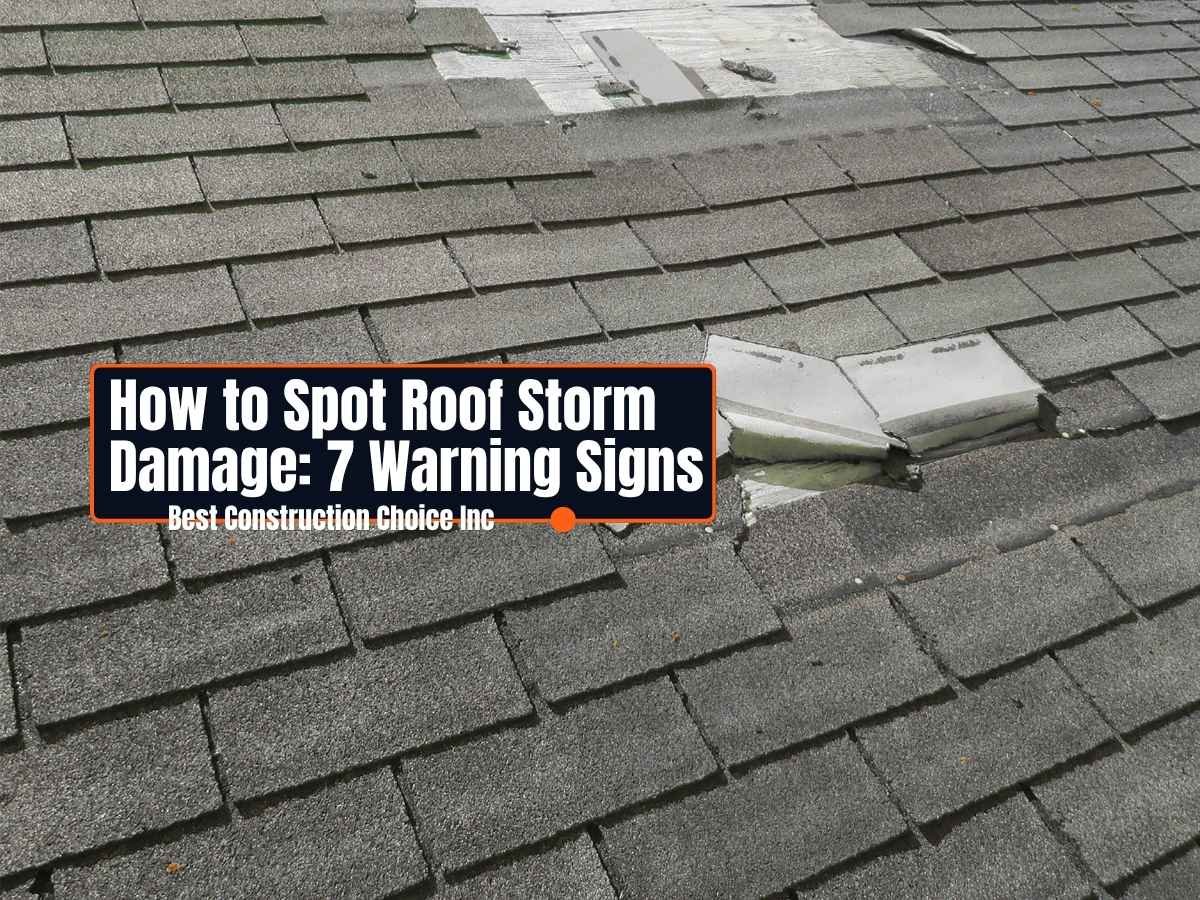
After a hard storm rolls through the Bronx, most homeowners glance up at their roof from the sidewalk, see nothing obviously wrong, and assume everything is fine. That assumption causes more expensive repairs than the storm itself. Learning how to spot roof storm damage matters because the signs are often subtle: a handful of missing granules, a bent piece of flashing, a shingle that’s lifted just slightly at the edge. None of that looks dramatic from the ground, but all of it can lead to leaks, wood rot, and interior damage within a few rainy weeks.
This guide walks through exactly what storm damage looks like, where it tends to hide, and how to tell the difference between something you can watch and something that needs a professional roof inspection right away.
What Counts as Storm Damage to a Roof?
Storm damage isn’t limited to a tree crashing through your roof deck. It includes anything a storm event does to shorten your roof’s lifespan or compromise its ability to keep water out — even damage that isn’t visible from the street. That covers:
- Wind lifting, cracking, or tearing off shingles
- Hail bruising or fracturing shingle mats
- Heavy rain finding its way through small gaps that used to be watertight
- Lightning strikes causing structural or electrical damage
- Fallen branches or trees puncturing, denting, or crushing roofing materials
A roof doesn’t have to look destroyed to be storm-damaged. Some of the most costly problems start as damage you’d never notice without climbing up or hiring a professional roof inspection.
Common Types of Storms That Damage Bronx Roofs
| Storm Type | How It Damages a Roof | What to Watch For |
|---|---|---|
| High wind / nor’easters | Lifts shingle edges, peels back tabs, loosens flashing | Missing or curled shingles, exposed nail heads |
| Hail | Bruises or cracks shingle surfaces, dents metal and vents | Dark spots, dents on gutters/vents, granule loss |
| Heavy rain / thunderstorms | Exposes weak seals, flashing gaps, and clogged drainage | Water stains on ceilings, overflowing gutters |
| Lightning | Can crack roofing materials or damage attached systems | Scorch marks, sudden electrical issues |
| Falling branches or trees | Punctures, cracks, or crushes roofing materials | Visible debris, dents, sagging sections |
Bronx roofs deal with all of these at different points in the year — nor’easters and freeze-thaw cycles in winter, thunderstorms and occasional hail in the warmer months, and the wind that comes with nearly every seasonal storm system. That mix is part of why routine roof inspections after severe weather matter more here than in milder climates.
7 Warning Signs Your Roof Has Storm Damage
Here’s what to actually look for, starting with what’s visible from the ground and moving toward damage that usually requires a closer look.
1. Missing, Cracked, or Lifted Shingles
This is the most obvious sign, and it’s usually visible with binoculars from your yard. Look for:
- Gaps where a shingle used to be
- Shingles with cracked or torn edges
- Tabs that are curling upward instead of lying flat
- Shingles that look a different color or texture than the ones around them (a sign they were recently replaced or repaired by a previous storm)
A single missing shingle isn’t an emergency, but it is an open door for water. Left alone through a few more rain events, it typically leads to a leak.
2. Granule Loss From Shingles
Asphalt shingles are coated with granules that protect the material underneath from UV rays and give the shingle its color. Storms — especially hail and heavy wind-driven rain — knock those granules loose.
Signs of granule loss include:
- Bald or shiny patches on shingles where the texture looks smoother than the rest of the roof
- Sandy, gritty buildup in your gutters or at the base of downspouts
- Shingles that look noticeably lighter or darker in certain spots
A little granule loss over the years is normal aging. A sudden, concentrated patch of it right after a storm is a different story and worth having checked.
3. Damaged Roof Flashing
Flashing is the thin metal installed around chimneys, skylights, vents, and roof valleys to keep water from seeping into the seams where two roof surfaces meet. It’s one of the most common places a storm-damaged roof starts leaking, because flashing is thinner and more exposed than the shingles around it.
Look for flashing that’s bent, lifted away from the roof surface, cracked at the seams, or missing sealant. If you have a chimney, pay close attention to the flashing around its base — that’s a frequent trouble spot after wind events.
4. Damaged Vents, Gutters, and Fascia
Roof vents, gutters, and fascia boards take a beating in storms because they stick out from the roof’s main surface. After a storm, check for:
- Dented or cracked vent caps
- Gutters pulled away from the roofline, bent, or full of shingle granules and debris
- Fascia boards that look warped, cracked, or separated from the roof edge
Damaged gutters don’t just look bad — they stop draining water properly, which sends runoff toward your foundation, siding, or fascia instead of away from your home.
5. Water Stains or Active Leaks Inside the Home
Sometimes the first sign of roof storm damage shows up nowhere near the roof at all — it shows up on your ceiling. Watch for:
- Brownish or yellowish rings on ceilings or upper walls
- Peeling paint or bubbling drywall
- A musty smell in the attic or top-floor rooms
- Visible dripping during or right after a storm
By the time water is visible inside, the roof has usually been compromised for a while. This is one of the clearest signals that it’s time for emergency roof leak repair rather than a wait-and-see approach.
6. Sagging Areas or Soft Spots
Walk your attic (if it’s safely accessible) with a flashlight after a storm and look for sagging rafters, dark or damp insulation, or any spot in the roof deck that looks like it’s dipping compared to the rest of the roofline. From outside, a sagging section of roof can also be visible as a shallow dip when viewed from a distance, especially on older homes.
This kind of damage often points to trapped moisture or a compromised roof deck underneath the shingles, and it’s not something to handle without a professional evaluation.
7. Debris, Dents, or Impact Damage From Trees and Branches
Even a glancing hit from a falling branch can crack shingles, dent metal roofing or gutters, or knock flashing loose without leaving an obvious hole. After any storm with wind gusts or nearby trees, walk the perimeter of your home and look for:
- Broken or hanging branches resting on or near the roof
- Dents in gutters, vents, or metal roofing sections
- Any visible puncture, crack, or displaced section of roofing material
If a tree or large branch actually made contact with the roof, treat that as a reason for a prompt inspection — even if there’s no visible hole.
Signs of Wind Damage vs. Hail Damage
Wind and hail tend to leave different fingerprints on a roof, which is useful to know if you’re trying to describe what you’re seeing to a contractor or insurance adjuster.
| Wind Damage | Hail Damage |
|---|---|
| Lifted or curled shingle edges | Round, bruise-like dents or dark spots on shingles |
| Missing shingles or exposed nail heads | Dents on metal vents, flashing, and gutters |
| Creased shingles (bent, not necessarily torn) | Cracked or fractured shingle mat under the surface |
| Debris and granules concentrated on one side of the roof | Granule loss in scattered, circular patterns |
| Loose or displaced ridge caps | Soft spots when pressed (indicating fractured material) |
Hail damage is notoriously easy to miss because it doesn’t always create an active leak right away — it weakens the shingle’s protective layer, and the leak shows up months later after repeated exposure to sun and rain.
Hidden Roof Damage You May Not Notice
Some of the most important storm damage isn’t visible unless you’re specifically looking for it, or unless it’s been examined up close by someone trained to spot it. This includes:
- Cracked underlayment beneath the shingles
- Micro-fractures in the shingle mat from hail that hasn’t yet caused visible granule loss
- Loosened but not yet displaced flashing
- Small punctures from debris that seal themselves temporarily with debris or dust
- Weakened seals around nails and fasteners
This is exactly why insurance adjusters and experienced roofers climb onto the roof and examine it up close rather than relying on a ground-level look. It’s also why a roof can “pass” a casual glance after a storm and still start leaking weeks later.
How Storm Damage Can Cause Roof Leaks
A storm doesn’t have to tear a hole in your roof to cause a leak. Most storm-related leaks develop gradually:
- Wind or hail compromises a shingle, seal, or piece of flashing.
- The compromised spot doesn’t leak immediately because it’s still mostly intact.
- Subsequent rain, snowmelt, or freeze-thaw cycles gradually work water into the weak point.
- Water tracks along the roof deck or rafters before it becomes visible inside the home, so the leak can show up far from where the actual damage occurred.
That delay is why homeowners are often surprised that a leak “just started” months after the storm that actually caused it. For a deeper look at how this plays out on Bronx roofs specifically, see our breakdown of why roofs leak after heavy rain and the most common causes of roof leaks in Bronx homes.
How to Check Your Roof After a Storm
You can do a reasonable first-pass check yourself, as long as you stay safe and stay on the ground.
- Use binoculars to scan the roof surface from your yard or driveway rather than climbing up.
- Check your gutters and downspouts for granules, shingle pieces, or debris.
- Walk the property perimeter looking for fallen branches, displaced shingles, or debris in the yard.
- Check the attic (if accessible) for water stains, damp insulation, or daylight coming through the roof deck.
- Photograph anything unusual for your records, even if you’re not sure it’s significant.
What you should skip: getting on a ladder or walking the roof surface yourself, especially right after a storm when shingles may be loose, wet, or brittle. That’s a fall risk, and it’s also easy to cause additional damage by walking on a roof that’s already compromised.
When to Call a Professional Roof Inspector
A ground-level check is a good starting point, but it won’t catch hidden damage, and it’s not a substitute for a close inspection. Consider scheduling a professional roof inspection if:
- You noticed any of the seven warning signs above, even minor ones
- Your area experienced hail, high winds, or a fallen tree/branch near your home
- You have an older roof that’s due for inspection regardless of storm activity — see how often you should get a roof inspection
- You’re planning to file, or already have filed, a homeowners insurance claim
- You simply want a professional opinion before deciding whether repairs are needed
A trained inspector can safely get on the roof, check flashing and seals up close, and identify hidden damage that isn’t visible from the ground or the attic.
What to Do Immediately After Storm Damage
- Prioritize safety first. Stay off the roof and away from downed branches or power lines.
- Document everything. Take dated photos and videos of visible damage, both on the roof (from the ground) and inside the home.
- Address active leaks with temporary measures. A bucket, a tarp over a known problem area, or moving belongings out of the way can limit interior damage until a professional arrives.
- Schedule an inspection. Don’t wait for a leak to appear before having the roof checked.
- Contact your insurance provider if the damage looks significant. Keep your documentation and any contractor estimates together for the claim.
Should You Repair or Replace a Storm-Damaged Roof?
This depends on the extent of the damage, the roof’s age, and the condition of the materials before the storm. As a general guide:
- Repair is usually appropriate when damage is isolated (a section of missing shingles, one damaged flashing point, a few dented vents) and the rest of the roof is in good condition.
- Replacement becomes worth considering when the roof was already near the end of its expected lifespan, when damage is widespread across multiple roof sections, or when repeated storm events have left a pattern of repairs that no longer make financial sense compared to a full roof replacement.
A contractor who inspects the roof in person is in the best position to tell you which category your situation falls into — this isn’t something that can be reliably judged from photos alone.
How Roof Storm Damage Affects Homeowners Insurance
Most homeowners insurance policies cover storm-related roof damage from wind, hail, and falling trees, though coverage details, deductibles, and exclusions vary by policy and provider. Damage attributed to gradual wear, aging materials, or lack of maintenance is typically treated differently than sudden storm damage, which is part of why documentation matters so much.
If you’re filing a claim, it helps to have:
- Dated photos of the damage
- A written estimate or inspection report from a licensed contractor
- Records of any prior roof maintenance or repairs
For a more complete look at what’s typically covered and how claims usually work, see our guide on whether homeowners insurance covers roof damage in the Bronx. This article is general information, not insurance advice — always confirm specifics with your own policy or agent.
Bronx-Specific Considerations
Bronx homes face a particular mix of conditions that make post-storm roof checks worth taking seriously:
- Mature tree cover in many neighborhoods means a higher chance of branch or tree-related roof damage during wind events.
- A large share of older housing stock, where roofing materials and flashing may already be closer to the end of their service life, leaving less margin before storm damage turns into a leak.
- Flat and low-slope roofs on multifamily buildings, which handle storm damage differently than pitched residential roofs and are especially prone to ponding water after heavy rain if drainage is compromised.
- Freeze-thaw cycles in winter, which can widen small storm-related cracks or gaps before they’re repaired.
None of this means every Bronx roof needs replacing after every storm — it just means a quick check after severe weather is worth the time, especially on older roofs.
Common Misconceptions About Storm Damage
- “If there’s no leak yet, there’s no damage.” Leaks often show up weeks or months after the storm that actually caused the damage.
- “A missing shingle or two isn’t a big deal.” It’s an open point of entry for water and tends to get worse with each subsequent storm.
- “I’ll be able to see hail damage easily.” Hail damage is frequently subtle — dents and bruising rather than obvious holes.
- “My roof looks fine from the driveway, so it’s fine.” A ground-level look misses flashing damage, granule loss, and hidden cracks almost every time.
How to Prevent Further Damage After a Storm
- Clear debris from gutters and downspouts promptly so water drains properly.
- Trim overhanging branches before storm season when possible.
- Cover any known damaged areas with a tarp until repairs can be made.
- Schedule a follow-up inspection even if the initial damage looked minor.
- Keep a simple record of storm dates and any roof work performed, so patterns are easier to track over time.
FAQ: Roof Storm Damage
Look for missing or lifted shingles, granule buildup in gutters, dented vents or flashing, and water stains on interior ceilings. A pair of binoculars and a walk around the property will catch most visible signs; hidden damage usually requires a professional inspection.
It ranges from obvious (missing shingles, visible dents, debris on the roof) to subtle (bald patches from granule loss, slightly lifted shingle tabs, small cracks in flashing).
Not immediately. Many storm-damaged roofs don’t leak right away — the damage weakens the roof’s protection, and a leak develops gradually as more weather exposes the compromised area.
Yes. Cracked underlayment, micro-fractures from hail, and loosened flashing are common examples of damage that isn’t visible from the ground or even from a casual walk across the roof.
As soon as reasonably possible after an inspection confirms the damage. Delaying repairs gives water more opportunities to work into the compromised areas, which usually increases the eventual repair cost.
Most policies cover sudden storm damage from wind, hail, or falling trees, though specifics vary by policy. Review your coverage or speak with your insurance provider, and keep documentation of the damage in case you need to file a claim.
A ground-level check with binoculars is reasonable and safe. Climbing onto the roof yourself isn’t recommended, especially right after a storm when materials may be loose or wet — that’s a job for a professional with the right safety equipment.
Get a Professional Opinion Before Small Damage Becomes a Big Repair
Storm damage rarely announces itself clearly. Most of the roofs we inspect after a storm have at least one sign the homeowner hadn’t noticed from the ground. If your Bronx home went through recent wind, hail, or heavy rain, it’s worth having a licensed professional take a closer look before a minor issue turns into a ceiling leak.
Best Construction Choice Inc has been serving Bronx homeowners since 2009, and we’re glad to walk you through what we find in plain language — no pressure, no guesswork. You can schedule a roof inspection, learn more about our storm damage roof repair services, or reach us directly:
- Phone: +1 917-916-0676 or +1 203-391-4261
- Website: bestconstructionchoiceinc.com
- Location: Find us on Google Maps