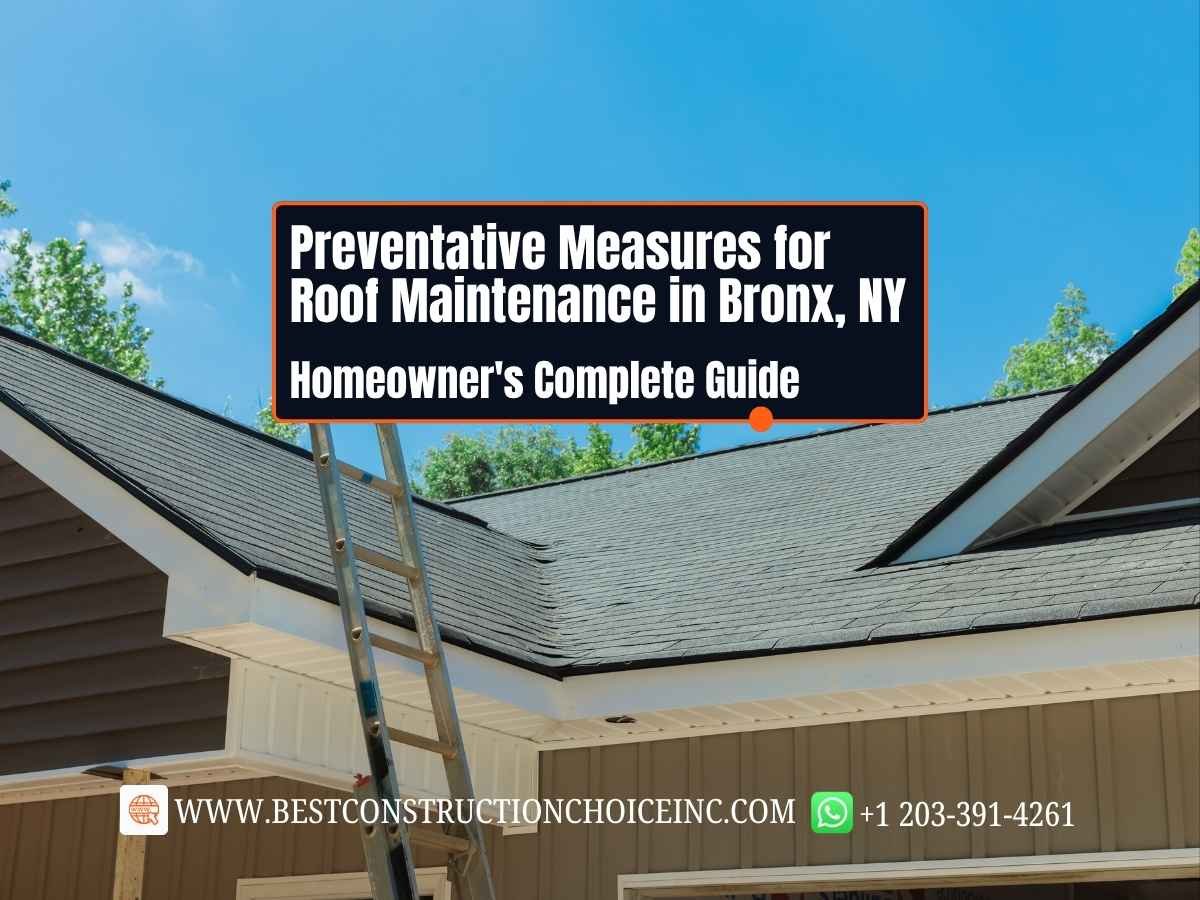
If you own a home, manage rental property, or oversee a building in the Bronx, your roof is working harder than you might think. Between hot, humid summers and freezing, snow-heavy winters, Bronx roofs go through constant stress. The good news? Most expensive roof problems are preventable — if you catch them early.
This guide covers everything you need to know about preventative measures for roof maintenance, including a regular roof inspection checklist, seasonal roof maintenance tips, safe roof cleaning methods, the role of insulation in roof longevity, and the early warning signs every homeowner should watch for.
At Best Construction Choice Inc, we’ve been helping homeowners across the Bronx and Westchester County protect their roofs since 2009. We’re a licensed, no-subcontractor exterior contractor offering free estimates and 24/7 emergency roofing. If you’d rather skip the DIY and have a professional handle it, call us at +1 203-391-4261.
Why Preventative Roof Maintenance Matters in the Bronx
Bronx homes face a unique combination of weather challenges. Hot summers cause roofing materials to expand, while cold winters cause them to contract — and this constant push-and-pull loosens fasteners, cracks shingles, and eventually leads to leaks. Whether it’s high winds, heavy rain, or freezing temperatures, each weather condition wears down a roof in its own way.
Winter is especially tough on local roofs. Snow and ice accumulation can put significant strain on a roof that isn’t properly maintained. Without proper insulation and ventilation, this can lead to ice dams — a major cause of water damage during cold months.
The financial case for prevention is clear, too. According to roofing industry data, a neglected roof can cost up to four times more to repair reactively than it would have cost to maintain preventatively. And the payoff for staying on top of maintenance is significant — studies show that proper residential roof maintenance can extend a roof’s lifespan by 25% or more.
In short: a small amount of seasonal effort now can save you thousands of dollars later — and that’s true whether you’re in Riverdale, Pelham Bay, Throggs Neck, Morris Park, or anywhere else in the Bronx.
Regular Roof Inspection Checklist
One of the most important preventative measures for roof maintenance is a consistent inspection routine. Most roofing professionals recommend a thorough inspection twice a year — once in spring to assess winter damage, and once in fall before the next freeze. Skipping these inspections doesn’t make problems disappear; it just means they accumulate undetected until a minor fix turns into a major, costly replacement.
Here’s what a complete roof inspection checklist should cover:
1. Exterior Roof Surface
- Look for cracked, curled, or missing shingles
- Check for bald spots where granules have worn away
- Note any dark streaks, moss, or algae patches
- Look for visible sagging along the roofline
2. Flashing and Penetrations
- Inspect flashing around chimneys, skylights, vents, and pipes
- Check for gaps, rust, or loose sections — even small separations in flashing can allow moisture to work its way beneath the roofing system
- Confirm seals around roof openings are tight to prevent leaks
3. Gutters and Downspouts
- Confirm gutters are securely attached and properly aligned
- Check for debris buildup, sagging sections, or separated joints
- Look for granules collecting in the gutters (a sign of shingle wear)
4. Attic and Interior
- Look for water stains, dark spots, or sagging on ceilings
- Check for daylight coming through the roof deck (a sign of holes or missing shingles)
- Feel for damp insulation or musty odors, which can signal hidden leaks
5. Documentation
- Take photos of any problem areas
- Keep a written record of inspection dates and findings — detailed records of inspections, repairs, and observations give you a clear history of your roof’s condition and help track recurring issues over time
A word of caution: Where tasks involve climbing onto the roof, remember that the risk is real — a fall costs far more than hiring a professional would. Many of these checks can be done safely from the ground with binoculars or from an attic access point. For anything that requires getting on the roof itself, it’s worth calling a licensed contractor.
Seasonal Roof Maintenance Tips for Bronx Homeowners
Because the Bronx experiences four distinct seasons — each with its own roofing risks — your maintenance routine should change throughout the year. Here’s a season-by-season breakdown.
Spring: Assess Winter’s Damage
Spring is the most important inspection window of the year. After months of snow, ice, and freezing temperatures, your roof has likely taken a beating. Walk the perimeter of your home and look for:
- Shingles that loosened or cracked during winter freeze-thaw cycles
- Ice dam damage along the eaves
- Clogged or damaged gutters from winter debris
- Signs of moisture in the attic from melted snow
If you spot curling, cracked, or missing shingles after winter, address them promptly — once shingles lose their seal, water can seep underneath and cause leaks or rot.
Summer: Clean and Inspect Before Storm Season
Summer in the Bronx brings heat, humidity, and the occasional severe thunderstorm. This is the time to:
- Clean gutters and downspouts before storm season ramps up
- Trim back tree branches that hang over the roof
- Check attic ventilation — proper airflow protects shingles and removes excess moisture in hot weather, since a well-vented attic moves super-heated air out, protecting roof shingles and removing moisture
- Inspect for any algae or moss growth that thrived during humid weeks
Fall: Prepare for Freeze-Thaw Season
Fall maintenance is arguably the most critical for Bronx homeowners, because it focuses on preparing the roof for freeze-thaw stress and preventing ice dam conditions, which cause the most serious residential roof damage each year in northern climates.
Key fall tasks include:
- Clean gutters again after leaf drop. The fall leaf drop is the primary threat to gutters, so cleaning them after the last leaves have fallen is essential — this single step helps prevent the ice damming cycle from starting.
- Check attic insulation and air sealing. Ice dams form when heat escapes through an under-insulated attic, warms the roof deck, and melts snow that then refreezes at the colder eave — the fix is better attic insulation, not more roof heat cables.
- Inspect and reseal flashing around chimneys and vents before winter weather arrives
- Schedule a professional inspection while contractors still have availability before the winter rush
Winter: Monitor, Don’t Climb
Once snow and ice arrive, your goal shifts from active maintenance to careful monitoring:
- Watch for ice dams — ice buildup can push water under shingles, but proper insulation and ventilation reduce this risk
- If heavy snow accumulates, use a roof rake from the ground, or hire help — never climb onto a snow- or ice-covered roof yourself
- Check indoors regularly for moisture — look in the attic and on ceilings for stains or damp spots that signal a developing leak
If you notice ice dams forming or suspect a winter leak, don’t wait until spring. Best Construction Choice Inc offers 24/7 emergency roofing services across the Bronx — call +1 203-391-4261 any time, day or night.
How to Clean Your Roof Without Causing Damage
Roof cleaning is one of those tasks homeowners often get wrong — and doing it incorrectly can shorten your roof’s lifespan rather than extend it. Here’s how to do it safely and effectively.
Start With Debris Removal
Leaves, branches, dirt, and other debris can quickly accumulate on roofs, and when debris sits for extended periods, it traps moisture and accelerates material deterioration. Regularly clearing this debris — especially in valleys and around chimneys — is one of the simplest ways to protect your roof.
Address Moss and Algae Carefully
Dark streaks on a roof aren’t just cosmetic. Black or green streaks indicate moisture retention, which accelerates shingle deterioration and can even affect indoor air quality.
When treating moss or algae:
- A common method is applying a 50/50 water-and-bleach solution with a low-pressure garden sprayer, letting it sit briefly before rinsing
- Avoid high-pressure power washing. High pressure can strip protective granules off asphalt shingles, which accelerates aging and exposes the shingle’s base layer to UV damage
- Always rinse from the top down, working with gravity rather than against it
- Trim overhanging branches that create shade and trap moisture, since those conditions encourage moss growth in the first place
Trim Trees Near the Roofline
Trimming trees helps prevent branches from rubbing against and scraping shingles, which over time wears down the protective granule layer and creates weak points where leaks can start.
Keep Gutters Flowing
Regular gutter cleaning keeps water and granules flowing off the roof safely rather than backing up under shingles or pooling near the foundation.
When to Call a Professional
If your roof has steep slopes, multiple stories, or visible damage, roof cleaning becomes a safety issue as much as a maintenance one. A professional crew has the right equipment, harnesses, and experience to clean safely without damaging shingles, flashing, or gutters — and they can spot developing problems while they’re up there.
The Role of Insulation in Roof Longevity
Many homeowners think of insulation purely as an energy-bill issue. In reality, insulation is one of the most important factors in how long your roof lasts — especially in a climate like the Bronx’s.
How Insulation Protects Your Roof
Proper insulation and air sealing keep attics cold in winter by blocking the entry of heat and moist air from below, which reduces the potential for ice damming. Ice dams form when snow melts off a roof from an attic that’s too warm, then re-freezes at the gutters — and that ice dam can cause significant roof damage.
In the summer, the benefit flips: a well-vented attic moves super-heated air out, protecting roof shingles and removing moisture, while insulation resists heat transfer into the house.
Insulation and Ventilation Work Together
It might seem counterintuitive, but adding insulation for warmth while also allowing cold outdoor air to ventilate the attic through vents is actually the key combination for a durable, energy-efficient home. One without the other doesn’t deliver the full protective benefit.
Is Your Attic Insulation Outdated?
Many Bronx homes — particularly older housing stock — may not meet today’s insulation standards. Homes built before 1980 typically have insufficient attic insulation by modern standards, because the energy codes in effect during construction required far less insulation than current recommendations. Even homes built more recently may be under-insulated if builders only met the bare minimum code requirements at the time — and what was considered adequate insulation years ago may be marginal by today’s standards.
Checking Your Insulation
If you want to check your attic insulation yourself: do a visual check by looking across the attic floor — if the insulation is at or below the level of the floor joists, you likely need more. You can also measure the depth of the insulation with a tape measure and record it, since insulation levels are specified by R-value, a measure of how well the material resists heat transfer.
If your attic shows signs of moisture, the insulation feels damp, or you’re not comfortable doing this assessment yourself, it’s best to have a contractor evaluate the attic and recommend next steps.
The bottom line: if you’re dealing with recurring ice dams, high winter heating bills, or icicles forming along your eaves every year, your attic insulation and ventilation system may be the root cause — not your roofing materials.
Common Signs of Roof Problems and How to Address Them Early
Knowing what to look for — and acting quickly — is the difference between a $200 repair and a $20,000 replacement. Here are the most common warning signs and what they mean.
1. Curling, Cracked, or Missing Shingles
Shingles that curl at the edges, crack, or fall off are a clear sign that your roof’s protective layer is weakening, and once shingles lose their seal, water can seep underneath and cause leaks or rot.
What to do: Replace damaged shingles as soon as possible. A small, localized repair now prevents water from reaching the underlayment and decking.
2. Granules Collecting in Gutters
Coarse, sand-like debris in your gutters means your shingles are shedding their protective granule coating, leaving the roof more exposed to sun damage and leaks. Granule loss often appears alongside other signs of shingle wear, like curling or cracking.
What to do: Some granule loss is normal as shingles age, but excessive amounts in your gutters — especially after a storm — warrant a professional inspection to assess remaining shingle life.
3. Dark Streaks, Moss, or Algae
Black or green streaks across a roof aren’t just cosmetic — they indicate moisture retention, which accelerates shingle deterioration. Moss and algae can trap moisture against shingles, leading to premature deterioration and potentially causing leaks.
What to do: Clean affected areas using the gentle methods described earlier, and address any underlying drainage or shade issues contributing to the growth.
4. Sagging Rooflines
A sagging roof could indicate structural problems, such as weakened decking or compromised supports. A roof that sags or looks uneven often has structural damage beneath the surface, frequently caused by long-term moisture exposure or weakened decking.
What to do: This is not a DIY fix. Sagging is one of the clearest signals that you need a professional structural assessment right away.
5. Water Stains or Discoloration on Ceilings
Water stains or discoloration on ceilings or walls clearly indicate a roof leak — these stains can appear as brown spots, yellowing, or even peeling paint.
What to do: Remember that water intrusion moves along rafters and into ceiling cavities, so a stain on the ceiling rarely marks the exact location of the leak’s origin. This is why a professional inspection — including attic access — is important rather than just patching the visible stain.
6. Damaged or Rusted Flashing
Broken or rusted flashing around chimneys and vents can lead to leaks, and small rust spots at flashing seams often signal future gaps before they become major leaks.
What to do: Have flashing inspected and resealed or replaced as part of your fall maintenance routine, before winter precipitation arrives.
7. Higher-Than-Normal Energy Bills
An unexpected jump in heating or cooling costs can sometimes point back to your roof. Drafts or temperature fluctuations caused by poor insulation can affect indoor comfort and increase energy bills — and as covered earlier, insulation and roof health are closely connected.
What to do: If your bills have crept up and you haven’t changed your habits, ask your roofing contractor to check attic insulation and ventilation during your next inspection.
Why Acting Early Matters
Hidden roof problems often start small — a few missing or curling shingles, granule loss, or a worn patch of flashing — but they let water quietly enter the attic, insulation, and framing, where trapped moisture accelerates wood rot, weakens rafters, and can produce sagging long before anyone notices obvious damage. Over time, repeated wetting and drying cycles cause fasteners to rust and wood to delaminate, reducing the roof’s ability to handle snow and live loads — and a single compromised truss or ridge can change load paths, increasing stress on adjacent members until visible sagging or even partial collapse appears.
In other words: small signs are your roof’s way of asking for help before things get serious.
Frequently Asked Questions About Roof Maintenance
Most experts recommend a professional inspection at least twice a year — once in spring and once in fall — plus an additional check after any major storm, heavy snowfall, or high-wind event.
Lifespan depends heavily on materials and maintenance, but most roofs last between 20 and 30 years depending on materials and the level of maintenance they receive. Older roofs — generally those over 15 to 20 years old — need more regular attention as materials naturally weaken over time.
The most effective prevention combines two things: proper attic insulation to keep heat from escaping into the roof deck, and adequate attic ventilation to keep the attic cold and allow air to flow naturally. Improving attic insulation — not adding more roof heat cables — is the actual fix for the underlying cause of ice dams.
Light debris removal from the ground and gutter cleaning are often manageable for homeowners with the right safety equipment. However, tasks that carry real risk should be flagged, since a fall from a roof costs far more than a contractor’s fee. Moss, algae treatment, and any work on steep or multi-story roofs are best left to professionals.
What should I do if I see a water stain on my ceiling?
Don’t ignore it, and don’t assume the leak is directly above the stain. Water intrusion moves along rafters and into ceiling cavities, so the stain rarely marks the leak’s true origin. Contact a roofing professional for an attic inspection to trace the source before it causes further damage.
How much does preventative roof maintenance save compared to repairs?
While exact savings vary by home, industry estimates suggest reactive roof repairs can cost up to four times more than preventative maintenance would have cost, and consistent maintenance can extend a roof’s overall lifespan by 25% or more.
Is it normal to find granules in my gutters?
Some granule loss is a natural part of shingle aging, especially after storms or heavy winds. However, if you’re seeing consistent or heavy accumulation, it’s worth scheduling an inspection, since it can indicate your shingles are nearing the end of their useful life.
Why Choose Best Construction Choice Inc for Roof Maintenance in the Bronx
When it comes to protecting one of your home’s most important assets, experience and trust matter. Here’s why homeowners across the Bronx and Westchester County choose us:
- Serving the Bronx and Westchester County since 2009 — we know how local weather patterns affect roofs in this area, season after season
- Licensed exterior contractor with no subcontractors — our own trained team handles every job
- Full-service roofing, including roof installation, roof repair, roof replacement, flat roofing, and storm damage repair
- 24/7 emergency roofing for those moments when a leak or storm damage can’t wait
- Beyond roofing — we also handle vinyl and cedar siding, composite deck installation and repair, gutter installation and cleaning, and chimney inspection and liner services, so your entire exterior is covered by one trusted team
- 5-star rated on Google, with a track record of satisfied homeowners throughout the Bronx
- Free estimates — no pressure, no obligation, just an honest assessment of your roof’s condition
Schedule Your Free Roof Inspection Today
Preventative roof maintenance is one of the smartest investments any Bronx homeowner, landlord, or property manager can make. Whether you need a routine seasonal inspection, gutter cleaning, attic insulation assessment, or you’re dealing with an active leak right now, the team at Best Construction Choice Inc is ready to help.
Don’t wait for a small problem to become a big one. Call Best Construction Choice Inc today at +1 203-391-4261 for your free, no-obligation roof inspection and estimate — serving the Bronx, NY, and all nearby areas in Westchester County.