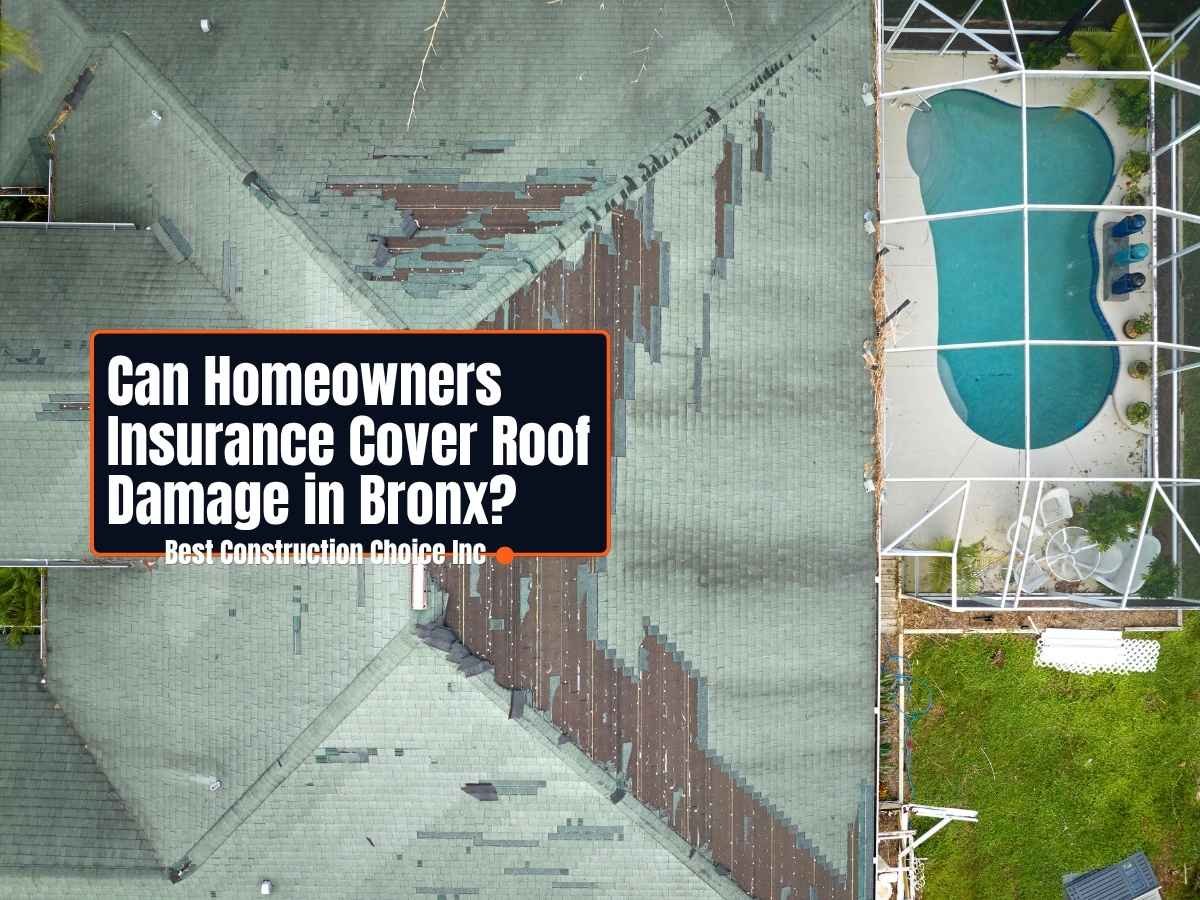
If a storm just tore through the Bronx and left you staring at missing shingles or a fresh ceiling stain, one question probably matters more than anything else right now: will insurance actually pay for this?
The short answer: roof damage insurance Bronx homeowners rely on typically covers damage from sudden, accidental events — wind, hail, or a falling tree branch. It generally excludes damage from normal wear and tear, aging materials, or neglected maintenance. Your policy’s exact language, the cause of the damage, and how well you document what happened all determine whether your specific situation qualifies. This article can’t replace reading your actual policy or talking to your insurance agent. It will, however, help you understand what’s typically covered, what usually isn’t, and how to approach a claim if you think you have one.
What Homeowners Insurance Typically Covers for Roof Damage
Most standard homeowners insurance policies center on covering sudden, accidental damage, not the slow deterioration every roof experiences over time. Coverage varies by policy and insurer, so treat the following as common patterns rather than a guarantee for your specific plan.
Wind and storm damage. High winds during a storm cause one of the more commonly covered types of roof damage, including torn-off shingles or sections damaged by wind-driven debris.
Hail damage. Most standard policies typically cover dents, cracks, or granule loss from hail impact, though coverage details vary by insurer.
Falling trees or branches. Most policies treat damage from a fallen tree or branch as a covered event.
Damage from other covered events. Depending on your specific policy, other sudden events like fire or certain types of water damage from a covered source may also apply.
Sudden and accidental damage. Across most covered scenarios, the damage happens suddenly and unexpectedly rather than developing gradually over months or years.
Interior water damage from a covered roof loss. If a covered event damages your roof and lets water into your home, your policy often covers the resulting interior damage as part of the same claim — though this depends on how quickly you address and document the issue.
Roof Damage That May Not Be Covered
This is where a lot of homeowners run into unwelcome surprises. Standard homeowners insurance generally excludes damage that develops gradually or results from a lack of upkeep.
- Normal wear and tear from years of sun, rain, and temperature swings
- Aging roofing materials that have simply reached the end of their expected lifespan
- Poor maintenance, such as ignoring obvious signs of damage for an extended period
- Neglected leaks that went unaddressed and caused worsening damage over time
- Mold or rot from long-term moisture exposure rather than a single sudden event
- Improper installation, if the original crew didn’t do the roofing work correctly
- Damage from specifically excluded events, which varies by policy and insurer
Insurers generally expect homeowners to maintain their roofs and address problems reasonably promptly. A claim for a leak that’s been dripping for two years tells a very different story than a claim for storm damage from last week.
How to File a Roof Insurance Claim
If you believe storm damage roof insurance Bronx coverage might apply to your situation, how you handle the first few days matters. A clear process helps your claim move smoothly and gives you the documentation you’ll likely need.
Document Everything First
Take photos and videos of the damage as soon as it’s safe to do so, both from the ground and, if you can safely get closer, up close too. Capture the full scope of the damage, not just the most obvious spot — adjusters look at the complete picture.
Prevent Further Damage Where Reasonable
Most policies expect you to take reasonable steps to prevent additional damage, like covering an exposed area with a tarp. Keep this in mind, but never risk climbing onto a damaged roof yourself — a professional can often handle emergency stabilization safely.
Contact Your Insurance Company Promptly
Report the damage as soon as reasonably possible. Delays can sometimes complicate a claim, particularly if you describe the damage as happening “recently” rather than right after the event.
Schedule an Inspection
Your insurer will typically send an adjuster to assess the damage. It’s often worth having your own roof inspection done as well, so you have an independent professional assessment to compare against the adjuster’s findings.
Get a Professional Roofing Assessment
A licensed roofing contractor can document the damage in detail, identify issues that might not be obvious to an adjuster doing a quick visual check, and provide a written estimate that supports your claim.
Keep Receipts for Temporary Repairs
If you pay for a tarp or emergency patch to prevent further damage, save every receipt. These costs are often reimbursable as part of the claim.
Review the Settlement and Deductible Carefully
Before agreeing to a settlement, review exactly what’s covered, what your deductible will be, and whether the payout reflects the actual cost of the repair or replacement your roof needs.
Insurance and Roof Replacement: What to Understand
If your roof damage is severe enough to consider replacement, a few insurance-specific concepts become especially relevant.
Actual cash value vs. replacement cost coverage. Some policies pay the depreciated value of your roof at claim time, while others pay the full cost to replace it. This distinction can mean a significant difference in your payout, so find out which type your policy provides.
Roof age and depreciation. Older roofs often depreciate under actual-cash-value policies, meaning an aging roof may bring a lower payout even for a fully covered claim.
Deductibles. Most policies apply a deductible to roof claims. Some insurers also use a separate, often percentage-based deductible specifically for wind or hail damage rather than a flat dollar amount.
Coverage limits. Your policy sets a maximum payout amount, so don’t assume a claim will fully cover replacement costs without checking that limit first.
Policy exclusions. Review your policy’s specific exclusions, since these vary significantly between insurers and can affect what applies to your situation.
Matching roofing materials. If only part of your roof suffers damage, some policies address whether the insurer will cover matching the remaining materials versus simply patching the damaged section with different-looking shingles.
Whether code upgrades are covered. If local building codes require upgrades during a repair or replacement that go beyond restoring what was there before, ask your insurer directly whether your policy covers those upgrade costs, since this varies.
Because these details vary so much by policy and insurer, reviewing your specific coverage with your insurance agent is the only reliable way to know exactly what applies to your situation.
Working With a Roofing Contractor During an Insurance Claim
The contractor you choose can make a real difference in how smoothly your claim goes.
Get a professional damage inspection. A roof inspection from a licensed contractor gives you documented, professional evidence of the damage’s extent and cause.
Get a written repair estimate. A detailed, written estimate strengthens your claim and gives you something concrete to compare against the insurer’s assessment.
Choose a licensed and insured roofer. This matters for insurance claims specifically, since insurers may scrutinize unlicensed contractors’ work more closely, and it protects you if anything goes wrong during the repair itself.
Ask for documentation that supports your claim. A good contractor will provide photos, detailed notes, and an itemized estimate that clearly explains the damage and recommended repair.
Watch out for contractors who guarantee insurance approval. No contractor can guarantee your insurance company will approve a claim or cover a specific amount — that decision belongs to the insurer, not the roofer. Treat anyone who promises otherwise as a red flag.
Compare repair and replacement estimates. If your contractor identifies both repair and replacement as options, ask for a clear explanation of the trade-offs. That way you can make an informed decision alongside your insurance conversation, similar to deciding between a leak repair and a full replacement outside of an insurance context.
Bronx-Specific Considerations for Roof Damage Claims
A few local realities are worth keeping in mind if you’re dealing with roof damage in the Bronx specifically.
Wind and severe weather. The Bronx experiences a full range of seasonal storms, and wind damage claims come up relatively often after significant weather events.
Heavy rain and water intrusion. Sustained heavy rain can expose weaknesses in a roof that weren’t obvious before, sometimes revealing damage from an earlier storm that you didn’t notice at the time.
Snow and ice damage. Winter weather, including ice dam formation, can contribute to roof damage. Whether it’s covered often depends on whether the insurer classifies it as sudden damage or a maintenance-related issue.
Older roofing systems. Much of the Bronx’s housing stock includes older roofs, and roof age can affect both coverage terms and depreciation calculations under an actual-cash-value policy.
Flat-roof damage. Multifamily buildings with flat or low-slope roofs may face different claim considerations than pitched residential roofs. Insurers often treat ponding water and drainage-related damage differently than storm damage.
NYC building-code requirements. Depending on the scope of repair or replacement, code compliance may come into play. Ask your insurer directly whether your policy covers any related upgrade costs, since this varies by policy.
Documentation for multifamily properties. Landlords and property managers handling a multifamily roof claim should expect more involved documentation requirements and claim processes than a single-family home typically needs, given the number of units potentially affected.
Common Misconceptions About Roof Insurance Claims
“My roof is old, so insurance won’t cover anything.” Not necessarily true. Age can affect the payout amount under an actual-cash-value policy, but a genuinely sudden, covered event like storm damage can still produce a valid claim even on an older roof.
“A small leak isn’t worth reporting.” Small issues can sometimes signal larger underlying damage. Delaying a report on damage that’s actually covered can complicate the claim later, so have it assessed rather than assuming it’s not worth pursuing.
“Any contractor can help me get my claim approved.” Not every contractor has experience working alongside insurance adjusters and documentation requirements. Choosing a licensed, experienced local roofer, like the team behind our roof repair services, can make the process considerably smoother.
“Insurance will always pay for a full roof replacement.” Coverage depends entirely on the cause and extent of the damage along with your specific policy terms. Some claims end in a targeted repair rather than a full replacement, depending on what the adjuster and your contractor determine.
When to Call a Professional vs. Handle Things Yourself
Documenting damage with photos from the ground and contacting your insurer are things you can reasonably handle yourself. Everything beyond that generally calls for a professional.
Reasonable for a homeowner:
- Taking photos and videos of visible damage from a safe vantage point
- Contacting your insurance company to report the damage
- Keeping records and receipts related to the damage and any temporary repairs
- Reviewing your policy documents to understand your coverage
Best left to a licensed roofing contractor:
- Getting onto the roof to assess the extent of damage
- Providing a professional, itemized damage assessment
- Performing any repair or emergency roof leak repair
- Identifying storm damage that isn’t visible from the ground
- Handling storm damage roof repair or full roof replacement
Climbing onto a storm-damaged roof yourself carries real safety risk. An untrained eye can also miss damage that a professional would catch, which could affect your claim.
Frequently Asked Questions
Often yes, if the damage resulted from a sudden, covered event like wind, hail, or a falling tree. Coverage for gradual issues like wear and tear or neglected maintenance is generally excluded. Your specific policy determines the details.
An older roof can still be covered for a genuinely sudden, covered event, though the payout may be affected by depreciation under an actual-cash-value policy. Review your policy or ask your insurer directly for specifics.
Document the damage with photos, prevent further damage where reasonably possible, contact your insurance company promptly, and get a professional roofing assessment to support your claim.
This depends on your insurer, your claims history, and your specific policy. It’s a reasonable question to ask your insurance agent directly before or during the claims process.
Actual cash value pays the depreciated value of your roof at the time of the claim, while replacement cost coverage pays the full cost to replace it. This distinction significantly affects your final payout.
No legitimate contractor can guarantee insurance approval — that decision rests entirely with your insurance company. Be cautious of any contractor who claims otherwise.
Get a Professional Damage Assessment Before You File
Whether you’re dealing with recent storm damage or trying to understand whether an existing issue might be covered, a professional roof inspection gives you the documentation and clarity you need before talking to your insurer. Best Construction Choice Inc provides roof damage assessments, repair, and replacement throughout the Bronx and nearby Westchester communities, including Yonkers, Scarsdale, and White Plains.
You can view our location on Google Maps or reach out to schedule an inspection or request a free estimate. Call us at +1 917-916-0676 or +1 203-391-4261, or visit our Roofing Contractor Bronx service page to learn more.
This article is for general informational purposes and isn’t a substitute for reviewing your specific insurance policy or speaking directly with your insurance agent about your coverage.