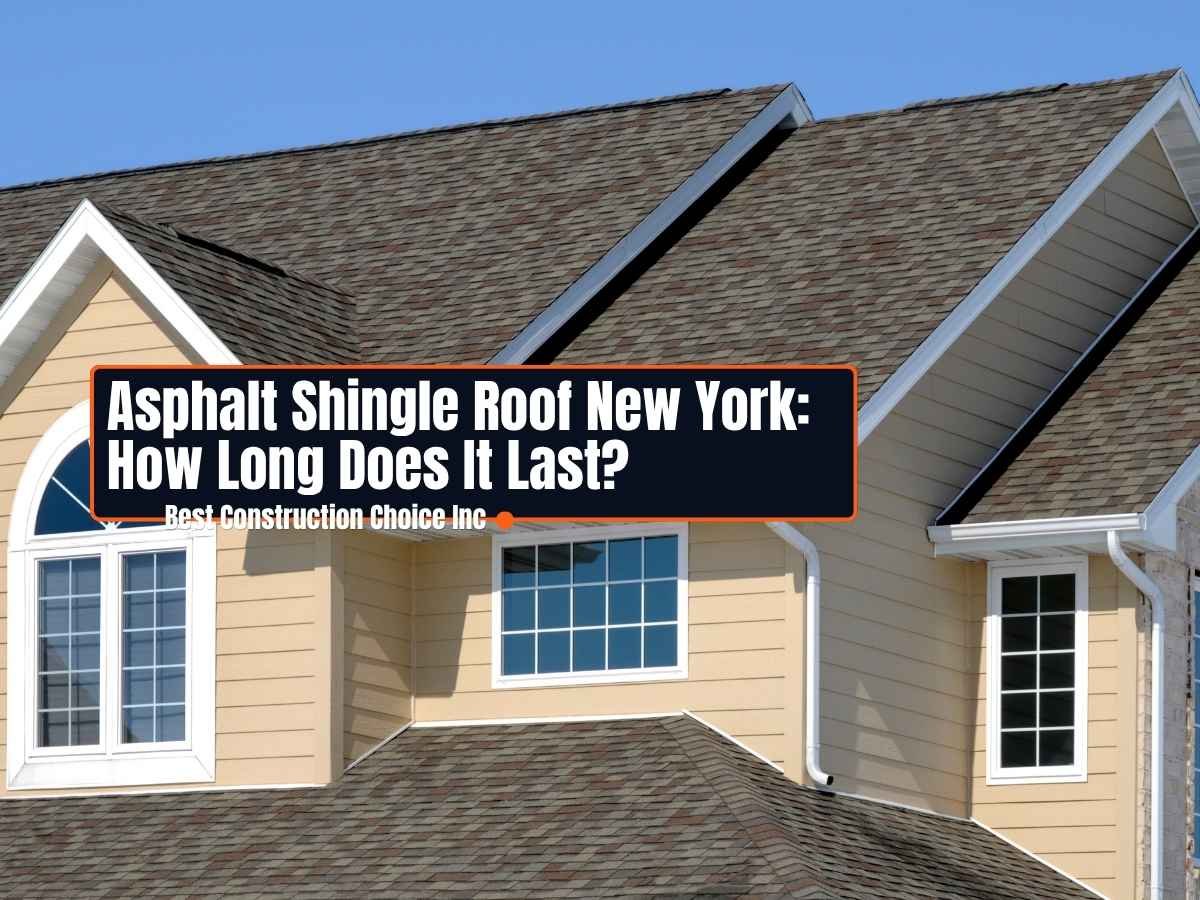
If you’re trying to figure out how many years you’ve got left on your roof, you’re asking a smart question. It’s smarter to ask now than after that “20-year shingle” claim gets tested by a New York winter.
The short answer: an asphalt shingle roof New York homeowners install typically lasts somewhere between 15 and 30 years. The exact number depends on the shingle type, installation quality, ventilation, and how much wear the roof takes from local weather over time. Basic 3-tab shingles tend to fall on the shorter end of that range. Architectural and premium shingles are generally built to last longer. But that range is only a starting point, not a guarantee. Two identical shingle products on two different Bronx roofs can age very differently depending on attic ventilation, ongoing maintenance, and how the crew installed the roof in the first place.
This guide breaks down realistic lifespan expectations by shingle type. It also covers how New York’s weather affects that timeline, the signs your roof is aging, and what you can do to get the most years out of it.
Typical Asphalt Shingle Lifespan by Type
Not all asphalt shingles are built the same way, and the type installed on your roof has a real impact on how long it lasts.
| Shingle Type | Typical Lifespan Range | Notes |
|---|---|---|
| 3-tab shingles | Shorter end of the range | Thinner, single-layer design; generally the most budget-friendly option |
| Architectural (dimensional) shingles | Mid-to-longer range | Thicker, layered construction; more resistant to wind and impact than 3-tab |
| Premium/luxury shingles | Longer end of the range | Heaviest, most durable asphalt shingle option, often designed to mimic slate or wood shake |
These ranges reflect general industry expectations, not a promise for any specific roof. Actual lifespan depends on installation quality, ventilation, climate exposure, and maintenance. That’s why two roofs with the same shingle type can age very differently.
It’s also worth understanding the difference between a manufacturer’s stated lifespan and real-world performance. Manufacturers typically base their estimates on controlled testing conditions. Real-world lifespan factors in New York’s actual weather, the installation crew’s skill, attic ventilation, and how consistently you maintain the roof. That’s why a shingle rated for 30 years doesn’t automatically mean 30 years for every roof.
How New York Weather Affects Roof Lifespan
New York’s climate puts asphalt shingle roofs through a genuinely wide range of conditions over the course of a year. That variety takes a toll over time.
Winter Weather Impacts
Snow and ice accumulation. Heavy snow adds weight to a roof. Prolonged accumulation can also cause moisture problems if it can’t melt and drain properly.
Freeze-thaw cycles. This is one of the more damaging patterns for shingle roofs. Water that gets under or into shingles can freeze and expand. That gradually loosens or cracks them, then the cycle repeats with the next cold snap.
Ice dams. Heat escaping from the attic melts snow on the upper roof. That water then refreezes at the colder eaves, forming a dam that pushes water backward under the shingles. This is a common winter issue in the Northeast, and it’s one reason attic insulation and ventilation matter so much for roof longevity.
Storms, Rain, and Summer Heat
Heavy rain. Consistent, heavy rainfall tests every seam, flashing point, and shingle edge on a roof. Aging or poorly installed shingles are more likely to let water through during sustained rain events.
High winds. Strong wind gusts, especially during storms, can lift shingle edges or tear off shingles already weakened by age or poor installation.
Summer heat and UV exposure. Hot summer temperatures and direct UV exposure gradually dry out the asphalt in shingles. Over years of exposure, this contributes to brittleness later in the roof’s life.
Storm and hail damage. Severe storms can cause sudden, visible damage — torn shingles, dented granule surfaces, or debris impact. If left unrepaired, this damage shortens the roof’s remaining useful life.
Bronx properties experience this full range of seasonal conditions. That’s why roofs here tend to benefit from more frequent inspections than a roof in a milder, more stable climate might need.
Signs Your Asphalt Shingle Roof Is Aging
Knowing what to look for can help you catch problems before they turn into a leak or a bigger repair.
- Curling or buckling shingles, where edges lift or the shingle surface no longer lies flat
- Cracked or missing shingles, often visible after a storm or high winds
- Granule loss, which shows up as bald or shiny patches on the shingle surface and in the gutters as gritty debris
- Damaged or deteriorating flashing around chimneys, vents, and roof edges
- Roof leaks, especially ones that seem to appear after specific weather events
- Sagging areas on the roofline, which can indicate deeper structural or decking issues
- Algae or moss growth, which doesn’t necessarily mean the roof is failing but can be a sign of trapped moisture over time
If you’re seeing more than one of these signs at once, it’s worth having the roof looked at rather than addressing each symptom individually.
How to Extend the Life of an Asphalt Shingle Roof
A few consistent habits make a real difference in how long a shingle roof actually lasts, regardless of which shingle type is installed.
- Schedule regular roof inspections, ideally once or twice a year and after major storms
- Address leaks promptly rather than waiting to see if they get worse
- Keep gutters and downspouts clear so water drains away from the roofline properly
- Make sure attic ventilation is adequate — poor ventilation traps heat and moisture, which accelerates shingle wear from underneath
- Confirm attic insulation is sufficient, since inadequate insulation contributes to ice dam formation in winter
- Remove debris like leaves and branches that can trap moisture against the roof surface
- Trim nearby trees to reduce the amount of debris landing on the roof and limit the risk of storm damage from falling limbs
- Have the roof inspected after any significant storm, even if there’s no obvious visible damage from the ground
None of these steps guarantee a specific lifespan, but consistent maintenance is one of the more reliable ways to help a roof reach the upper end of its expected range rather than the lower end.
Repair vs. Replacement: When Does It Make Sense to Fix vs. Replace?
Not every aging roof needs full replacement right away. The right decision usually comes down to how widespread the damage or wear actually is.
Repair may be reasonable when:
- Damage is limited to a small, specific area
- The roof is still within a reasonable portion of its expected lifespan
- The rest of the shingles show minimal granule loss or curling
- There’s no evidence of underlying decking or structural damage
Replacement is often more cost-effective when:
- The roof is near or past the upper end of its expected lifespan for its shingle type
- Damage or wear is spread across large sections rather than isolated spots
- You’ve had multiple repairs in different areas over a relatively short period
- There are signs of widespread granule loss, curling, or brittleness across the roof
Roof age plays a significant role in this decision. A five-year-old roof with isolated storm damage is usually a good repair candidate. A twenty-five-year-old roof with the same damage may be a better candidate for replacement, since the rest of the roof is likely nearing the end of its useful life anyway. A licensed asphalt shingle roofing contractor can help you weigh which direction makes sense for your specific roof. It’s a decision worth exploring further if you’re already deciding between a leak repair and a full replacement on your own roof.
Choosing Shingles for New York’s Climate
If you’re planning a roof replacement, it’s worth understanding the shingle options available and how they compare for a climate like New York’s.
3-tab vs. architectural shingles. Architectural shingles are thicker and heavier than 3-tab shingles. That generally makes them more resistant to wind uplift, a relevant consideration given the storm exposure New York roofs face.
Architectural vs. luxury shingles. Manufacturers build luxury or premium shingles with even more material, often designed to visually mimic slate or wood shake. These generally rank as the most durable, longest-lasting asphalt option.
Wind-resistant shingles. Some shingle products are specifically rated for higher wind resistance, which may be worth discussing with your contractor given how exposed Bronx rooftops can be during storms.
Impact-resistant shingles. These are designed to better withstand hail and debris impact, which can be a relevant factor depending on your property’s exposure.
Energy-efficient roofing options. Some shingle products are designed with reflective granules to reduce heat absorption, which can have a modest effect on attic temperatures during summer months.
There’s no single “best” shingle for every property — the right choice depends on your budget, the pitch and exposure of your roof, and your priorities around durability versus cost. If you’re not sure which materials suit your particular home, comparing roofing materials for your property is a useful next step before requesting quotes.
DIY vs. Professional: What You Can and Can’t Safely Handle
Some basic roof monitoring is reasonable for a homeowner to do; most actual roof work is not.
Reasonable for a homeowner:
- Visual inspections from the ground or with binoculars after storms
- Checking gutters for granule buildup, which can indicate shingle wear
- Clearing visible debris from gutters when it can be done safely
- Watching for obvious signs of curling, missing shingles, or sagging from a safe vantage point
Best left to a licensed roofing contractor:
- Any inspection that requires getting on the roof itself
- Diagnosing the source of a leak
- Shingle repair or replacement
- Flashing repair
- Evaluating attic ventilation and insulation adequacy
- Assessing storm or hail damage for extent and repair needs
- Full roof replacement
Roofing work at height carries real safety risk, and incorrectly diagnosed or repaired damage can sometimes create bigger problems than the original issue — like a poorly sealed patch that traps moisture instead of keeping it out. A professional roof inspection is a relatively low-cost way to get an accurate picture of your roof’s condition before deciding on next steps.
Frequently Asked Questions
Typically somewhere between 15 and 30 years, depending on the shingle type, installation quality, attic ventilation, and how much wear the roof has taken from local weather over time. This is a general range, not a guarantee for any individual roof.
Generally yes — architectural shingles are thicker and more durable than 3-tab shingles, which tends to translate into a longer real-world lifespan, though actual results still depend on installation and maintenance.
Snow accumulation, freeze-thaw cycles, and ice dams can all contribute to shingle damage over time, particularly when attic insulation or ventilation isn’t adequate to prevent uneven roof-surface temperatures.
Widespread granule loss, curling or buckling shingles, recurring leaks in different areas, and visible sagging are common signs that a roof may be nearing the end of its useful life rather than needing a simple repair.
Often yes, particularly if the damage is localized and the rest of the roof is in reasonably good condition. A contractor can assess whether a targeted repair makes sense or whether the roof’s overall age and condition point toward full replacement.
Costs vary significantly based on roof size, shingle type, pitch, and the scope of the project. A written estimate from a licensed local contractor after an in-person inspection is the most reliable way to get an accurate number for your specific roof.
Ready to Get a Clear Picture of Your Roof’s Condition?
Whether your asphalt shingle roof New York property has is five or twenty-five years old, understanding where it stands is the best way to plan ahead instead of dealing with a surprise leak. Best Construction Choice Inc provides roof inspections and asphalt shingle repair and replacement throughout the Bronx and nearby Westchester communities, including Yonkers, Scarsdale, and White Plains.
You can view our location on Google Maps or reach out to schedule an inspection or request a free estimate. Call us at +1 917-916-0676 or +1 203-391-4261, or visit our Roofing Contractor Bronx service page to learn more.