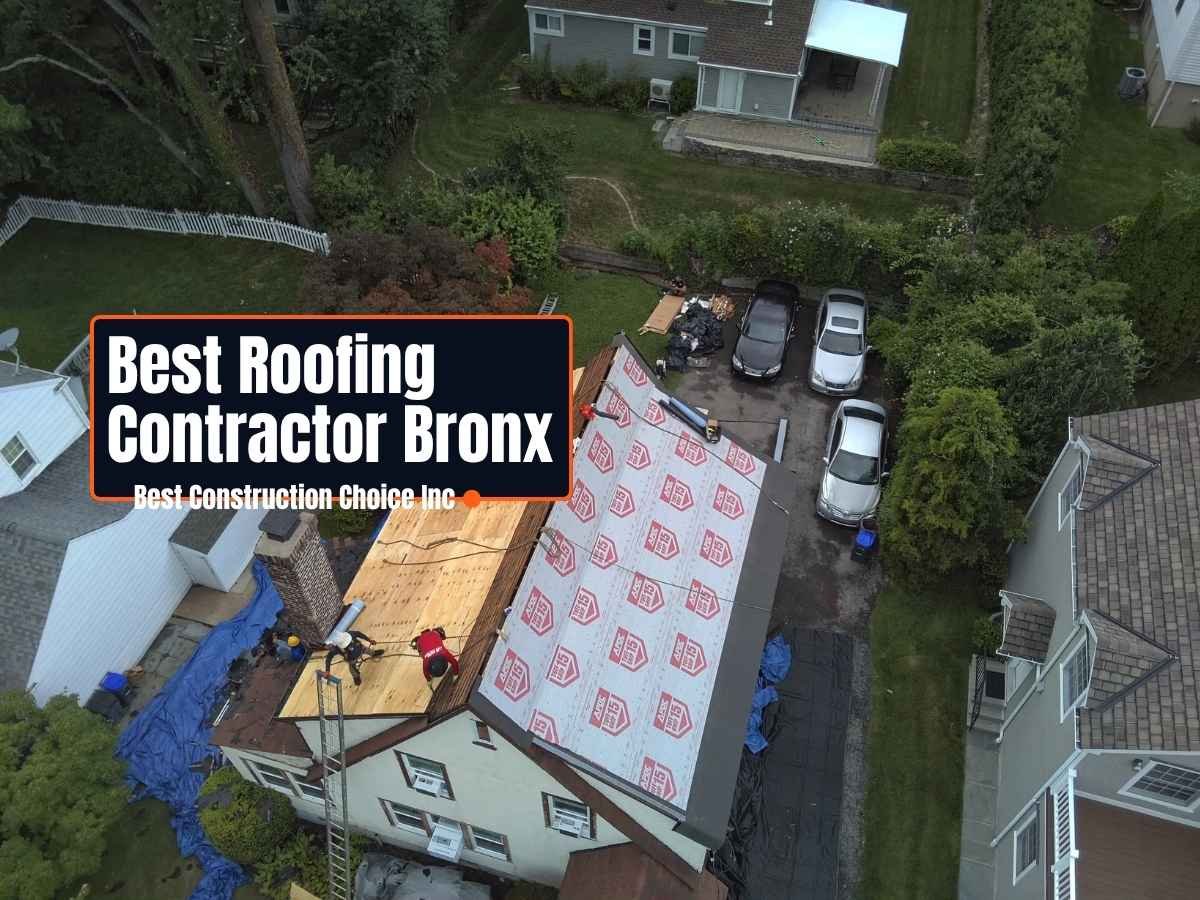
Your roof protects your family from the outside world. The Bronx sees nor’easters, freeze-thaw cycles, and roughly 26 inches of snow every year, so that barrier takes a real beating. Perhaps you’re a homeowner in Riverdale. Or maybe you manage a multifamily building in Fordham, or oversee several properties across the Bronx. Either way, the contractor you hire will determine how well your roof performs for the next 20 to 50 years.
This guide walks you through how to choose the best roofing contractor in Bronx, NY. First, it covers verifying licenses and insurance. Next, it covers comparing quotes and spotting red flags. Finally, it shows you what your money actually buys. In short, use it if you’re a homeowner, landlord, or property manager ready to hire a professional.
Why Choosing the Right Roofing Contractor in Bronx, NY Matters
The Bronx sits directly in the path of Atlantic storm tracks. Cold continental air collides with warm, moist ocean air. That collision produces nor’easters. These storms can dump heavy snow, driving rain, and hurricane-force gusts in a single event. The Bronx has felt the full force of this before. Superstorm Sandy caused an estimated $19 billion in damage across New York City. Flooding, wind damage, and structural losses hit all five boroughs. More recently, a February winter storm dropped 4.6 inches of snow in Fordham. That was more than any other borough saw that day.
In addition, the borough sees dozens of freeze-thaw cycles each winter. Meltwater seeps into small cracks, refreezes, and expands. As a result, a roof installed by an inexperienced or underinsured contractor can fail years early. Choosing the right roofing contractor in Bronx, NY isn’t just about price. It’s about hiring a team that understands local codes and weather patterns. It’s about a roof system built to hold up through a Bronx winter.
That’s exactly the kind of work Best Construction Choice Inc specializes in. Our licensed and insured crews serve homeowners, landlords, and property managers throughout the Bronx and Westchester County. We handle roof repair, roof replacement, and full roof installation. We offer free estimates and clear communication from your first call to the final walkthrough.
Qualities of a Reliable Roofing Contractor
Not every company that answers the phone can handle a Bronx roof well. Before you hire anyone, look for these core qualities:
- Local experience. A contractor who has worked on Bronx buildings understands row-house flat roofs, older housing stock, and DOB permitting.
- Proper licensing and insurance. NYC requires an active Home Improvement Contractor (HIC) license from the Department of Consumer and Worker Protection (DCWP). The contractor also needs active general liability and workers’ compensation coverage.
- Transparent, itemized estimates. Reliable contractors put material type, labor scope, tear-off, disposal, and permit costs in writing. They don’t hand you a single vague number.
- A real physical address and a working phone number. You should be able to visit the office. You should be able to confirm the business is based nearby, not operating out of a truck.
- Manufacturer certifications. Major manufacturers like GAF, Owens Corning, and CertainTeed certify roofers who meet their standards. Certified installers can typically offer extended, factory-backed warranties.
- Written warranties on both materials and labor. A trustworthy contractor stands behind their installation, not just the shingles.
- Clear communication. A good contractor explains what they’re doing and why. They respond promptly to questions.
If a company checks every one of these boxes, you’re already ahead of most homeowners.
How to Verify a Roofing Contractor’s License and Insurance
New York State doesn’t issue a single statewide roofing license. Instead, licensing happens locally, and in NYC that means the DCWP’s Home Improvement Contractor (HIC) program. Any contractor doing home improvement work worth more than $200 in the five boroughs must hold an active HIC license, and that includes roofing. Therefore, here’s how to check before you sign anything:
- Ask for the contractor’s exact legal business name and HIC license number.
- Search the DCWP’s official “Check License Status” tool on nyc.gov. Confirm the license is active, not expired, suspended, or pending.
- Request a current Certificate of Insurance naming your address as the certificate holder. Call the insurer directly to confirm coverage hasn’t lapsed. General liability coverage of at least $1,000,000 per occurrence is standard industry practice.
- Confirm workers’ compensation coverage. New York law requires it for any contractor with employees. An uninsured crew can leave you liable if a worker gets injured on your roof.
- Cross-check the business address. Search it on Google Maps. Confirm it’s a real, staffed location, not a P.O. box or vacant lot.
Skipping this step is one of the costliest mistakes a property owner can make. For example, unlicensed or uninsured work can void your insurance claim. Beyond that, it can create liability exposure and complicate a future sale.
Questions to Ask Potential Roofing Contractors
Before signing a contract, ask every roofing contractor these questions:
- Are you licensed with the NYC DCWP, and can you provide your license number?
- Can I see proof of current general liability and workers’ compensation insurance?
- Will you pull the required DOB permit, or is that my responsibility?
- Who will supervise the crew on-site: your employees or subcontractors?
- What roofing manufacturer certifications do you hold?
- What does your workmanship warranty cover, and for how long?
- Can I see photos or addresses of similar projects you’ve completed in the Bronx?
- What’s your projected timeline, and what happens if weather delays the job?
- How do you handle issues found once you remove the old roof, like rotted decking?
- What’s your payment schedule, and is a deposit required?
A contractor who answers clearly, without hesitation, is more likely to deliver a smooth project.
Red Flags to Watch for When Hiring a Roofing Contractor
Roofing scams tend to spike after major storms, because homeowners get anxious to fix things fast. Consequently, watch for these warning signs:
- Uninvited door-to-door sales, especially right after a storm. Reputable roofers rarely canvass neighborhoods; they build business through referrals.
- Demands for full payment or a large deposit upfront. A deposit in the 10–30% range is standard. Anything close to full payment upfront is a risk.
- No local address or out-of-state plates on work vehicles. This can signal a “storm chaser” who won’t be around for a future warranty claim.
- Pressure to sign a contract the same day, especially with claims that crews are “only available today.”
- Offers to waive or “cover” your insurance deductible. This is illegal in New York and most states. It can expose you, not just the contractor, to fraud liability.
- Vague or missing written estimates. If a contractor won’t put the scope, materials, and price in writing, walk away.
- No verifiable reviews or an inactive Better Business Bureau profile.
If you spot even one of these red flags, pause. Verify the contractor’s credentials, or simply choose another company.
Residential vs. Commercial Roofing Contractors
Not every roofing company can handle every type of building. For instance, residential contractors typically specialize in sloped, shingle-based systems on one- to four-family homes. Commercial contractors, on the other hand, work with low-slope or flat systems on larger multifamily buildings, retail spaces, and mixed-use properties. Commercial work also involves the specialized insulation New York’s energy code requires.
Property managers overseeing multiple buildings should confirm a contractor’s direct experience with their building type. A single-family pitched roof and a large flat membrane roof need different crews, equipment, and code compliance.
Roof Repair vs. Roof Replacement: What You Need to Know
One of the biggest decisions a homeowner faces is repair versus replacement. A qualified contractor should walk you through both options honestly, not push the pricier one.
Roof repair typically makes sense when damage is isolated. Think a section of missing shingles after a storm, a small roof leak, or flashing pulled away around a chimney. If your roof is under 15 years old and the rest looks good, repair is usually the more cost-effective route. Best Construction Choice Inc also offers emergency roof leak repair for urgent situations. We also provide dedicated storm damage roof repair after major weather events.
Roof replacement becomes the smarter investment as a roof nears the end of its lifespan. It also makes sense when damage is widespread or repairs keep adding up. For example, standard three-tab asphalt shingles typically last 20 to 22 years when properly installed and ventilated, while architectural shingles generally last 25 to 30 years. Meanwhile, watch for curling shingles, granule loss, or soft spots on the decking. If your roof shows several of these signs, a full roof replacement is usually more economical than continuing to patch it. Alternatively, a roof restoration can sometimes extend an existing roof’s life without a full tear-off. Either way, a licensed roof inspection is the best way to find out which option fits your situation.
Popular Roofing Materials and Their Benefits
The right material depends on your roof’s pitch, your building type, your budget, and how long you want it to last.
Asphalt shingles remain the most common material for sloped residential roofs across New York. They’re cost-effective and easy to install. They also perform well in cold climates when properly ventilated. Three-tab shingles are the most budget-friendly option. Architectural shingles use multiple layers for added strength, a more dimensional look, and a longer service life.
Rubber (EPDM) flat roofing is the go-to choice for flat and low-slope roofs, and it’s common on Bronx row houses and multifamily buildings. Specifically, EPDM resists cracking, sun damage, and moisture, and it holds up well against freeze-thaw cycles and heavy rain. Overall, it needs less maintenance than asphalt, though you should still check it periodically for pooling water or seam issues.
Metal roofing, meanwhile, is gaining popularity in the boroughs. It sheds snow quickly and resists wind uplift, which matters given the region’s above-average snowfall. Although it costs more upfront than asphalt, it lasts substantially longer.
A qualified contractor will help you weigh upfront cost against lifespan and maintenance. They should explain how each material performs in a Bronx winter, not just recommend whatever is easiest for them to install.
How Seasonal Weather in Bronx, NY Affects Roof Choices
Every season stresses a Bronx roof differently. In winter, freezing temperatures, snow, and ice dams can force water backward under shingles. Then, in spring and fall, heavy rain and strong winds test flashing and drainage. Finally, summer heat and UV exposure can dry out, curl, or strip granules from shingles that weren’t rated for the climate.
This is why local experience matters so much. Specifically, a roofer who works regularly in the Bronx plans for ice-and-water shield underlayment at eaves and valleys. In addition, they design proper attic ventilation to prevent ice dams, and they use fastening patterns built to resist nor’easter-strength wind gusts. Together, these details separate a roof that lasts its full lifespan from one that fails early.
The Latest Trends in Roofing Design and Technology
Roofing has evolved well beyond a simple protective layer. Homeowners today increasingly ask about:
- Impact-resistant, cold-climate-rated shingles. These stay flexible in sub-freezing temperatures and resist cracking through winter freeze-thaw cycles.
- Reflective, energy-efficient roofing systems that cut cooling costs in summer.
- Enhanced manufacturer warranty programs. These often require factory-certified installation and single-manufacturer component systems in exchange for extended, non-prorated coverage.
- Better attic ventilation and insulation design, which plays a growing role in energy efficiency and roof performance.
An experienced local contractor stays current on these options. They can tell you honestly which upgrades are worth the investment.
Understanding Roofing Contractor Costs
Factors That Affect Roofing Costs in Bronx, NY
Several variables drive the final price. These include roof size and pitch, your material choice, and the condition of the existing deck. Accessibility matters too, since row houses and attached buildings add labor complexity. Required DOB permits play a role as well. Specifically, in New York City, permitting alone can add several hundred dollars and multiple weeks for complex jobs. Because of this, only a licensed, DOB-registered contractor can pull the permit.
How to Budget for Roof Repair or Replacement
Across New York City, homeowners typically pay $4 to $11 per square foot for a standard asphalt shingle roof replacement. As a result, total project costs commonly land between $8,000 and $25,000, depending on home size and material. However, premium materials like metal, slate, or specialty membrane systems push costs significantly higher. Because pricing varies so widely by borough and roof type, the most reliable way to budget is a written, on-site estimate, not a national average.
Understanding Quotes: Breaking Down Roofing Estimates
A trustworthy quote breaks down materials, labor, and tear-off and disposal costs at minimum. It should also list permit fees and warranty terms. If a quote gives you a single lump number with no breakdown, ask the contractor to itemize it before you sign.
Cost Differences Between Different Roofing Materials
Asphalt shingles remain the most budget-friendly option per square foot, and crews typically install them fastest. Rubber (EPDM) roofing, however, generally costs more upfront than asphalt. Even so, it can offset that cost over time with a longer lifespan and lower maintenance. Metal and slate sit at the top of the price range, but they offer the longest service life of any common roofing material, which can make sense if you plan to stay put for decades.
Saving Money with Energy-Efficient Roofing Options
Reflective or Class 4 impact-rated shingles often qualify for insurance discounts with major carriers. Better attic insulation and ventilation can reduce heating and cooling costs year-round. These options may cost more upfront. Ask your contractor to walk through the long-term savings in energy bills, insurance discounts, and roof life. Weigh the full picture, not just the sticker price.
Comparing Quotes from Different Roofing Contractors
Get at least three written estimates before you commit. When you compare them, look past the bottom-line number and check:
- Do all three quotes specify the same materials and brands?
- Does each quote include tear-off, disposal, and permit fees, or are those extra?
- What’s the length and scope of the workmanship warranty in each quote?
- Is the timeline realistic given the project size and season?
- Does the lowest bid come from a licensed, insured, local company, or does it seem too good to be true?
The lowest bid isn’t automatically the best value. In fact, a dramatically underpriced quote can signal corner-cutting, uninsured labor, or a contractor planning to pad the final bill later.
How to Read and Interpret Online Reviews for Contractors
Online reviews are one of the most useful tools you have, but only if you read them critically:
- Look at the total volume of reviews, not just the average rating. A handful of five-star reviews carries less weight than years of consistent positive feedback.
- Read the negative reviews carefully. Pay attention to how the company responded. A professional, solution-oriented response is a good sign; silence is not.
- Check for recency. A company with strong reviews from years ago but nothing recent may have changed ownership or crew.
- Cross-reference multiple platforms. Check Google Reviews and the Better Business Bureau instead of relying on one source.
- Look for detail. Reviews mentioning specific project types, timelines, or crew names tend to be more reliable than generic praise.
Case Studies: Successful Roofing Projects in Bronx, NY
Every property is different. For example, a Riverdale single-family home with a steep pitched roof needs a different approach than a flat-roof building in Fordham. Similarly, a storm-damaged roof in Pelham Bay needing emergency repair is different still. Therefore, when you evaluate a contractor, ask to see completed projects similar to your building type and neighborhood. A contractor with a real, verifiable track record in the Bronx will gladly share references and photos.
Testimonials from Homeowners Who Chose Local Contractors
Beyond star ratings, ask a contractor to connect you with past customers nearby. Call a previous client directly. Ask about communication, timeline accuracy, and how the company handled any issues. That conversation often tells you more than dozens of online reviews combined.
The Importance of Post-Service Support and Warranties
A roofing project isn’t finished the day the crew leaves. Instead, reliable contractors stand behind their work with two distinct types of warranty:
- Manufacturer (materials) warranty. This covers defects in the shingles, membrane, or other components. These typically run 10 to 30 years. Some enhanced programs extend coverage further when a factory-certified contractor handles the install.
- Workmanship (labor) warranty. The contractor provides this directly, and it covers installation errors like improper fastening or flashing mistakes. Industry standards generally start around 5 years. Well-established contractors often offer longer coverage.
Before you sign a contract, get both warranty terms in writing. Ask what would void them — most require basic maintenance and prohibit unauthorized modifications.
Tips for Providing Feedback to Your Roofing Contractor
Clear communication after the project ends benefits everyone. If you’re happy with the work, leave a detailed review that mentions the crew, the timeline, and the service performed. That way, it helps other Bronx homeowners decide, and it helps a good contractor build its reputation. On the other hand, if an issue comes up, contact the contractor directly and in writing first. A reputable company will want the chance to fix it under their workmanship warranty before you escalate elsewhere.
Why Choose Best Construction Choice Inc
Best Construction Choice Inc is a licensed and insured roofing, deck, gutter, chimney, and siding contractor, serving the Bronx and Westchester County, NY. Our services include roof inspection, roof repair, complete roof installation, and roof replacement. Our local crew focuses on quality craftsmanship and clear communication, from your first estimate through the final walkthrough. Additionally, we handle emergency roof leak repair, storm damage roof repair, and roof restoration for Bronx neighborhoods and Westchester County homeowners alike.
You can view our service area and past projects on our Google Business Profile. We offer free estimates. Call +1 917-916-0676 or +1 203-391-4261 to schedule a roof inspection.
Frequently Asked Questions
Most Bronx homeowners pay roughly $8,000 to $25,000 for a standard asphalt shingle roof replacement. The price depends on roof size, material, and accessibility. A written, on-site estimate gives you the most accurate number.
In most cases, yes. NYC Department of Buildings permits are typically required. Only a licensed, DOB-registered contractor can pull that permit for you.
Most residential roof replacements take one to a few days. Weather, roof size, and material availability can extend the timeline.
Ask for their HIC license number. Verify it as active through the NYC DCWP’s official license lookup tool before you sign anything.
The manufacturer warranty covers defects in the roofing materials. The workmanship warranty, from your contractor, covers installation quality.
Most roofing professionals recommend an inspection at least once a year. Schedule extra checks after any major storm.
Ready to Get Started?
Choosing the best roofing contractor in Bronx, NY comes down to a few steps. Verify credentials. Ask the right questions. Compare detailed quotes, and read between the lines of online reviews. Best Construction Choice Inc is a licensed and insured local roofing contractor serving the Bronx and Westchester County. We offer free estimates and clear communication on every project. Call +1 917-916-0676 or +1 203-391-4261 today to schedule your free roof inspection.