What Is a Downspout and Gutter Drainage System?
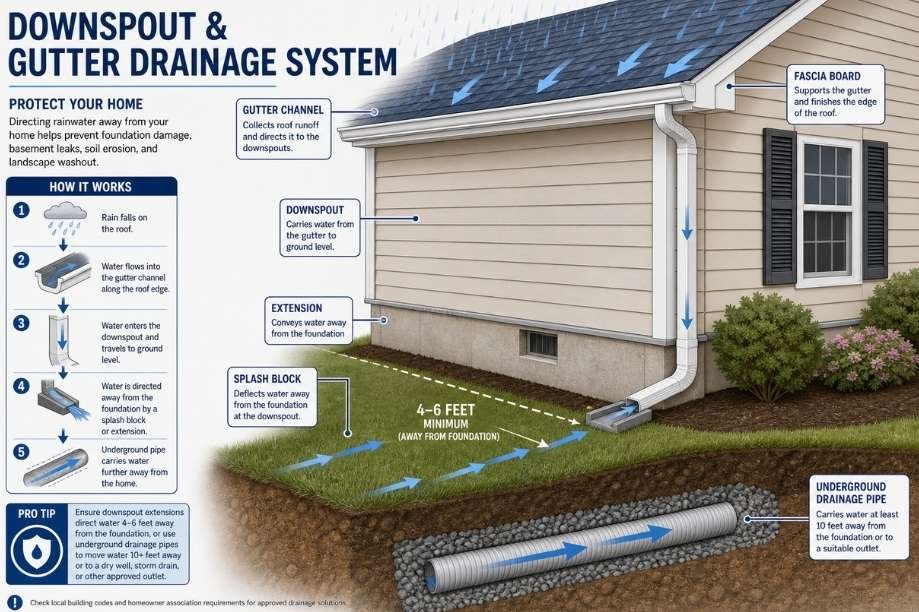
A downspout and gutter drainage system is your home’s first line of defense against water damage. In short, it is a network of channels, pipes, and accessories that collect rainwater from your roof and carry it safely away from your home’s foundation.
Furthermore, this system is one of the most important exterior components on any residential property. Without it, rainwater falls freely off your roof, splashes against your siding, and saturates the soil around your foundation, which ultimately leads to costly structural damage over time.
The Two Main Parts of Every Gutter Drainage System
Every residential gutter drainage system consists of two core components that work together:
- Gutter channels are horizontal troughs that run along the edge of your roof. They collect rainwater as it runs off your shingles and direct it toward the downspout.
- Downspouts are vertical pipes that carry the collected water from the gutters down to ground level and away from your home’s foundation.
Together, these two parts form a complete roof drainage system that protects your home from top to bottom.
Did you know? According to the Insurance Information Institute, over 50% of residential water damage claims originate from improper exterior water management, with gutters being a primary failure point.
How Does a Downspout and Gutter Drainage System Work?
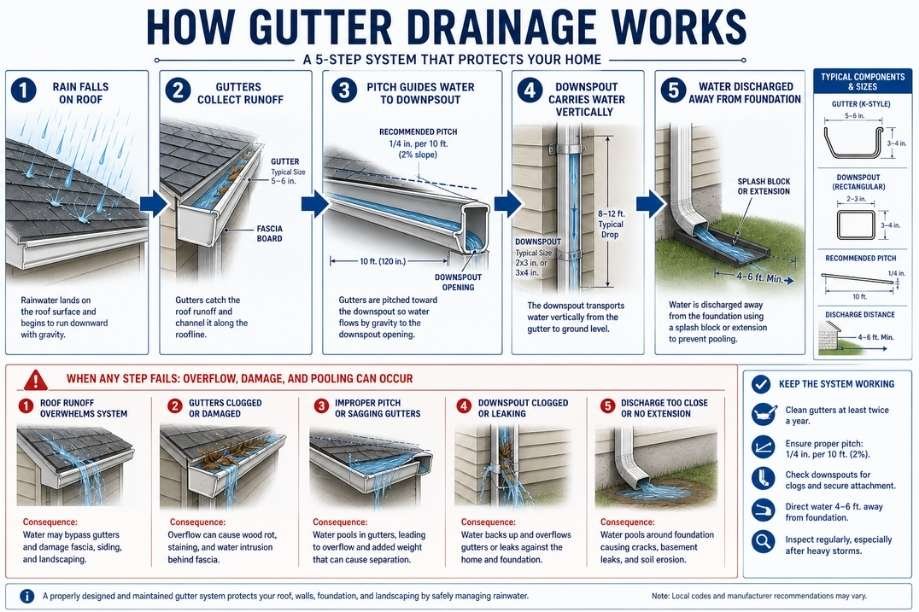
Understanding how your downspout and gutter drainage system works helps you spot problems early. Specifically, here is the step-by-step flow of a properly functioning system.
Step 1: Rain Falls on Your Roof
First, water flows downward along the slope of your roof shingles during any rainfall event. As a result, gravity pulls all of that water toward the edges of your roof.
Step 2: Gutters Collect the Roof Runoff
Next, horizontal gutter channels along the roofline catch the water before it drips off the edge. Consequently, instead of splashing down the side of your home, the water is captured and channeled in a controlled direction toward the downspout.
Step 3: Water Flows Toward the Downspout Opening
After that, gutters are pitched or angled slightly so that water flows naturally toward the downspout opening. This slope is typically about 1/4 inch for every 10 feet of gutter to ensure steady drainage.
Step 4: Downspouts Carry Water to Ground Level
Then, the vertical downspout pipe carries water safely down the side of your home. Moreover, downspouts are secured to the exterior wall with brackets to keep them firmly in place during heavy storms.
Step 5: Water Is Discharged Away from the Foundation
Finally, extensions, splash blocks, or underground drain pipes redirect the water at least 4 to 6 feet away from your home’s foundation. This last step is critical because, without it, even a perfectly installed gutter system can still cause foundation damage over time.
When any step in this chain fails, whether from clogs, improper pitch, or a broken downspout, water overflows and pools around your foundation.
Why Your Home Needs a Downspout and Gutter Drainage System
A functioning downspout and gutter drainage system protects almost every part of your home. Therefore, understanding what is at stake can help you prioritize this investment properly.
Foundation Protection Through Proper Roof Water Drainage
Poor downspout placement is a major cause of basement water issues, accounting for nearly 85% of incidents, according to industry studies. In addition, a well-designed system diverts approximately 1,000 gallons of water away from your foundation for every inch of rainfall on a 2,000 sq ft roof. Clearly, that is a massive volume of water that needs somewhere safe to go on a rainy day.
Siding and Exterior Wall Protection
When water overflows gutters or drips off the roof edge, it washes down your siding continuously. Over time, this causes staining, rot, and mold, which is especially damaging to wood and vinyl siding. As a result, a functioning exterior water drainage system directly extends the life of your siding and exterior walls.
Landscape and Yard Preservation
Without proper drainage, water runoff floods garden beds, erodes soil, and damages plants. However, with a correctly installed rain gutter and downspout system, water is redirected away from your landscaping. Consequently, your yard stays healthy and your soil stays intact season after season.
Increased Home Value
A protected home is a more valuable home. In fact, premium gutter system upgrades provide up to a 70% return on investment at resale, according to Remodeling Magazine. Therefore, installing a reliable drainage system is not just a safety measure but also a smart financial decision for homeowners and landlords alike.
Ice Dam Prevention for Bronx Winters
Here in the Bronx and Westchester County, winters are particularly harsh. Fortunately, properly maintained gutters reduce ice dam formation by 60% when combined with adequate attic insulation and ventilation, according to the Insurance Institute for Business & Home Safety. For that reason, keeping your roof drainage system in top shape is especially important before winter arrives each year.
Key Components of a Rain Gutter and Downspout System
Understanding the parts of your downspout and gutter drainage system helps you maintain it effectively and recognize when something needs repair or replacement.
Gutter Channels
Gutter channels are available in 4-inch, 5-inch, and 6-inch widths. Most Bronx homes use K-style gutters, which look like crown molding and handle significantly more water than half-round styles. Furthermore, they are the primary collection point for all roof runoff throughout the year.
Downspouts
Downspouts are vertical pipes typically made from aluminum or galvanized steel. Specifically, a standard 3-inch downspout handles 600 sq ft of roof area, a 4-inch handles 1,200 sq ft, and a 5-inch can manage 2,000 sq ft. Therefore, choosing the correct size for your roof is essential for proper gutter drainage system performance.
Downspout Extensions
Downspout extensions direct water further away from your foundation. Best practice is to extend downspouts at least 4 to 6 feet from your home. Additionally, underground downspout extensions can carry water 10 or more feet away for even greater foundation protection in areas with heavy rainfall.
Splash Blocks
Splash blocks are placed at the base of the downspout. As a result, they slow water flow and direct it away from the foundation while also preventing soil erosion directly beneath the downspout outlet.
Gutter Guards
Gutter guards are mesh screens or covers that prevent leaves and debris from clogging the gutters. Because of this, they reduce maintenance needs significantly and help your residential gutter drainage system perform consistently throughout every season.
Fascia Boards and Mounting Brackets
These are the structural and mounting hardware components that hold your gutter system securely to your roofline. Without properly installed brackets, gutters sag and pull away from the house, which defeats their entire purpose.
Underground Drainage Pipes
For more advanced setups, downspouts connect to underground pipes that carry water to a drywell or storm drain. This is a particularly effective solution for Bronx properties with limited yard space or persistent pooling problems.
Common Gutter Drainage System Problems and How to Fix Them
Even well-installed gutters develop problems over time. As a result, it is important to know the most common issues Bronx homeowners face with their downspout and gutter drainage system and how to address them effectively.
Clogged Gutters in the Drainage System
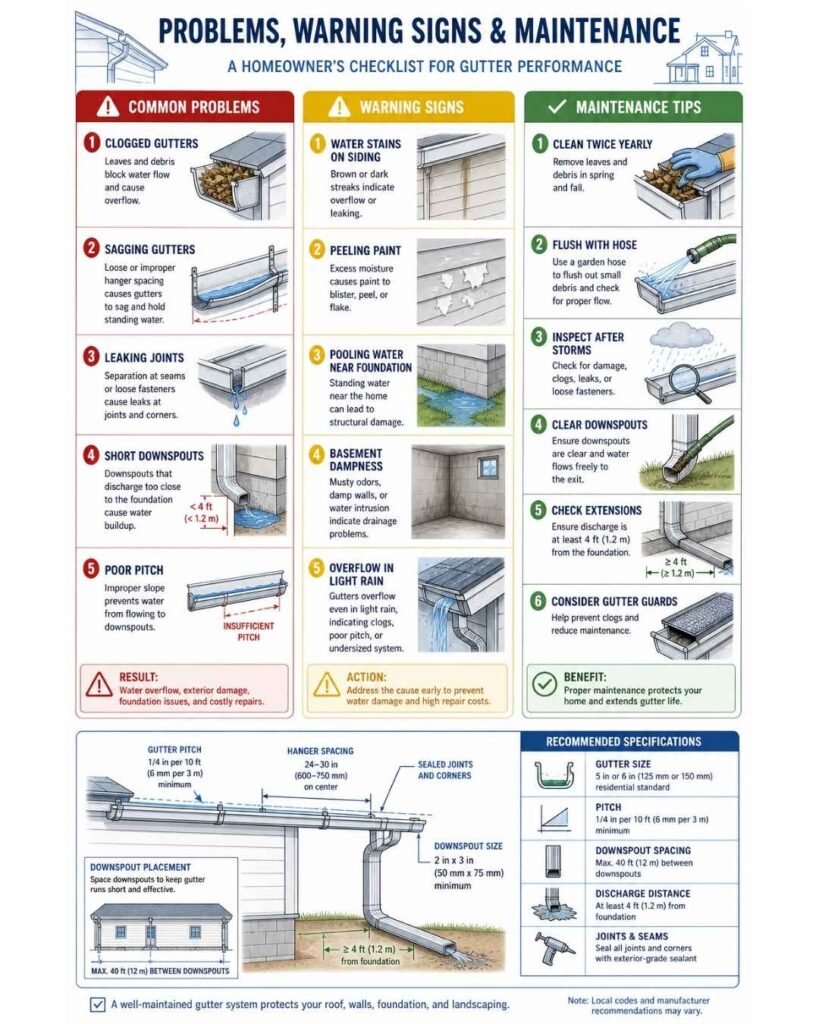
Leaves, twigs, and debris block water flow, leading to overflow and foundation damage. Indeed, clogged gutters are the number one cause of gutter drainage system failures. To fix this, clean your gutters at least twice a year or install gutter guards to prevent ongoing debris buildup.
Improper Pitch in the Gutter Channel
Gutters must slope slightly toward the downspout at about 1/4 inch per 10 feet. According to Fine Homebuilding, improperly pitched gutters fail to capture 40% of roof runoff during heavy rainfall events. Consequently, this leads to standing water and overflow even when the gutters appear to be clean and undamaged.
Too Few Downspouts for Your Roof Size
A typical home needs one downspout for every 20 to 40 feet of gutter. Moreover, if you live in a high-rainfall area like the Bronx, you will likely need more than average. Adding additional downspouts is one of the most effective ways to improve your overall rain gutter and downspout system performance during storms.
Downspouts Placed Too Close to the Foundation
Downspouts should discharge water at least 6 feet away from your home. Anything less leads to pooling and water infiltration into your basement or crawlspace. Therefore, adding downspout extensions is a simple but critical fix that protects your foundation year-round.
Separated or Leaking Joints
Sectional gutters have seams that can pull apart or crack over time, causing leaks behind the gutter that damage fascia boards. In contrast, seamless gutters eliminate most of these seam-related problems by design.
Sagging Gutters
Too much weight from water or debris causes gutters to sag and pull away from the roofline. As a result, water bypasses the gutter entirely and falls directly onto the soil below. Tightening or replacing the hanger brackets usually resolves this issue promptly.
Warning Signs Your Gutter Drainage System Needs Attention
Look out for these important red flags that suggest your system needs service:
- Water stains on siding or exterior walls after rain
- Peeling paint near the roofline or fascia area
- Pooling water near the foundation after rainfall
- Basement dampness or leaks following storms
- Overflowing gutters during moderate rain, not just heavy downpours
- Visible rust, cracks, or separated gutter sections
DIY vs. Professional Gutter Drainage System Installation
Many homeowners wonder whether they can install or repair their own downspout and gutter drainage system. Here is an honest comparison of both options so you can make the right decision.
DIY Gutter Drainage System Installation: What You Should Know
You can certainly buy gutters and downspouts at any home improvement store. However, installation is significantly harder than it looks. Improper gutter drainage system installation leads to flooding, erosion, mold, and pest infestations. Additionally, safety is a serious concern. Each year, there are over 164,000 emergency room-treated injuries in the U.S. caused by falls from ladders, according to industry data. For that reason, DIY gutter work carries real risk far beyond just the potential for installation errors or poor drainage performance.
Professional Gutter and Downspout System Installation: Why It Is Worth It
On the other hand, a licensed contractor ensures your downspout and gutter drainage system is installed correctly from the start. Specifically, professional installation provides:
- Correct pitch and alignment for optimal roof water drainage
- Proper number and placement of downspouts based on your roof size and local rainfall
- Leak-free connections and properly sealed joints throughout the system
- Full code compliance, which is especially important in NYC and the Bronx
- Warranty-backed work you can rely on for years to come
Which Option Is Right for You?
In general, for anything beyond minor cleaning or a small downspout extension, hiring a professional gutter drainage contractor is the smarter and safer choice. The cost of a botched DIY installation, in terms of water damage and structural repairs, far exceeds the cost of professional service from the start. As a result, most Bronx homeowners who attempt DIY gutter work eventually call a contractor anyway.
How Much Does a Downspout and Gutter Drainage System Cost?
The cost of a gutter drainage system installation in 2025 and 2026 varies based on materials, home size, and system complexity. Below is a detailed breakdown to help you plan your budget accurately.
Gutter Material Cost Comparison
| Material | Cost Per Linear Foot (Installed) | Lifespan |
|---|---|---|
| Vinyl | $3 to $9 | 10 to 15 years |
| Aluminum (most popular) | $6 to $12 | 20 to 30 years |
| Galvanized Steel | $8 to $20 | 15 to 20 years |
| Copper (premium) | $30 to $50+ | 50 to 100 years |
Typical Gutter and Downspout System Installation Costs
According to data from Angi, HomeGuide, and This Old House, here is what most homeowners pay:
- Seamless aluminum gutter drainage system for an average home: $900 to $3,000
- Standard gutter and downspout installation for a complete system: $900 to $5,000, with most homeowners paying around $1,500
- Downspout replacement only: approximately $670 on average, or $4 per linear foot for minor repairs
- Professional gutter cleaning service: $119 to $234 per visit on average
Affordable Gutter Drainage Upgrades Worth Considering
Additionally, several smaller upgrades can make a significant difference in your residential rainwater drainage system without requiring a large investment:
- Splash block installation: under $100 in most cases
- Downspout extensions: $50 to $200 depending on length and type
- Gutter guards: $200 to $1,500 depending on the type and total gutter length
Pro Tip: Investing in a seamless aluminum downspout and gutter drainage system now can save thousands in foundation repairs, basement waterproofing, and siding replacement later on.
Call Best Construction Choice Inc today for a FREE estimate: +1 203-391-4261
Maintenance Tips for Your Downspout and Gutter Drainage System
Regular maintenance dramatically extends the life of your downspout and gutter drainage system and prevents costly failures. Fortunately, most maintenance tasks are straightforward and can be scheduled with ease.
How Often Should You Service Your Gutter Drainage System?
As a general rule, follow this cleaning schedule to keep your system functioning properly:
- At minimum, clean gutters twice per year, once in spring and once in fall
- If you have many trees nearby, increase cleaning frequency to 3 to 4 times per year
- Always inspect your system after severe storms, especially during winter months
Simple Downspout and Gutter Maintenance Checklist
Follow these steps during each maintenance visit to keep your system working at full capacity:
- First, clear all debris from gutters using a scoop or leaf blower
- Next, flush the gutters with a garden hose to test proper water flow direction
- Then, check for and clear any downspout clogs using a hose or auger tool
- After that, look for sagging sections, rust spots, or separated gutter joints
- Additionally, make sure downspout extensions are properly directing water away from the foundation
- Finally, verify that gutter guards are intact and free of accumulated debris
When to Call a Professional Gutter Drainage Contractor
In some cases, maintenance goes beyond what a homeowner should handle alone. Specifically, call a professional gutter drainage contractor near you when you notice any of the following:
- Water overflowing during light rain, not just during heavy storms
- Visible rust, large cracks, or sections pulling away from the roofline
- Basement or crawlspace dampness appearing after rain events
- Standing water remaining in gutters several days after it has rained
Advanced Downspout and Gutter Drainage Solutions for Bronx Homes
For properties that deal with persistent drainage challenges, which are especially common in the Bronx and Westchester County, these advanced solutions go beyond basic gutter drainage system installation. In particular, combining multiple systems consistently delivers the best long-term results.
Seamless Gutter Drainage System Installation
Unlike sectional gutters, a seamless gutter drainage system is fabricated in one continuous piece that is custom-cut to fit your home. Because there are no seams except at corners and downspout connections, these gutters are far less prone to leaking. Furthermore, nearly 94% of homeowners who install seamless gutters report full satisfaction with quality, according to a 2025 survey of 1,000 homeowners conducted nationwide.
Underground Downspout Drainage System for Foundation Protection
In this setup, downspout pipes connect to underground drain lines that carry water 10 or more feet from your foundation. The water then discharges safely into a drywell, French drain, or municipal storm drain. This solution is ideal for homes with limited yard space or persistent water pooling near the foundation walls.
Gutter Guards for Long-Term Drainage Performance
Mesh screen, micro-mesh, or reverse-curve gutter guards dramatically reduce debris buildup inside your residential gutter drainage system. In fact, about 71% of homeowners with guards report cleaning their gutters only once a year or less, compared to 2 to 4 times per year for systems without guards installed.
Splash Blocks and Downspout Extensions
This is a simple yet highly affordable upgrade. By placing splash blocks and extending downspouts, water exits at least 4 to 6 feet from your foundation. As a result, this protects against one of the most common causes of basement water intrusion in the Bronx area.
Rainwater Harvesting Through Your Gutter and Downspout System
Your downspout and gutter drainage system can also connect to a rain barrel or cistern to capture and reuse rainwater for lawn and garden irrigation. Consequently, this eco-friendly upgrade reduces stormwater runoff while also lowering your water bill throughout the warmer months.
French Drains for Improved Yard Drainage
For yards with poor drainage or grading problems, French drains work alongside your gutter drainage system to redirect groundwater away from your home’s foundation. These perforated pipes, buried in gravel-filled trenches, are an excellent complement to any complete exterior water drainage solution.
Smart Downspout Diverter Valves
Finally, smart diverter valves can be installed on your downspouts to automatically direct water to rain barrels during light rain and switch to normal drainage during heavy storms. As a result, your system handles all weather conditions efficiently without any manual adjustment needed.
Why Choose Best Construction Choice Inc for Your Gutter Drainage System?
Best Construction Choice Inc has served the Bronx, NY and Westchester County since 2009. That means more than 15 years of protecting homes just like yours with professional downspout and gutter drainage system installation, repair, and maintenance services.
We Are a Fully Licensed and Insured Gutter Drainage Contractor
We are NYC-compliant and fully licensed for all exterior work, including complete gutter drainage system installation, repairs, and replacements. Because of this, you can trust that every job meets local building codes and manufacturer specifications without exception.
Our Gutter and Drainage Services Include
We offer a full range of gutter and downspout installation services for homeowners, landlords, and property managers throughout the Bronx:
- Gutter cleaning, repair, and full system replacement
- Seamless aluminum gutter drainage system installation
- Downspout installation and custom drainage solutions
- Underground downspout drainage system design and installation
- Custom gutter drainage system planning for complex rooflines
- Roof replacement and 24/7 emergency repair services
- Siding, chimney, deck, and fence installation and repair
Our Service Areas for Gutter Drainage System Installation
We proudly serve homeowners and property managers throughout:
- Bronx ZIP codes: 10469, 10467, 10466, 10462, 10461
- Westchester County: Yonkers, Scarsdale, White Plains, and all surrounding communities
What Sets Us Apart from Other Gutter Drainage Contractors
- Free estimates on all projects with no obligation required
- 24/7 emergency roof and gutter repair service available year-round
- Licensed and insured, fully NYC compliant on every project
- Over 15 years serving Bronx homeowners, landlords, and property managers
- Expert crew with deep local knowledge of New York weather and drainage challenges
Ready to Protect Your Home? Call Us Now.
Best Construction Choice Inc 📞 +1 203-391-4261 🌐 bestconstructionchoiceinc.com
Free estimates. No obligation. Serving the Bronx and Westchester County since 2009.
Frequently Asked Questions About Downspout and Gutter Drainage Systems
A downspout and gutter drainage system is a combination of horizontal gutter channels along your roofline and vertical downspout pipes that work together to collect rainwater from your roof and carry it safely away from your home’s foundation. In addition to protecting the foundation, this system also shields your siding, landscaping, and basement from ongoing water damage.
First, rainwater runs off your roof into the gutters, which are pitched to direct water toward the downspout opening. Then, the downspout carries water vertically down the side of your home and releases it at ground level. Finally, extensions, splash blocks, or underground pipes direct the water safely away from your foundation.
Downspouts are the critical link in your residential gutter drainage system. Without them, water would pour over the edge of your gutters, wash down exterior walls, saturate the soil around your foundation, and ultimately cause structural damage, mold growth, and basement flooding. Moreover, poor downspout placement alone accounts for nearly 85% of basement water incidents according to industry research.
Start by clearing any debris clogs from your gutters and downspouts. Next, check that gutters are properly pitched toward the downspout at the correct angle. Additionally, make sure downspouts extend at least 4 to 6 feet from your foundation. Add splash blocks or downspout extensions if needed. For persistent problems, call a professional gutter drainage contractor near you to assess your full system.
How do I extend a downspout away from the house?
You can attach a rigid or flexible downspout extension to the bottom of your existing downspout. These extensions are widely available at hardware stores and clip on easily. Furthermore, for a permanent solution, an underground downspout drainage system connects your downspout to a buried pipe that discharges water 10 or more feet from your foundation.
What is the best gutter drainage solution for heavy rain?
For most Bronx homeowners dealing with heavy rain, the best solution is a seamless gutter and downspout system paired with proper downspout extensions and gutter guards. Additionally, underground downspout drainage is ideal for homes with limited yard space or significant water management challenges. Combining multiple solutions consistently delivers the best long-term results.
How do I prevent water damage with a gutter drainage system?
First, keep gutters clean at least twice a year. Second, make sure downspouts discharge water at least 6 feet from your foundation. Third, install gutter guards to reduce debris buildup and clogging. Finally, inspect your downspout and gutter drainage system after every major storm. Fixing small problems early is always far more affordable than dealing with major water damage or foundation repairs later.
How much does gutter drainage system installation cost in the Bronx?
Most homeowners in the Bronx and Westchester County spend between $900 and $5,000 for a complete gutter drainage installation, with the average around $1,500 according to data from Angi and HomeGuide. Specifically, seamless aluminum gutters cost $6 to $12 per linear foot installed. Additionally, simple improvements like downspout extensions and splash blocks typically cost under $200.