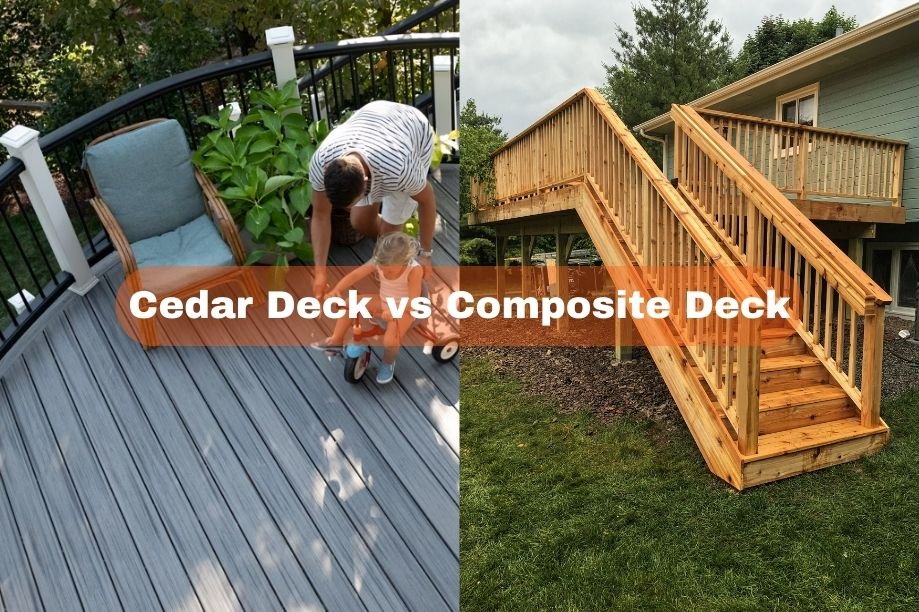
If you are a homeowner, landlord, or property manager in the Bronx, NY, one of the most valuable exterior upgrades you can make right now is building or replacing a deck. But before the first board goes down, you face one crucial question: Cedar Deck vs Composite Deck — which one is right for you?
Both materials are widely used across New York and the broader Northeast, but they perform very differently when it comes to cost, durability, maintenance, aesthetics, and long-term return on investment. The Bronx climate – with its hot, humid summers and cold winters — adds another layer to this decision that many homeowners overlook.
At Best Construction Choice Inc, we have been building and renovating decks across the Bronx and surrounding neighborhoods for over 15 years. In this comprehensive guide, we break down every factor you need to know — backed by verified 2025 data — so you can walk into your next deck project with complete confidence.
Expert Tip from Best Construction Choice Inc: In New York City, adding a deck can offer a 65–75% increase in resale value (Van Deck Builders, 2025). Choosing the right material from day one is the single most important decision you will make.
What Is a Cedar Deck? Introduction to Cedar Decking
Cedar decking is one of the most traditional and time-honored choices for outdoor structures in North America. Made from natural Western Red Cedar or Northern White Cedar, these decks have been installed on American homes for generations — and for very good reason.
Cedar is a softwood that contains natural oils and tannins, which give it an inherent resistance to rot, insects, and moisture without the need for chemical pressure treatment. This makes it one of the most environmentally clean wood options available on the market today.
Key Characteristics of Cedar Decking:
- Natural oils: Cedar contains oils that discourage pests and help the wood withstand moisture better than many other wood species (Real Cedar, 2025).
- Lightweight: Cedar is easy to cut, saw, nail, and glue — and much lighter than composite materials, making it easier to work with on tight urban job sites like those common across the Bronx (Real Cedar, 2025).
- Workability: Ask any experienced builder and they will tell you cedar is highly favored because its tools behave predictably and cuts are clean.
- Natural appearance: Cedar comes in a variety of grades and profiles, offering an authentic wood grain that no manufactured product can fully replicate.
- Grades available: From select (near-knot-free) to knotty cedar, giving homeowners and contractors flexibility for any budget level.
What Is a Composite Deck? Introduction to Composite Decking
Composite decking is an engineered building material made primarily from a blend of recycled wood fibers (sawdust) and plastic, along with binding agents. It was developed as a response to the maintenance demands of traditional wood decking and has grown significantly in popularity since the early 2000s.
According to EVODEK (2025), composite decking is typically made of approximately 50% wood powder, 38% high-density polyethylene (HDPE), and 12% additives. Premium brands like Trex and TimberTech have refined this formula to mimic natural wood grain while offering performance advantages over traditional lumber.
Key Characteristics of Composite Decking:
- Made from recycled materials: Most leading composite brands use up to 95% recycled content, including reclaimed wood fibers and recycled plastic bags (Trex, 2025).
- Two types — hollow and solid: Hollow composite boards are more cost-effective but less sturdy and can hold water. Solid composite boards look more like real wood and are sturdier, though they tend to expand and contract (Real Cedar, 2025).
- Low maintenance by design: Composite decks require no sanding, staining, or sealing. Periodic cleaning with soap and water or a power wash is typically all that is needed.
- Heavier than wood: Composite materials are generally much heavier than cedar, sometimes requiring a more reinforced substructure (Real Cedar, 2025).
- Comes with long warranties: Most quality composite decking products come with 25–50 year transferable warranties — a major selling point for homeowners planning to resell.
Cedar Deck Pros and Cons
Pros of a Cedar Deck
- Authentic, natural beauty: Cedar’s warm wood grain and rich reddish-brown color create an unmatched natural aesthetic that many homeowners and real estate buyers strongly prefer.
- Lower upfront cost: Cedar decking materials typically cost between $4 and $10 per square foot, making it more accessible for budget-conscious projects (HomeAdvisor, 2025).
- Lightweight and easy to install: Cedar’s low density makes it far easier to transport, cut, and fasten — especially important on tight residential lots in the Bronx.
- Environmentally renewable: Cedar is a naturally grown, renewable resource. Wood products use less energy during manufacturing and produce less air and water pollution than man-made products (Real Cedar, 2025).
- Stays cooler underfoot: Cedar does not absorb and trap heat the way composite or PVC boards can — an important comfort factor during Bronx summers.
- Restainable and refinishable: You can sand, restain, and refinish a cedar deck to restore it to near-new condition — something that is not possible with composite boards.
- Strong resale ROI: Wood decks offer approximately 83% ROI at resale according to the 2024 Cost vs. Value Report by Zonda/Remodeling Magazine — one of the strongest home improvement returns available.
Cons of a Cedar Deck
- Requires regular maintenance: Cedar needs to be stained or sealed every one to two years. Homeowners can expect to spend $150 to $375 per year on ongoing maintenance (HomeAdvisor, 2025).
- Shorter lifespan without upkeep: Without consistent maintenance, cedar decks may last as few as 10 years. With proper care, they can last 15 to 20 years (EVODEK, 2025).
- UV fading: Exposure to sunlight deteriorates surface fibers and turns the wood gray within a year or two. Regular resealing slows but cannot stop this process (Family Handyman, 2025).
- Susceptible to splintering: Over time, cedar boards can crack, curl, and splinter — creating a safety hazard, especially for households with children and pets.
- Quality variability: Cedar boards vary in knot density, straightness, and moisture content. Selecting quality boards on delivery takes skill and time.
- Less scratch-resistant: As a softwood, cedar is less scratch-resistant than composite boards and will show wear faster under heavy furniture or high foot traffic (EVODEK, 2025).
Composite Deck Pros and Cons
Pros of a Composite Deck
- Minimal maintenance: Composite decking requires no sanding, painting, or sealing. A simple soap and water wash or annual power wash is all that is needed (Russin, 2025).
- Longer lifespan: Composite decks typically last 25 to 50 years. According to Trex (2025), composite decking can last up to 50 years under the same conditions where a wood deck would need replacement.
- Resistant to rot, mold, and insects: Unlike wood, composite materials do not absorb moisture the same way, making them less susceptible to rot, mold, and insect infestation (Russin, 2025).
- Consistent appearance: Composite boards maintain their color and shape over time far better than natural wood.
- Transferable warranty: Premium brands offer 25–50 year transferable warranties — a meaningful selling point during a home sale in competitive markets like the Bronx.
- Wide color and style selection: Available in numerous colors and profiles, including options designed to realistically mimic the look of natural hardwood.
- Made from recycled content: Leading composite products use recycled plastic and wood fiber, reducing waste and lowering the material’s carbon footprint.
Cons of a Composite Deck
- Higher upfront cost: Composite materials range from $8 to $18 per square foot. In NYC, installed composite decks run $60–$64 per square foot — higher than cedar at $52–$59 per square foot (Best Construction Choice Inc, 2025).
- Gets hot in direct sunlight: Composite decking contains heat-absorbing plastic, which can make the surface uncomfortably hot on sunny summer days (Family Handyman, 2025).
- Cannot be refinished: If color fades or the surface sustains damage, composite boards cannot be sanded and refinished the way cedar can (Family Handyman, 2025).
- Heavier and harder to work with: The additional weight requires a reinforced substructure and makes handling on tight urban sites more challenging (Real Cedar, 2025).
- Hollow boards can warp: Less expensive hollow composite boards can hold water and warp over time. Solid boards are sturdier but expand and contract, leading to cracking (Real Cedar / Longhouse Cedar, 2025).
- Synthetic feel and appearance: Despite significant manufacturing improvements, many homeowners and buyers still prefer the authentic look and feel of natural wood.
- Lacks structural strength: Composite decking requires support structures with more joists placed closer together (Family Handyman, 2025).
Cost Comparison: Cedar Deck vs Composite Deck (2025 Data)
Cedar Deck Cost in 2025
| Cost Item | Amount |
|---|---|
| Installed cost (national avg.) | $14–$35 per sq ft |
| Installed cost (NYC/Bronx) | $52–$59 per sq ft |
| Materials only (national) | $4–$10 per sq ft |
| Total project (NYC, 200 sq ft) | ~$10,400–$11,800 |
| Annual maintenance cost | $150–$375 per year |
| Staining/sealing (every 1–2 yrs) | $0.50–$1.50 per sq ft |
Composite Deck Cost in 2025
| Cost Item | Amount |
|---|---|
| Installed cost (national avg.) | $25–$54 per sq ft |
| Installed cost (NYC/Bronx) | $60–$64 per sq ft |
| Materials only (national) | $8–$18 per sq ft |
| Total project (NYC, 200 sq ft) | ~$12,100–$12,800 |
| Annual maintenance | ~$100–$250 (power wash only) |
The 25-Year Cost Reality
When comparing cedar deck vs composite deck, looking beyond the initial price tells a very different story. Composite decking’s higher upfront cost often becomes competitive — or even cheaper — when you factor in 25 years of maintenance savings.
Example: A 300 sq ft cedar deck in NYC at $16,500 installed, plus $375/year in maintenance, costs approximately $25,875 over 25 years. A composite deck at $19,500 installed plus $2,500 in maintenance over 25 years totals $22,000. The 25-year difference may strongly favor composite.
Sources: HomeAdvisor 2025, Angi 2025, Best Construction Choice Inc NYC Market Data 2025
Longevity and Durability: Cedar vs Composite Deck
How long will your deck actually last? This is one of the most important factors for homeowners in the Bronx, where decks face both hot summers and cold, wet winters.
Cedar Deck Lifespan
With proper and consistent maintenance, cedar decks can last 15 to 20 years (EVODEK, 2025). Without regular staining and sealing, however, cedar can deteriorate significantly faster. The Bronx’s freeze-thaw cycles put significant stress on exposed wood fibers, causing cracking, warping, and accelerated rot.
| Maintenance Level | Expected Lifespan |
|---|---|
| Excellent (annual seal/stain) | 15–20 years |
| Average | 10–15 years |
| Minimal | 7–10 years |
Composite Deck Lifespan
Composite decking significantly outperforms cedar in longevity. According to Trex (2025), composite decking can last up to 50 years under the same conditions where a wood deck would require replacement. Most major brands back their products with 25–50 year transferable warranties.
| Composite Type | Expected Lifespan |
|---|---|
| Premium solid composite | 25–50 years |
| Mid-grade composite | 20–30 years |
| Economy hollow composite | 15–20 years |
Bronx Climate Note: The freeze-thaw cycle in the Bronx is one of the harshest tests for any decking material. Composite decking is engineered to resist these conditions far more effectively than natural cedar.
Maintenance Needs: Cedar vs Composite Decks
Cedar Deck Maintenance Schedule
Cedar decks require a committed maintenance routine to protect your investment and ensure safety.
- Annual cleaning: Power wash the deck ($100–$250) to remove dirt, mildew, and algae buildup.
- Staining/sealing every 1–2 years: Apply a UV-resistant stain or sealant ($0.50–$1.50 per sq ft).
- Annual inspection: Check for cracked, split, or rotting boards. Replace damaged planks promptly.
- Resealing every 2–3 years: A full reseal costs $560–$1,400 depending on deck size (HomeAdvisor, 2025).
- Sand and refinish as needed: Every 5–7 years, sanding off old finish and restaining can restore cedar to near-new condition.
Composite Deck Maintenance Schedule
Composite decking’s dramatically lower maintenance requirement is one of its biggest selling points (Star Lumber, 2024).
- Annual power wash or soap-and-water scrub: This is typically all that is required for most composite decks.
- Spot-clean stains promptly: Composite boards resist staining but respond better when spills are cleaned quickly.
- Inspect fasteners annually: Check hidden fasteners and any screws for signs of corrosion.
- No staining, painting, or sealing required: This alone saves Bronx homeowners hundreds of dollars every year.
Aesthetic Differences: Natural Cedar Look vs Engineered Composite
Cedar’s Natural Aesthetic Appeal
Cedar decking offers an authentic, warm, and organic appearance that no manufactured material has yet fully replicated. Its natural grain variations and the way it interacts with natural light give cedar decks a timeless character. Cedar is also fully customizable — you can stain it any color, change the look later, or completely transform its appearance with a full sanding and refinishing. According to Longhouse Cedar (2022), cedar design options are essentially endless and the material can easily be transformed at any time.
Composite’s Engineered Look
Modern composite decking has come a long way. Premium brands like Trex and TimberTech now produce boards with realistic wood grain textures and color variations. They also offer a much wider range of colors – from classic wood tones to bold grey, charcoal, and contemporary finishes.
However, composite decking has one key limitation: you are locked into the designs the manufacturer has produced. Composite boards cannot be repainted or restained to change their appearance (Star Lumber, 2024). That said, composite boards maintain a more consistent appearance over time — color fading and surface wear occur far more slowly than with natural wood.
Aesthetic Verdict: If authentic natural beauty and customization flexibility matter most to you, cedar wins. If you want a consistent, low-maintenance modern look with a broad color palette, composite is an excellent choice.
Environmental Impact: Cedar versus Composite Decking
Cedar’s Environmental Profile
Cedar is a natural, renewable resource. According to Real Cedar (2025), wood products like Western Red Cedar leave the smallest carbon footprint when compared to other building materials. Independent studies confirm that wood products use less energy during manufacturing and produce less air and water pollution than man-made products. Cedar trees grow relatively quickly, require no harsh chemical treatments during production, and are fully biodegradable at the end of their life cycle.
Composite’s Environmental Profile
Composite decking’s environmental story is more nuanced. On the positive side, most premium composite products use recycled content — Trex, for example, uses up to 95% recycled materials including plastic bags and reclaimed wood fiber. However, Longhouse Cedar (2022) notes that composite decking does not decompose easily and its production process involves the release of greenhouse gases into the atmosphere. At the end of a composite deck’s life, disposal is also more complex than recycling natural wood.
Environmental Verdict: Cedar holds a slight edge as a renewable, biodegradable material with a lower production carbon footprint. Composite earns points for diverting recycled waste from landfills. Both are responsible choices compared to petroleum-based PVC or aluminum decking.
Choosing the Right Material for Your Deck: Cedar or Composite?
For Bronx homeowners, landlords, and property managers, here are the key factors to weigh:
Your Budget
Cedar wins on upfront cost. Composite can be more cost-effective over 20+ years when maintenance savings are factored in. If budget is tight today, cedar is the more accessible starting point.
Your Maintenance Commitment
Be honest with yourself. Are you willing to seal, stain, and inspect your deck every year? If the answer is no or if you manage a rental property — composite decking is almost certainly the better fit.
How Long You Plan to Stay
If you plan to sell within 5–8 years, a well-maintained cedar deck offers excellent ROI (~83% per the 2024 Cost vs. Value Report). If you plan to stay 20+ years, composite’s longevity and low maintenance make it the stronger long-term investment.
Your Climate Exposure
The Bronx’s freeze-thaw cycles can damage wood fibers over time. Cedar handles this well with consistent maintenance, but composite is specifically engineered to resist freeze-thaw damage — an important advantage in New York’s climate.
Tenant and Family Considerations
For landlords with tenants, composite’s near-zero maintenance removes a recurring responsibility. For families with young children or pets, cedar’s cooler surface temperature may actually be more comfortable during summer months.
Aesthetic Goals
Traditional or craftsman homes typically pair better with natural cedar. Modern or contemporary homes, including many newly renovated Bronx properties, often look great with composite’s clean lines and modern color options.
Installation & DIY Guide for Cedar and Composite Decks
Preparation and Planning for Deck Building
- Check local building codes: In the Bronx and throughout NYC, deck projects typically require a permit from the NYC Department of Buildings (DOB). Decks over 200 square feet or more than 30 inches above grade almost always require a permit.
- Design your deck layout: Determine size, shape, desired features (railings, stairs, built-in seating), and direction. South- and west-facing decks receive the most direct sunlight, relevant for the heat retention question with composite.
- Measure and order materials: Order approximately 10–15% more material than your square footage calculation to account for cuts, waste, and defective boards.
- Assess your substructure needs: Composite decking is heavier than cedar and may require closer joist spacing (typically 12 inches on center instead of 16 for wood).
Tools Needed for Deck Installation
- Power drill/driver
- Circular saw or miter saw (carbide-tipped blades for composite)
- Table saw (for ripping boards to width)
- Chalk line (for keeping boards aligned)
- Tape measure and speed square
- Level
- Hidden fastener system
- Safety glasses, work gloves, steel-toed boots, and hearing protection
Step-by-Step Cedar Deck Installation
- Obtain permits: Submit plans to the NYC DOB and wait for approval before beginning any work.
- Install the ledger board: Attach a pressure-treated ledger board to the house at the correct height, using lag screws and flashing to prevent water infiltration.
- Set footings and posts: Dig footings below the frost line (NYC frost depth is approximately 36 inches). Pour concrete and set post anchors.
- Install beams and joists: Attach beams to posts and run joists at 16 inches on center. Use joist hangers for proper load transfer.
- Lay cedar decking boards: Begin at the house and work outward. Allow a 1/8-inch gap between boards. Use hidden fasteners or pre-drill to prevent splitting.
- Trim and finish edges: Snap a chalk line and cut board ends flush. Install fascia boards for a finished appearance.
- Apply initial sealer/stain: Allow new cedar to dry for at least 30–60 days before applying a penetrating stain or sealer.
Step-by-Step Composite Deck Installation
- Obtain permits: Check NYC DOB requirements. Composite decks of significant size require the same permitting as wood decks.
- Prepare the substructure: Composite is heavier than cedar. Joists may need to be spaced at 12 inches on center rather than 16. Use pressure-treated lumber for all framing.
- Install footings and posts: Set below frost line and allow concrete to cure fully before loading.
- Install the hidden fastener system: Most composite manufacturers provide proprietary hidden clip fastening systems. Follow the specific manufacturer instructions — improper installation can void the warranty.
- Lay composite boards: Begin installation from the house outward. Allow for thermal expansion gaps specified by the manufacturer — typically 1/8 to 1/4 inch between board ends.
- Cut with appropriate blades: Use carbide-tipped saw blades. Cut slowly to prevent overheating the material.
- Install fascia and trim boards: Finish edges with matching composite fascia for a professional appearance.
- Final inspection: Schedule the NYC DOB final inspection if required. Ensure all railings meet code height requirements (typically 36–42 inches depending on deck height).
Safety Tips During Deck Installation
- Never work on ladders alone — always have a second person present when working at height.
- Inspect all lumber before use — reject warped, cracked, or damaged boards immediately.
- Keep the work area clear of offcuts and tools to prevent trip hazards.
- Wear appropriate PPE — safety glasses, gloves, and steel-toed boots are non-negotiable.
- Follow electrical clearance rules — maintain proper clearances from overhead utility lines and verify utility locations through NYC 811 before digging.
- Hire licensed professionals for permitted work — unpermitted decks in NYC can result in fines and mandatory removal.
Best Construction Choice Inc handles all DOB permit filing, structural engineering reviews, and final inspection coordination for Bronx deck projects. Call +1 203-391-4261 for a free estimate.
Cedar Deck vs Composite Deck: Side-by-Side Comparison Table
| Factor | Cedar Deck | Composite Deck | Winner |
|---|---|---|---|
| Material Cost | $4–$10/sq ft | $8–$18/sq ft | Cedar |
| Installed Cost (NYC) | $52–$59/sq ft | $60–$64/sq ft | Cedar |
| Lifespan | 15–20 years | 25–50 years | Composite |
| Annual Maintenance Cost | $150–$375/yr | ~$100–$250/yr | Composite |
| Maintenance Effort | High (stain, seal, sand) | Low (rinse only) | Composite |
| Natural Appearance | Authentic Wood Grain | Engineered Look | Cedar |
| Heat Resistance | Stays Cooler | Can Get Hot in Sun | Cedar |
| Eco-Friendliness | Renewable Resource | Made from Recycled Material | Tie |
| Resale ROI (NYC) | ~83% | ~68% | Cedar |
| Warranty | None/Limited | 25–50 Year Transferable | Composite |
| DIY-Friendly | Yes (lightweight) | Moderate (heavier) | Cedar |
| 25-Year Total Cost | Higher (maintenance adds up) | Lower (less ongoing cost) | Composite |
Sources: HomeAdvisor 2025, Angi 2025, Family Handyman 2025, Real Cedar 2025, Trex 2025, Best Construction Choice Inc NYC Market Data 2025, Zonda/Remodeling Magazine Cost vs. Value Report 2024.
Frequently Asked Questions (FAQ): Cedar Deck vs Composite Deck
Both materials can perform well in the Bronx, but they require different approaches. Cedar needs consistent annual maintenance to withstand the freeze-thaw cycles and humidity of New York. Composite decking is engineered to resist freeze-thaw damage without maintenance and is generally considered a better fit for homeowners who want a durable, low-maintenance outdoor space in the Northeast.
In the NYC and Bronx market, cedar decks are installed for approximately $52–$59 per square foot, while composite decks run $60–$64 per square foot (Best Construction Choice Inc, 2025). On a 200 sq ft deck, that translates to roughly $10,400–$11,800 for cedar and $12,100–$12,800 for composite.
According to the 2024 Cost vs. Value Report by Zonda/Remodeling Magazine, wood decks offer approximately 83% ROI at resale, compared to approximately 68% for composite decks nationally. In NYC specifically, outdoor decks offer 65–75% increases in resale value regardless of material, due to the premium placed on outdoor living space in dense urban markets.
How long does a cedar deck last?
A well-maintained cedar deck can last 15 to 20 years. Without consistent maintenance (staining and sealing every 1–2 years), this can drop to 10 years or less. Cedar decks can also be restored by sanding and refinishing — something not possible with composite.
How long does a composite deck last?
Quality composite decks last 25 to 50 years, with most major brands backing their products with 25–50 year transferable warranties. TruNorth Decking (2025) confirms that composite decking lasts at least double the average lifespan of a wood deck.
Is composite decking maintenance-free?
Not entirely, but very close to it. Composite decking requires no staining, sealing, or sanding. An annual cleaning with soap and water or a power wash is typically all that is needed — dramatically less work than cedar, which requires yearly maintenance.
Does composite decking get too hot to walk on?
This is a legitimate concern. Composite decking contains heat-absorbing plastic, which can make the surface uncomfortable to walk on barefoot on hot sunny days (Family Handyman, 2025). Cedar naturally stays cooler because wood does not absorb and retain heat as effectively. Lighter-colored composite boards perform better than dark ones in terms of heat retention.
Can I install a cedar or composite deck myself (DIY)?
Cedar is lighter, easier to cut, and more forgiving for DIY installers. Composite is heavier, requires specific manufacturer installation instructions to maintain warranty validity, and requires carbide-tipped blades for cutting. In the Bronx and NYC, any deck requiring a permit also requires a licensed contractor. Best Construction Choice Inc can handle the entire project from permits to final inspection.
Which deck material is better for the environment?
Cedar has a strong environmental case as a renewable, biodegradable resource with a low production carbon footprint. Composite earns points for diverting recycled waste — with leading brands using up to 95% recycled content. Both are more responsible choices than petroleum-based PVC or virgin plastic decking.
Should I choose cedar or composite for a rental property in the Bronx?
For rental properties, composite decking is almost always the better choice. The near-zero maintenance requirement eliminates a recurring cost and responsibility for landlords. The longer lifespan and transferable warranty also protect the investment over the full holding period of most rental properties.
Why Choose Best Construction Choice Inc for Your Bronx Deck Project?
When it comes to the cedar deck vs composite deck decision, the material you choose is only half the equation. The quality of installation and the expertise of your contractor are equally critical to your deck’s long-term performance.
Best Construction Choice Inc has been the Bronx’s most trusted deck builder for over 15 years. Our team has installed cedar and composite decks across Riverdale, Fordham, Pelham Bay, Mott Haven, Throggs Neck, Co-op City, and all surrounding neighborhoods.
What We Offer:
- 15 years of hands-on deck experience across the Bronx and nearby areas
- Full-service project management — from DOB permit filing to construction, inspection, and final walkthrough
- Expert material guidance — cedar, composite (Trex, TimberTech), pressure-treated wood, and premium hardwoods
- Licensed and insured for all residential and commercial deck projects in NYC
- Free, no-obligation estimates with no pressure
- Serving homeowners, landlords, and property managers throughout the Bronx, Westchester, Manhattan, and surrounding neighborhoods
Ready to Build Your Dream Deck in the Bronx?
📞 Call Best Construction Choice Inc today for your FREE estimate:
+1 203-391-4261
Your Trusted Bronx Construction and Exterior Home Improvement Experts Roofing • Siding • Gutters • Chimneys • Decks • Concrete • Masonry • Skylights • Railings