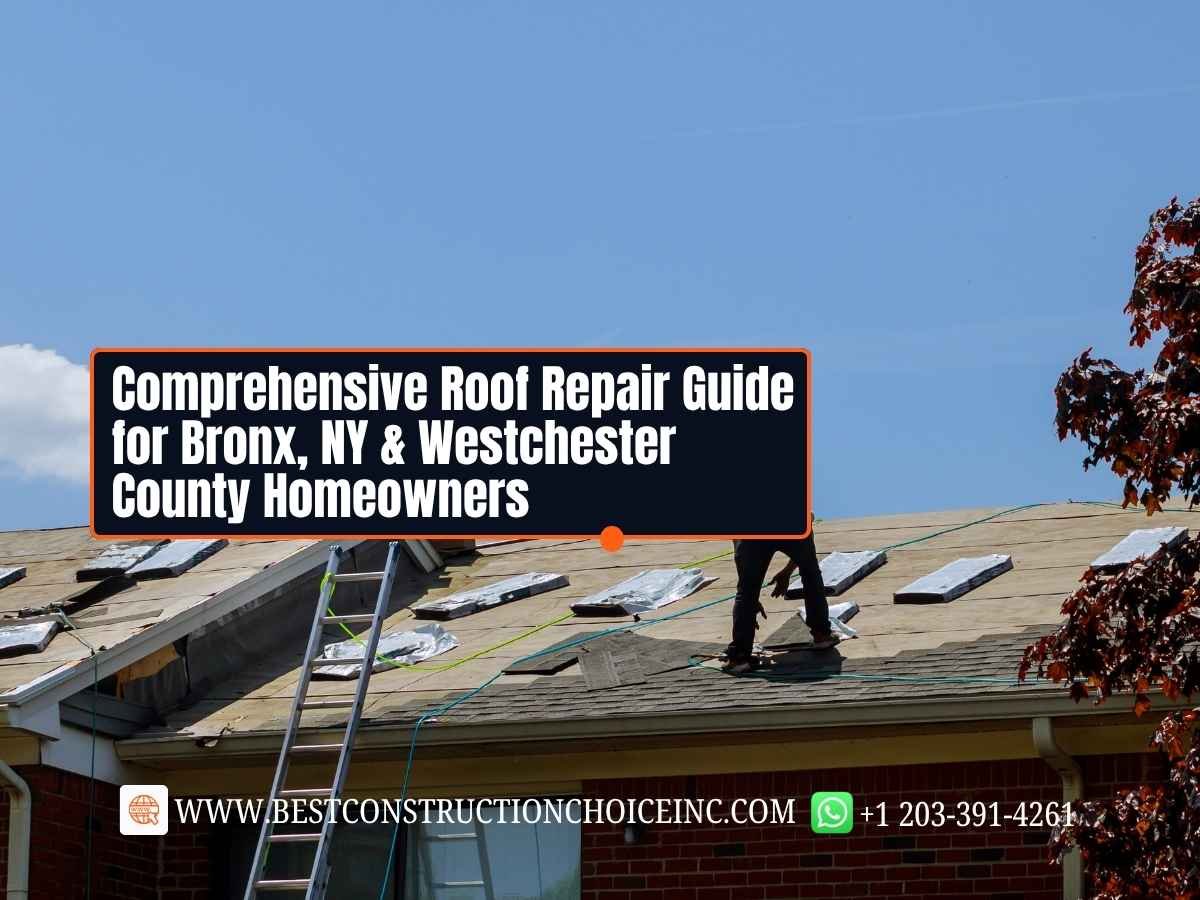
Have you noticed a water stain on your ceiling? Maybe a shingle blew off after a windy night, or daylight is peeking through your attic. You’re not alone. Roof problems are common, and they’re urgent for homeowners, landlords, and property managers across the Bronx and Westchester County. This Comprehensive Roof Repair Guide covers everything you need. You’ll learn how to spot roof damage, which tools fix it, and how to repair leaks step by step. We’ll also explain how to repair shingles the right way. Most importantly, you’ll learn when to call a professional roofing contractor.
Best Construction Choice Inc is a licensed exterior contractor. We’ve served Bronx, NY and Westchester County homeowners since 2009. Our team handles roof repair, roof replacement, emergency roofing, flat roofing, and storm damage repair. We also handle gutters, siding, decks, and chimney repair. We use no subcontractors, and every estimate is free. Maybe you want to understand a small leak before it grows. Or maybe you’re ready to book a professional roof repair. Either way, this guide has you covered.
📞 Call +1 203-391-4261 anytime for a free roof inspection and estimate.
Why a Comprehensive Roof Repair Guide Matters for NYC Homeowners
New York winters are hard on roofs. Freeze-thaw cycles, heavy snow, and ice dams take a toll. They cause shingles to crack and membranes to shrink. They also pull flashing away from chimneys and vents. Inland boroughs like the Bronx face design wind speeds of 100 to 115 miles per hour. That’s why roofing contractors recommend a standard six-nail shingle pattern here for extra wind resistance.
Many homes and multi-family buildings in the Bronx have flat or low-slope roofs. These roofs face extra risk in winter. Melting snow and ice can pool on the surface instead of draining away. Older EPDM, TPO, and modified bitumen membranes also turn brittle in freezing temperatures, which makes them prone to cracking.
Roof problems are common everywhere, not just in the Bronx. Industry data shows that most home “catastrophe” losses are roof-related. Yet most homeowners rarely check their roofs. That’s why this comprehensive roof repair guide matters. Keep it on hand, and keep a trusted local roofing company on speed dial.
Understanding Different Types of Roof Damage
Before you can fix a roofing problem, you need to know what you’re dealing with. Here’s a breakdown of the most common types of roof damage homeowners in the Bronx and surrounding areas encounter.
1. Wind and Storm Damage
High winds are a leading cause of roof failure, even on newer roofs. Strong gusts can tear shingles off completely. This leaves the roof deck exposed to rain and snow. After any major storm, walk around your property. Check the yard, lawn, and gutters for loose or fallen shingles.
2. Hail Damage
Even small hail can cause real damage. It often leaves small dark spots or bruises on asphalt shingles. Hail can also knock loose the granules that protect shingles from UV rays. Check your gutters, vents, mailbox, and car for dents after a hailstorm. Dents on these items often mean your roof took a hit too. Homeowners insurance often covers this type of damage.
3. Shingle Wear: Curling, Cracking, and Granule Loss
Shingles naturally wear down with age, especially after the 12-year mark. Watch for curling or cupping edges, which often point to poor attic ventilation. Blistering bubbles can form from trapped moisture. Granule loss leaves bare patches on the shingle surface. Sun exposure and temperature swings can also crack or tear shingles over time.
4. Flashing Damage
Roofers install flashing — thin metal strips — around chimneys, skylights, vents, and roof valleys. Flashing directs water away from these vulnerable seams. When it rusts, separates, or goes in incorrectly, it becomes a common source of isolated roof leaks. The good news: fixing flashing is usually a simple repair, not a full replacement. That holds true as long as the surrounding shingles and decking remain in good shape.
5. Water Damage and Active Leaks
Water damage often starts small, like a faint ceiling stain or a slightly discolored patch. It then spreads quietly through the roof decking and into the walls. Left unchecked, it can lead to mold growth, rotted wood, and structural issues. Roof valleys face extra risk because they collect runoff from two roof slopes at once.
6. Ice Dams (A Bronx and Westchester Winter Problem)
Ice dams form when heat escapes from your attic. That heat melts the snow on your roof. The meltwater then refreezes at the colder roof edge, forming a ridge of ice. The trapped water then has nowhere to go but under your shingles. Watch for thick icicles on the gutters, water stains on ceilings, peeling paint, and damp attic insulation. Climbing on a snow- or ice-covered roof is dangerous. Leave this type of repair to a professional roofing crew with the right safety gear.
7. Flat Roof and Membrane Issues
Flat roofs are common on Bronx apartment buildings, two-family homes, and additions. Clogged drains, ponding water, and aging membranes (EPDM, TPO, or modified bitumen) are the top causes of flat roof leaks. This risk grows once a roof passes the 20-year mark. Rooftop HVAC units add even more penetration points. The sealant around these units can crack and let water in.
8. Tree Damage, Moss, and Algae
Overhanging branches can scrape shingles and drop debris into your gutters. In a storm, a large branch can even puncture the roof deck. In shaded or humid spots, moss and algae trap moisture against the roof surface. This speeds up deterioration. Trim back branches and clear debris regularly to prevent this damage.
9. Structural Damage (Sagging Roofline)
Watch for a sagging or uneven roofline. New cracks in interior ceilings or walls are another red flag. Both often point to long-term water damage in the rafters or decking. If you see these signs, call a professional right away. Don’t attempt a DIY fix for structural issues.
Essential Tools for Roof Repair
Maybe you’re tackling a small fix yourself. Or maybe you just want to understand what a roofing crew does on your roof. Either way, it helps to know the essential tools roofers use for repairs.
Safety equipment (non-negotiable):
- A sturdy extension ladder that extends at least 3 feet above the roofline
- A full-body safety harness with roof anchors and lanyards
- Non-slip rubber-soled shoes or boots
- Heavy-duty gloves and protective eyewear
Core hand tools:
- Roofing hammer or hatchet (combines a hammer face with a shingle-cutting blade)
- Flat pry bar or crowbar for lifting shingles and pulling nails
- Utility knife with extra blades for cutting shingles and underlayment
- Caulking gun for applying roofing sealant around flashing and nail heads
- Chalk line and tape measure for accurate cuts and alignment
Materials you’ll typically need:
- Replacement shingles that match your existing roof (always keep a few spare bundles)
- Galvanized roofing nails
- Roofing cement or roofing sealant (never substitute general-purpose caulk, which fails under UV exposure and temperature swings)
- Flashing material and pipe boots
- Roofing felt or underlayment
Power tools for bigger jobs:
- Pneumatic or cordless roofing nailer
- Circular saw (for cutting damaged decking)
- Cordless drill with adjustable torque
DIY Toolkit vs. Professional Equipment
A basic toolkit covers most minor repairs. Think sealing a small leak, replacing a few shingles, or securing loose flashing. But steep roofs and multi-story buildings are different. Any work on the roof deck itself calls for more. A licensed roofing crew brings specialized tools and safety equipment that make a real difference. This matters most for the attached homes and multi-family buildings common across the Bronx. Roof access there can be tricky, and falls are far more dangerous.
Step-by-Step Guide to Fixing Roof Leaks
A roof leak rarely shows up where it starts. Water travels along the roof deck, down rafters, and across ceiling joists. By the time you see a stain inside your home, the water has already traveled far. Here’s a step-by-step approach to finding and fixing a leak.
Step 1: Spot the Warning Signs
Look for brownish rings or streaks on ceilings and walls. Other signs include peeling paint, musty odors, and mold or mildew growth. Dripping water during or after rain is the clearest sign of all.
Step 2: Locate the Source
If your attic is accessible, head up there with a flashlight during or right after rain. Look for damp insulation and dark staining on the underside of the roof deck. Also check for any spots where daylight shines through. Then follow the trail upward, toward the roof ridge. Gravity and the roof’s slope usually lead you close to the actual entry point.
Step 3: Put Safety First
Before going onto the roof, check the weather first. Never attempt repairs on a wet, icy, or steeply pitched roof. Use a secure ladder. Wear a properly anchored safety harness and shoes with good grip. Is the roof steep, high, or still wet? Stop here and call a professional roofing contractor instead.
Step 4: Inspect Common Leak-Prone Areas
Once you’re safely on the roof, or viewing from a ladder, check the usual suspects. These include roof valleys, areas around vents and chimneys, flashing seams, skylights, and the edges near gutters. Most leaks start in these spots.
Step 5: Apply a Temporary Patch (If Needed)
If a permanent fix isn’t possible right away, spread roofing cement generously over the crack or small hole. Think of this as a stopgap, not a permanent solution. It buys you time and protects the structure underneath.
Step 6: Make the Permanent Repair
For a shingle-related leak, start with a flat pry bar. Carefully lift the edges of the surrounding shingles. Remove the nails from the damaged shingle and slide it out. Slide a new matching shingle into place. Secure it with roofing nails, then seal the edges and nail heads with roofing cement for a watertight finish.
Step 7: Check the Flashing and Pipe Boots
If the leak is near a vent pipe, remove the old flashing or boot. Apply sealant, then slide the new flashing or boot over the pipe. Secure it with nails, and seal every exposed nail head afterward.
Step 8: Schedule a Follow-Up Inspection
Even after a successful patch, have a professional roofer take a look. A licensed contractor can confirm there’s no hidden moisture damage to the decking or insulation. They can also tell you whether your roof needs broader repairs.
How to Repair Roof Shingles Effectively
Shingle damage is one of the most common — and most fixable — roofing problems homeowners face. Here’s how to repair roof shingles effectively, whether you’re dealing with a few cracked shingles or several missing ones.
Choose the Right Day
Always work on a warm, dry day. In moderate temperatures, shingles stay flexible and lift easily without cracking. Cold weather makes them brittle, while extreme heat or humidity can prevent sealants from setting properly.
Repairing Cracked or Curling Shingles
If a shingle is cracked or split but mostly intact, you can often fix it without removing it. Apply roofing sealant or adhesive underneath the crack. Press the shingle flat, then add a thin layer of roofing cement along the edges for a watertight seal.
Replacing a Missing or Severely Damaged Shingle
- Use a flat pry bar to gently lift the shingles directly above the damaged one. This releases them from their sealant strip.
- Remove the nails holding the damaged shingle in place, then slide it out.
- Slide the new shingle into position, aligning it carefully with the surrounding shingles.
- Nail it down using 4 to 6 roofing nails along the designated nail line.
- Lift the shingle above and press it back into place, then seal the edges and nail heads with roofing cement.
- Press firmly and add light weight on top for a couple of hours to help the seal set.
Matching Materials Matters
Buy replacement shingles that match the color, style, and brand of your existing roof. Always purchase a few extra for future repairs. Are the surrounding shingles old, brittle, and prone to cracking when lifted? That’s often a sign you need to expand the repair area. It may also mean a larger section of the roof needs attention.
Know Your Limits
Small repairs, like a handful of cracked or missing shingles, work well for homeowners comfortable on a ladder. But multiple damaged areas, a steep roofline, or low confidence on the roof change things. In these cases, a professional inspection ensures a correct repair and catches any hidden damage underneath.
When to Call a Professional: Roof Repair vs. Replacement
This is the question almost every homeowner eventually faces: is this a repair, or do I need a new roof? Here’s how to think it through.
Two Key Factors: Age and Extent of Damage
Two factors drive this decision: your roof’s age and how widespread the damage is. As a general guideline, asphalt shingle roofs last 25 to 30 years. Basic 3-tab shingles last closer to 15 to 20 years. Is your roof under 15 years old, with damage limited to one area and a clear cause? Repair is usually the right call. Is your roof nearing the end of its lifespan, or is the damage spread across multiple areas? Replacement often makes more financial sense.
The Cost Comparison
Roof repair costs vary by issue. Most homeowners spend roughly $350 to $1,900 for shingle and flashing repairs. Many jobs land around $800 to $1,150. A full roof replacement costs more. Expect $5,000 to $15,000 for an average asphalt shingle roof. The price can run higher depending on size, material, and roof complexity. Flat roofs on Bronx multi-family buildings often fall in a similar range, depending on the membrane system and roof access.
The “50% Rule”
Here’s a rule of thumb roofing professionals use. If a repair would cost close to 50% of a full replacement, replacement is usually the smarter long-term investment. This is especially true for an older roof.
Hidden Damage Is Common
A professional inspection matters for one big reason: hidden damage. Decking issues, rotted plywood, and hidden moisture often stay invisible until a crew removes the shingles or roofing material. Some homeowners skip the full inspection and choose a quick repair. Within a year, many call back because the underlying problem turned out bigger than it looked.
Insurance Coverage
Most standard homeowners insurance policies cover roof damage from sudden events. This includes storms, wind, hail, and falling debris. Policies typically exclude damage from age, neglect, or gradual wear and tear. Did a documented storm damage your roof? Have a professional roofing contractor inspect and document the damage before you file a claim.
Permits and Licensing in NYC
New York City generally requires a Department of Buildings (DOB) permit for a full roof replacement. A significant structural repair usually needs one too. Minor patch repairs to stop a leak usually don’t need one. Contractors doing residential roofing work in the Bronx must also hold a license. The NYC Department of Consumer and Worker Protection issues this Home Improvement Contractor (HIC) license. Before you hire any roofing company, confirm their license and insurance. This step protects you if something goes wrong.
When DIY Stops Making Sense
Is your roof steep, more than one story, or showing multiple types of damage? Does a leak keep coming back after repeated patches? Call a licensed professional. The same goes for storms and ice dams. Climbing onto a wet, icy, or storm-damaged roof causes many fall injuries among homeowners and untrained workers.
Why Choose Best Construction Choice Inc for Roof Repair in the Bronx & Westchester County
Best Construction Choice Inc has served Bronx, NY and Westchester County homeowners since 2009. We’re a licensed exterior contractor with a 5-star rating on Google. We never use subcontractors. Our own experienced crew completes every job.
Our roofing and exterior services include:
- Roof installation and roof replacement
- Roof repair and storm damage repair
- Emergency roofing, available 24/7
- Flat roofing for multi-family and residential buildings
- Vinyl siding and cedar siding
- Composite deck installation and deck repair
- Gutter installation and gutter cleaning
- Chimney inspection and chimney liner installation
Areas we proudly serve include:
The Bronx (including Riverdale, Throggs Neck, Pelham Bay, Co-op City, and Morris Park), plus Westchester County communities such as Yonkers, Mount Vernon, New Rochelle, White Plains, and surrounding towns.
Have you worked through this comprehensive roof repair guide and you’re still not sure what your roof needs? That’s exactly what our free estimate is for. We’ll inspect your roof and explain exactly what we find. Then we’ll give you an honest recommendation, with no pressure and no upselling.
📞 Call +1 203-391-4261 today for your free roof inspection and estimate.
Frequently Asked Questions
Most roof repairs cost between $350 and $1,900. Many homeowners pay around $800 to $1,150. The price depends on the type and extent of damage, plus your roof’s size and pitch. Simple fixes, like sealing a small leak or replacing a few shingles, fall on the lower end. Flashing replacement or larger damaged areas cost more.
It depends mainly on your roof’s age and how widespread the damage is. A roof under 15 years old with isolated damage usually makes a good repair candidate. A roof nearing or past its 20- to 30-year lifespan often needs replacement instead. The same goes for a roof with damage in multiple sections. A professional inspection gives you the most reliable answer.
Standard 3-tab asphalt shingles typically last 15 to 20 years. Architectural and luxury asphalt shingles can last 25 to 30 years or more with proper maintenance. Regular inspections, gutter cleaning, and prompt repairs all help extend your roof’s lifespan.
Most standard homeowners insurance policies cover roof damage from sudden events. This includes storms, high winds, hail, and falling tree limbs. Policies usually don’t cover damage from age, lack of maintenance, or gradual wear. Take photos right after a storm, and schedule a professional inspection. Both steps help support an insurance claim.
Repair Process, Safety, and Permit Questions
Crews can often fix small leaks within a few hours. More extensive repairs, involving multiple shingles, flashing, or decking, may take a full day or longer. Weather affects timing too, since roofers generally avoid working during rain, snow, or ice.
Many homeowners can handle minor repairs themselves. This includes replacing a few shingles or resealing a small leak on a low, accessible roof. You just need the right tools and safety gear. But steep roofs, multi-story buildings, flashing work, ice dams, and structural sagging are different. Hire a licensed roofing professional for these to avoid injury and prevent further damage.
Most roofing professionals recommend an annual roof inspection. Schedule an additional check after any major storm too. Regular inspections catch small issues early, like a lifted shingle or cracked flashing. This prevents them from turning into costly leaks or interior damage.
Generally, minor patch repairs to stop a leak don’t need a Department of Buildings permit. A full roof replacement or significant structural repair typically does. Roofing contractors should also hold a valid Home Improvement Contractor license to work legally in NYC. A licensed local contractor can confirm exactly what your project requires.
Final Thoughts
A small roof issue rarely stays small. This holds especially true in the Bronx and Westchester County. Ice dams, heavy snow, and strong winds stress every roof here. This comprehensive roof repair guide helps you recognize warning signs and understand the basics of a repair. Most importantly, it helps you know exactly when to bring in a professional.
Are you dealing with a leak, missing shingles, or storm damage? Do you just want peace of mind before winter hits? Best Construction Choice Inc is ready to help. We’ve protected homes across the Bronx and Westchester County since 2009. We offer no subcontractors, free estimates, and a 5-star rating on Google.
📞 Call Best Construction Choice Inc today at +1 203-391-4261 for your free roof repair estimate. 🌐 Visit bestconstructionchoiceinc.com to learn more about our roofing, siding, deck, gutter, and chimney services.