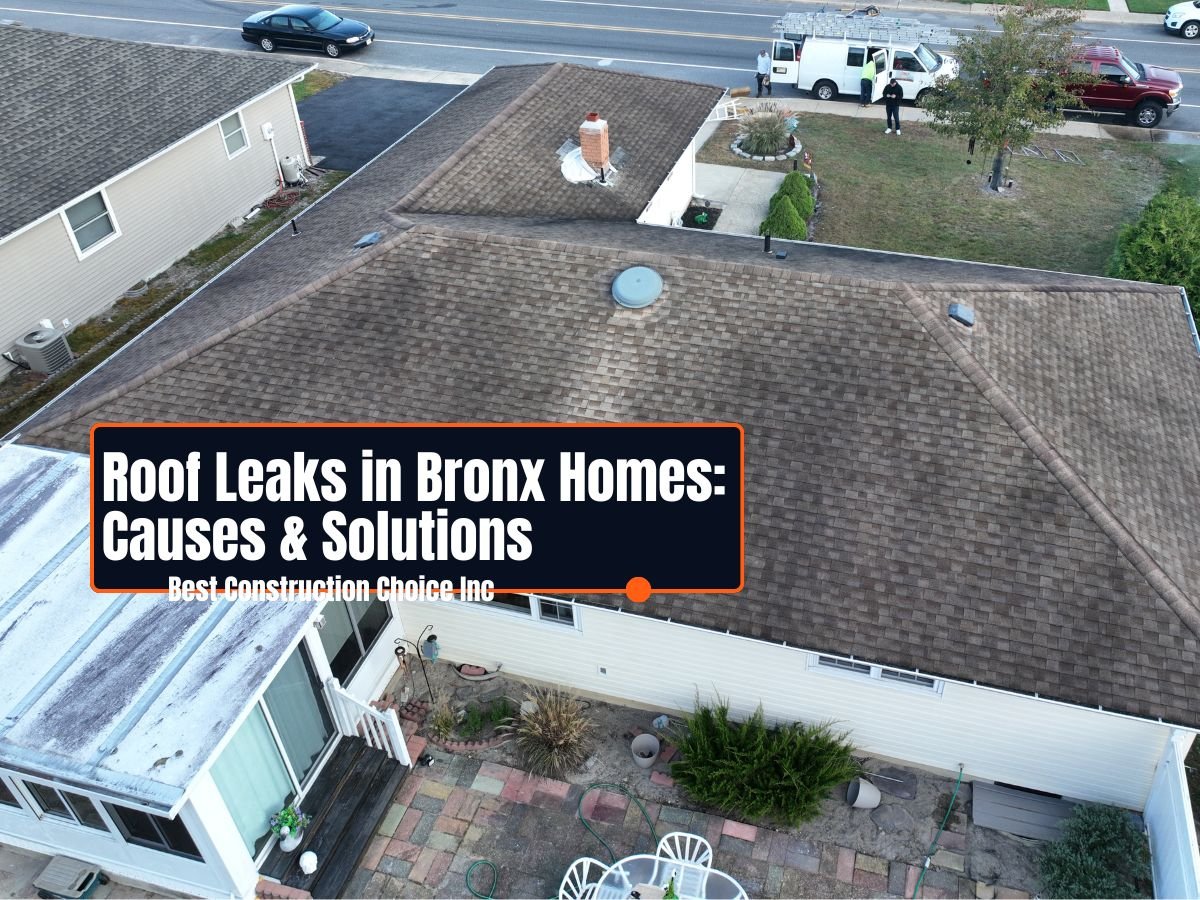
A roof leak rarely shows up out of nowhere. By the time you spot a water stain on the ceiling or a damp patch in the attic, something has usually been failing quietly for a while. It could be a cracked seal, a gap in flashing, or a clogged gutter backing water up under the shingles. The good news: once you understand the common causes, most roof leaks in Bronx homes trace back to a fairly short list of culprits, and many are preventable with regular maintenance.
In short, a handful of factors typically cause roof leaks in Bronx homes: damaged or missing shingles, deteriorated flashing around chimneys and vents, and clogged or damaged gutters. Aging roofing materials, poor drainage on flat roofs, and weather stress from the Bronx’s rain, snow, wind, and freeze-thaw cycles round out the list. This guide breaks down each cause in plain language, explains how to spot warning signs before a small issue becomes a big one, and covers when a repair makes sense versus when it’s time to think about replacement.
The Most Common Causes of Roof Leaks
Most roof leaks come down to a breakdown in one of the roof’s protective layers — the shingles or membrane, the flashing, the seals around penetrations, or the drainage system. Here’s what that looks like in practice.
Damaged or Missing Shingles
Shingles are your roof’s first line of defense against rain and snow. Over time — or after a storm with strong winds — shingles can crack, curl, lose their protective granules, or blow off entirely. Once a shingle is damaged or missing, water has a direct path underneath, and it doesn’t take much rain for it to find its way into the roof deck below.
Cracked or Deteriorated Flashing
Flashing is the thin metal (or sometimes rubber) material roofers install around roof penetrations — chimneys, skylights, vent pipes, and where the roof meets a wall — to seal those transition points. It’s one of the most common leak sources on any roof, because these are the spots where two different materials meet and rely on a tight seal to stay watertight. Flashing can crack, rust, pull away from the surface, or simply age past its usable life, all of which create an opening for water.
Failed Roof Seals and Sealant
Roofers apply sealant around nail heads, flashing edges, and other small gaps to keep water out. Sealant isn’t permanent — it dries out, shrinks, and cracks over the years, especially with repeated exposure to sun and temperature swings. A failed seal is often a small, inexpensive fix if it’s caught early, but it can lead to a persistent leak if ignored.
Damaged Vents and Pipe Penetrations
Every plumbing vent, exhaust vent, or other pipe that passes through your roof needs a properly sealed boot or flashing around it. These rubber or metal boots deteriorate over time, cracking or shrinking away from the pipe, and are a surprisingly common source of leaks that homeowners don’t think to check.
Chimney Flashing Problems
Chimneys are a frequent leak point because they combine masonry, roofing material, and flashing all in one spot — three different systems that all need to stay properly sealed together. Chimney flashing can separate from age, and the surrounding masonry (the mortar joints and cap) can deteriorate independently, letting water in even if the roofing itself is fine.
Clogged or Damaged Gutters
Gutters carry water off the roof and away from the house. When they’re clogged with leaves and debris, water has nowhere to go — it backs up under the shingles at the roof edge or overflows and runs down the fascia, both of which can lead to leaks and rot over time.
Poor Roof Drainage
On both pitched and flat roofs, drainage matters. Pitched roofs rely on proper slope and valley design to shed water quickly; flat roofs depend on slight slope toward drains or scuppers. When drainage is inadequate, water sits longer than it should, increasing the chance it finds a weak point to seep through.
Aging Roofing Materials
Every roofing material has a general expected lifespan. As materials approach the end of that range, they naturally become more prone to leaks — shingles get brittle, membranes lose flexibility, and seals that once held tight start to fail more frequently. An aging roof doesn’t necessarily need immediate replacement, but it does warrant closer and more frequent inspection.
Improper Installation
Sometimes a leak traces back to how a contractor installed the roof (or a past repair) in the first place — improper flashing technique, incorrect shingle overlap, or underlayment that wasn’t installed to spec. This is one of the strongest arguments for hiring an experienced, licensed contractor: a roof installed correctly the first time is far less likely to develop early leaks.
Bronx Weather-Related Causes of Roof Leaks
Local climate plays a real role in how and when roofs leak in the Bronx.
| Weather Factor | How It Affects Roofs |
|---|---|
| Heavy rain and wind | Can drive water sideways under shingles or loosen and lift roofing material, especially at edges and ridges |
| Snow and ice accumulation | Adds weight and, as it melts and refreezes, can create ice dams that force water backward under shingles |
| Freeze-thaw cycles | Repeated freezing and thawing stresses flashing, sealant, and masonry joints, gradually opening small gaps |
| Storm damage | High winds and wind-driven debris can crack, tear, or completely remove roofing material in a single event |
| Water pooling after heavy rain | Especially relevant for flat roofs, where standing water increases the chance of it finding a weak seam or crack |
If your roof took a beating during a recent storm, it’s worth a visual check from the ground (or a professional roof inspection) even if you don’t see an active leak yet — some storm damage doesn’t show up as a leak until weeks later.
Flat Roof Leaks: A Different Set of Causes
Many Bronx homes, and especially multifamily and mixed-use buildings, have flat or low-slope roofs, which leak differently than pitched shingle roofs.
Ponding Water
Water that sits in low spots for extended periods after rain increases pressure on the membrane and the odds it finds a weak point.
Cracked Roofing Membranes
TPO, EPDM, and modified bitumen (SBS) membranes can crack or split as they age or from physical damage.
Seam Separation
Flat roofs consist of large sheets or rolls of material welded or adhered together at the seams. Those seams are common failure points if not properly sealed.
Damaged Roof Drains
Clogged or damaged drains and scuppers prevent water from leaving the roof surface the way it should.
Deteriorated Coatings
Protective coatings on some flat roof systems wear down over time and need reapplication to keep performing.
Poor Drainage and Slope
If the original installation lacked adequate slope toward drains, water pooling becomes a chronic issue rather than an occasional one.
If you manage or own a Bronx multifamily building with a flat roof, drainage and seam condition are generally the first things worth having inspected when a leak shows up.
Hidden Sources of Roof Leaks
Not every leak comes from an obviously damaged shingle. Some of the most frustrating leaks to diagnose come from less visible sources:
- Attic moisture and condensation — poor attic ventilation can cause moisture to build up and condense on the underside of the roof deck, which can look and act like a leak even without an actual breach in the roofing material
- Plumbing vent leaks — as mentioned above, these are easy to overlook since the pipe itself often looks fine from the ground
- Skylights — the flashing around skylights is a common leak point, particularly on older installations
- HVAC penetrations — rooftop HVAC units and their mounting curbs create additional seams that need proper flashing
- Roof-wall intersections — where a roof meets a taller adjacent wall (common on rowhouses and attached buildings), flashing has to handle water running down the wall as well as off the roof
- Damaged soffits and fascia — while not part of the roofing surface itself, damaged soffit and fascia can let water into the roof structure from the edges
How to Tell You Have a Roof Leak
Roof leaks don’t always announce themselves as an obvious drip. Watch for these signs:
- Water stains or discoloration on ceilings or upper walls
- Damp or compressed attic insulation
- Visible mold or mildew in the attic or along ceiling edges
- Peeling or bubbling paint, especially on ceilings
- Musty odors in upper rooms or the attic
- Dripping or active water during or shortly after rainfall
- Missing, curled, or damaged shingles visible from the ground
- Granules from asphalt shingles collecting in gutters or on the ground
A common misconception is that if you don’t see water dripping, there’s no leak. In reality, slow leaks can travel along rafters or sheathing before showing up somewhere far from the actual entry point, which is why professional leak detection sometimes takes some investigation rather than a quick glance.
Not sure whether what you’re seeing counts as urgent? Our guide on the signs you need emergency roof repair in the Bronx breaks down which warning signs warrant an immediate call versus which ones can wait for a scheduled inspection.
How to Prevent Roof Leaks
Most roof leak prevention comes down to consistent, unglamorous maintenance:
- Schedule regular roof inspections — ideally at least once a year, and after any major storm
- Clean gutters and downspouts regularly, especially in fall when leaves accumulate
- Address flashing issues promptly rather than waiting for them to turn into an active leak
- Trim overhanging tree branches that can drop debris on the roof or scrape against shingles in wind
- Maintain proper attic ventilation to reduce condensation-related moisture issues
- Check the roof after major storms for obvious damage — missing shingles, dented flashing, debris buildup
- Keep an eye on flat roof drainage to make sure drains and scuppers stay clear
None of this guarantees a roof will never leak, but consistent maintenance meaningfully reduces the odds of small issues turning into expensive ones. If you’re not sure how often an inspection actually makes sense for your property, our post on how often you should get a roof inspection in Bronx, NY walks through a reasonable schedule based on roof age and type.
Roof Leak Repair vs. Replacement
Not every leak means you need a new roof. Here’s how to think about it:
Repair is usually the right call when:
- The leak is coming from a single, identifiable source (a cracked seal, damaged flashing, one section of missing shingles)
- The roof is still within a reasonable portion of its expected lifespan
- There’s no widespread damage to the roof deck underneath
- This is a first or isolated occurrence, not a recurring pattern
Replacement becomes the more sensible option when:
- You’re dealing with multiple recurring leaks in different areas
- The roof is at or near the end of its expected lifespan for its material
- There’s widespread wear — curling shingles, extensive granule loss, or a membrane with multiple failed seams
- Previous repairs haven’t resolved the underlying problem, suggesting the roofing system itself is failing rather than one isolated spot
The cost of repeated repairs is also worth factoring in. If you’ve patched the same general area more than once, it’s reasonable to ask whether a more thorough repair — or replacement — would be the better long-term investment. A roof leak repair assessment can usually give you a clear answer either way, and our breakdown of whether roof repair or roof replacement is better for Bronx homes covers the decision in more depth. If your leak turns out to be fixable without a full tear-off, our post on whether you can repair a roof leak without replacing the whole roof walks through exactly when that’s a realistic option.
When to DIY and When to Call a Professional
Some basic maintenance is reasonable to handle yourself: clearing debris off a flat roof, cleaning gutters, and doing a visual check from the ground after a storm are all things a comfortable homeowner can do.
Actually locating and repairing a leak is a different matter. Roof leak sources are often not directly above where the water shows up inside — water can travel along framing before dripping somewhere else entirely. That’s why DIY leak-chasing often leads to patching the wrong spot. There’s also the safety risk of working at height, and the possibility of accidentally causing more damage (or voiding a material warranty) with an improperly executed repair. For anything beyond basic maintenance and a ground-level visual check, it’s worth calling in a professional, especially if the leak is active or you’re unsure of the source.
How Best Construction Choice Inc Can Help
Best Construction Choice Inc has provided roofing services to homeowners, landlords, and property managers across the Bronx and nearby Westchester County — including Yonkers, Scarsdale, and White Plains — since 2009. When it comes to leaks, our process starts with accurately identifying the actual source of the problem, not just patching the symptom. That’s how you get a repair that actually holds up.
Whether you’re dealing with a slow drip after every rainstorm or storm damage that needs urgent attention, we’re happy to take a look and explain what we find in plain terms before recommending next steps. If a leak turns out to be part of a bigger problem, our guides on how to choose the best roofing contractor in Bronx, NY and how much a new roof costs in Bronx can help you understand what a larger repair or replacement project would involve.
Frequently Asked Questions
Heavy rain can expose weaknesses that don’t show up in normal conditions. Damaged flashing, worn sealant, or gutters that can’t keep up with the volume of water can all let water in during a downpour, even if the roof seems fine most of the time.
Flat roof leaks are commonly caused by ponding water, cracked or separated membrane seams, damaged drains, or inadequate slope that keeps water sitting on the surface longer than it should.
Start by checking the attic for water stains, damp insulation, or daylight coming through gaps. Because water can travel before it shows up inside, a professional inspection is often the most reliable way to pinpoint the actual source.
Chimney leaks are usually caused by deteriorated flashing, cracked mortar joints, or a failing chimney cap — all common wear points where masonry and roofing material meet.
It depends on the extent and location of the damage and the overall condition and age of the roof. A single, localized leak on a roof that’s otherwise in good shape is often repairable; recurring leaks or a roof nearing the end of its lifespan may point toward replacement.
Cost varies based on the cause, extent of damage, and accessibility of the roof. A contractor can typically provide a specific estimate after inspecting the leak in person.
Concerned About a Leak? Let’s Take a Look
If you’re noticing water stains, a musty smell in the attic, or visible roof damage after a storm, it’s worth having it looked at before it turns into a bigger repair. Best Construction Choice Inc offers roof inspections and leak repair services across the Bronx and nearby areas, with honest assessments and no pressure.
📞 Call us at +1 917-916-0676 or +1 203-391-4261 🌐 Visit bestconstructionchoiceinc.com to request a free estimate or schedule an inspection 📍 Find us on Google Maps
For urgent, active leaks, our emergency roof leak repair service is available, and for roofs affected by a recent storm, see our storm damage roof repair page. If you have a flat roof, our rubber flat roof services cover membrane and drainage repairs, and for pitched shingle roofs, see our asphalt shingle roofing page. If the damage turns out to be more extensive than a repair can address, our roof replacement and roof restoration services are also available.