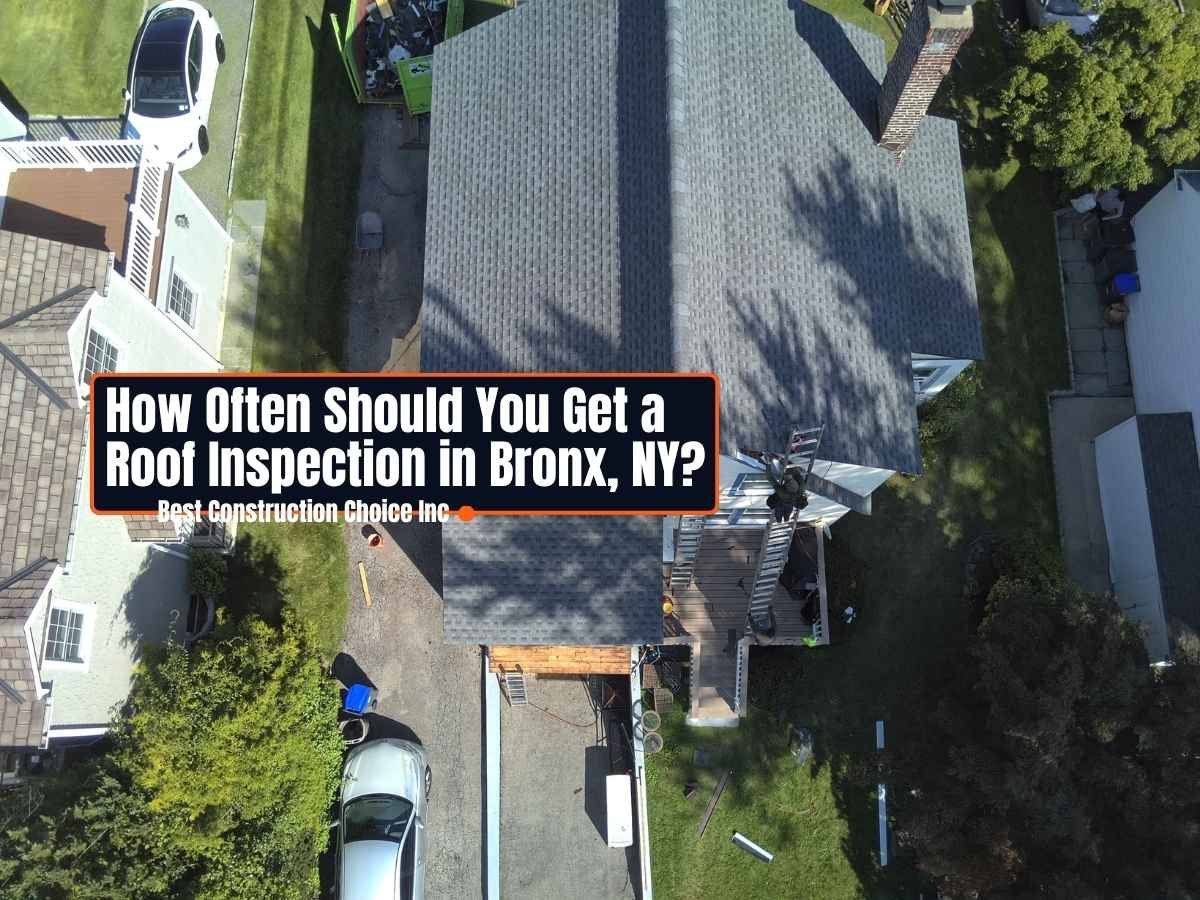
If you’re a homeowner in the Bronx, you probably don’t think much about your roof. Not until something goes wrong. Maybe it’s a stain on the ceiling, or a shingle in the yard after a windy night. Sometimes it’s a leak that shows up right when it starts to snow. By then, a small fix has often turned into a bigger repair.
So how often should you actually get a roof inspection? For most Bronx homes, a good baseline is once or twice a year — typically in spring and fall. Add extra inspections after major storms, high winds, or heavy snow. Older roofs, or roofs nearing the end of their expected lifespan, may need more frequent checks.
That said, there’s no single right answer for every roof. It depends on your roof’s age and material, how exposed your home is to weather, and whether you’ve had past issues. In this guide, we’ll cover how to think about inspection timing, what an inspection actually involves, when DIY checks are reasonable, and when to call a professional. We’ll also look at what Bronx weather means for your maintenance schedule.
Why Roof Inspections Matter More Than Most Homeowners Realize
A roof rarely fails all at once. It wears down gradually. A shingle curls here. A small gap opens in the flashing there. Granules wash into the gutters over a few seasons. On their own, these are minor issues. Left alone, they can let water into the roof deck, the insulation, or the inside of your home. That’s when repairs get expensive and disruptive.
Regular inspections are about catching problems while they’re still small. This matters everywhere, but it matters especially in the Bronx. Local roofs face a real mix of conditions across the year — freezing winters, humid summers, and everything between.
One thing worth saying clearly: an inspection isn’t a repair. It’s not a guarantee that your roof is problem-free, either. It’s simply a structured way to assess your roof’s current condition, so you can make informed decisions about maintenance, repair, or replacement.
How Often Should a Roof Be Inspected? A Realistic Breakdown
There’s no single answer for every roof. It helps to break this down by situation.
General Guideline for Most Homes
If your roof is in generally good condition, with no history of leaks or damage, twice a year is a reasonable rhythm. Check once in spring, after winter weather passes. Check again in fall, before winter sets in. This isn’t a strict rule. Some homeowners inspect just once a year, and that can still be reasonable depending on the roof’s age and condition.
Roof Age Matters
| Roof Age | Suggested Inspection Frequency |
|---|---|
| New roof (0–5 years) | Annually, or after major storms |
| Established roof (5–15 years) | Twice a year, plus after storms |
| Older roof (15+ years, nearing end of expected lifespan) | Twice a year or more, with closer attention to wear |
Expected lifespans vary by material, installation quality, ventilation, and maintenance history. Treat these ranges as general guidance, not fixed rules for your specific roof.
After Specific Events
Some events call for an inspection no matter when your last one was:
- After a significant storm. High winds, heavy rain, or hail can damage shingles, flashing, or gutters. Sometimes nothing looks wrong from the ground.
- After heavy snow or ice buildup. Snow weight and the freeze-thaw cycle can stress a roof and contribute to ice dams.
- Before or after buying a home. A roof inspection is standard due diligence in a home purchase.
- If you notice interior warning signs. Ceiling stains, peeling paint near the roofline, or a musty attic smell all warrant a closer look.
Bronx, NY Weather and What It Means for Your Roof
The Bronx sees a full range of seasonal weather. Each season stresses a roof differently.
Winter brings freezing temperatures, snow, and the risk of ice dams. This happens when melting snow refreezes at the roof’s edge and pushes water back under the shingles. Older or poorly ventilated roofs tend to be more prone to this. A fall inspection, done before winter weather arrives, gives you a chance to fix small issues early.
Spring often brings heavier rain. That’s a natural stress test for how well a roof sheds water. It’s also a good time to check for winter damage — missing or lifted shingles, damaged flashing, or gutters clogged with debris.
Summer heat and UV exposure can speed up wear on roofing materials over time. South- and west-facing sections tend to take the most direct sun, so they often show wear first.
Storm season brings strong winds and heavy downpours. It’s a reminder that inspections shouldn’t only follow a calendar. They should also happen after any weather event that could plausibly cause damage.
Weather effects on roofing vary by property. Tree coverage, roof orientation, and building height all play a role. Treat these seasonal patterns as general context, not a precise schedule for your specific home.
What Actually Happens During a Professional Roof Inspection
Many homeowners aren’t sure what an inspector actually looks for. Here’s a general sense of what’s typically covered. The exact scope can vary between contractors.
Exterior roof surface:
- Condition of shingles, tiles, or roofing membrane (cracking, curling, missing pieces, granule loss)
- Flashing around chimneys, vents, skylights, and roof edges
- Condition of gutters and downspouts, including drainage and attachment
- Signs of moss, algae, or ponding water (water that sits instead of draining)
Structural and interior signs:
- Attic ventilation and insulation condition
- Signs of moisture, staining, or mold in the attic
- Any visible sagging or unevenness in the roofline
Documentation:
- Photos of any areas of concern
- A summary of findings, often with recommendations for repair, monitoring, or replacement
A thorough inspection usually takes 30 minutes to a couple of hours. It depends on the roof’s size and complexity, and whether it includes interior access, like the attic.
DIY Roof Checks vs. When to Call a Professional
There’s a reasonable middle ground here. You don’t need to never look at your roof. You also don’t need to climb up there every month. Here’s how to think about it.
What You Can Reasonably Check Yourself
From the ground or a window, without getting on the roof, you can often spot:
- Shingles that are visibly missing, curling, or out of place
- Sagging areas in the roofline
- Debris buildup in gutters
- Granules collecting in gutters or on the ground near downspouts (a sign of shingle wear)
- Moss or dark streaking on the roof surface
Inside the home, you can check:
- Ceilings and walls for staining, especially near the top floor
- The attic, if safely accessible, for daylight through the roof, damp insulation, or a musty smell
- Around skylights and chimneys for interior signs of leaking
When to Call a Professional Instead
Getting on a roof isn’t something most homeowners are equipped to do safely. It’s also easy to miss damage that isn’t obvious from the ground. It’s generally worth calling a professional when:
- You notice any of the warning signs above and want a fuller assessment
- Your roof is aging and you want a clear picture of its remaining condition
- You’ve had recent storm damage, or suspect you might have
- You’re buying or selling a home
- You want a baseline understanding of your roof’s condition, without guessing
A professional inspection often catches issues that are hard or unsafe to spot from the ground — things like compromised flashing or early-stage moisture intrusion. For homeowners in the Bronx, Best Construction Choice Inc offers roof inspections as part of its residential roofing services.
Common Misconceptions About Roof Inspections
“If there’s no leak, the roof is fine.” Not necessarily. Roof damage often starts in ways you can’t see from inside the home. A leak is frequently a later-stage symptom, not an early warning sign.
“A new roof doesn’t need inspecting.” Even a newer roof can be affected by storm damage. It can also have installation issues that weren’t obvious at first, or ventilation problems. Annual checks are still worthwhile.
“I can tell if my roof needs work just by looking from the driveway.” A ground-level look catches obvious problems. But flashing issues, minor shingle damage, and early moisture problems are often only visible up close, or from inside the attic.
“Roof inspections are only necessary before selling a house.” Pre-sale inspections are common. But routine inspections throughout ownership are what actually help prevent costly surprises in the first place.
Roof Maintenance Beyond Inspections
An inspection identifies problems. Regular maintenance helps prevent some of them from developing in the first place. Between inspections, a few habits can help:
- Keeping gutters and downspouts clear of leaves and debris, especially in fall
- Trimming back tree branches that overhang the roof
- Watching for ice dam formation along the roof edge in winter
- Addressing small repairs — a lifted shingle, a small flashing gap — before they get worse
None of this replaces a professional inspection. But it does lower the odds of small issues turning into bigger ones between visits.
Cost, Budget, and Long-Term Value
Inspection pricing and repair costs vary. It depends on the contractor, the roof’s size and pitch, the materials, and the scope of any issues found. We won’t put a specific number on it here. What’s generally true is this: catching a problem early tends to be less disruptive, and less costly, than fixing it after it causes secondary damage — to insulation, drywall, or the roof deck itself. Think of inspections as a small, recurring investment, not an occasional emergency expense. That mindset tends to pay off over the life of a roof.
Frequently Asked Questions
Twice a year — spring and fall — is a reasonable general guideline for most homes. Add extra inspections after major storms, or if you notice warning signs. Roof age, material, and condition can shift this for individual homes.
Pricing varies by contractor and by the scope of the inspection. It’s best to ask directly. Best Construction Choice Inc can give you details based on your specific home.
You can do a basic visual check from the ground or your attic. A full inspection, especially one that involves getting on the roof, is safer and more thorough when a professional handles it.
It’s a reasonable precaution. Storm damage isn’t always visible from the ground. Catching it early can prevent a small issue from becoming a bigger repair.
Usually somewhere between 30 minutes and a couple of hours. It depends on the roof’s size, pitch, and whether attic access is included.
Requirements vary by insurance provider and policy. It’s worth checking directly with your insurer, rather than assuming a general rule applies.
Related Topics You Might Find Useful
- Roof repair services in the Bronx — for addressing issues found during an inspection
- Emergency roof leak repair — for active leaks that need prompt attention
- Storm damage roof repair in the Bronx — for roofs affected by recent severe weather
- Roof replacement in the Bronx — for homeowners whose inspection suggests the roof is nearing the end of its lifespan
- Asphalt shingle roofing in the Bronx — for homeowners wanting to learn more about one of the most common roofing materials
Final Thoughts
A roof inspection isn’t about finding a reason to spend money. It’s about understanding the real condition of one of the most important parts of your home. That way, you can plan ahead instead of reacting to emergencies. For most Bronx homes, a twice-a-year rhythm plus a check after any major storm is a sensible starting point. From there, your roof’s age, material, and history can help you fine-tune what makes sense for your situation.
Has it been a while since your roof was last checked? Has recent weather left you wondering if everything’s still in good shape? Best Construction Choice Inc offers roof inspections for homeowners throughout the Bronx. You can also find their location and service area on Google Maps. Reaching out for an inspection doesn’t commit you to anything beyond getting a clear picture of where your roof currently stands.