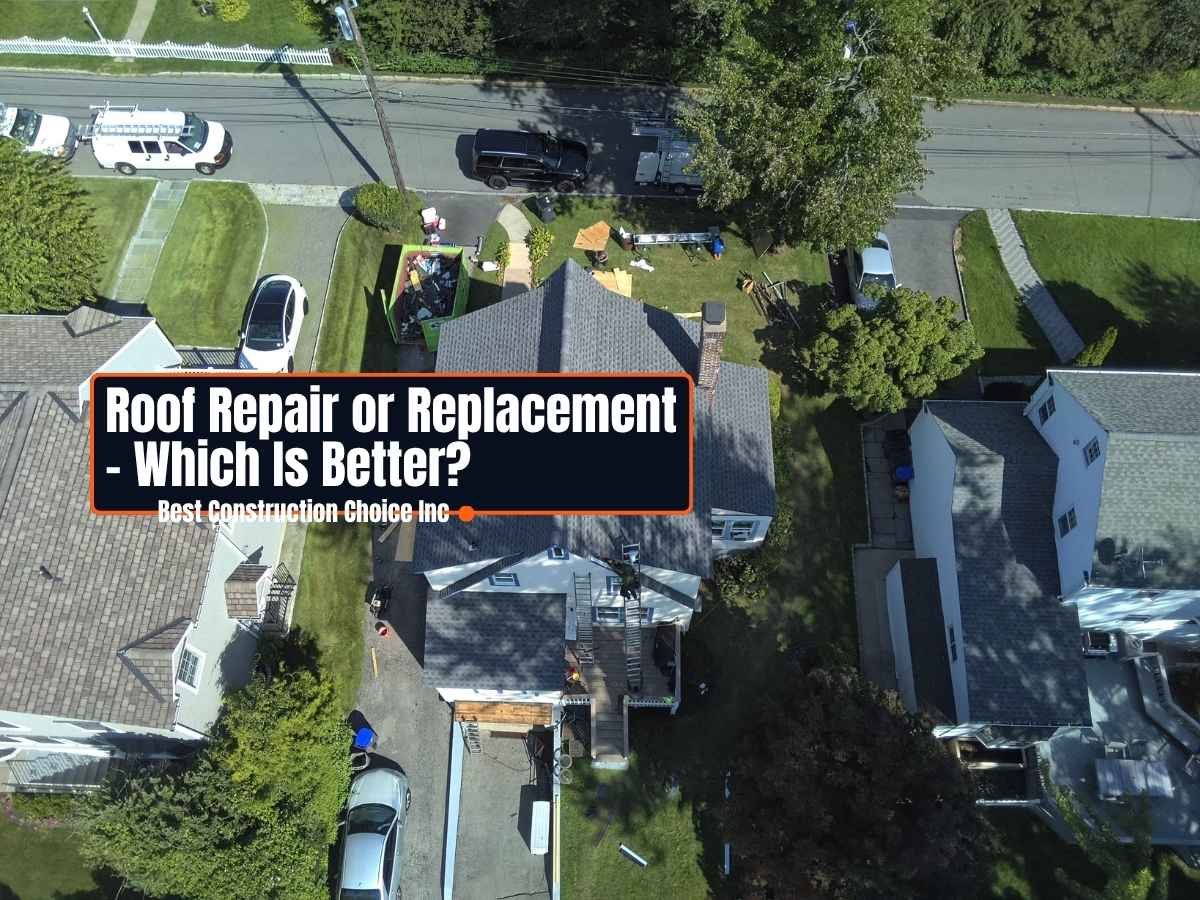
Maybe you spotted a stain on your ceiling. Maybe a few shingles blew off after a windy night. Either way, you’re probably asking one question: do I need a repair, or a whole new roof? In general, repair makes sense when damage is small, recent, and isolated to one area. Replacement becomes the better choice when a roof is old, damaged in multiple places, or needs repeated repairs.
This guide walks through how to tell the difference. It covers what typically drives the cost of each option. It also looks at how Bronx weather, nor’easters, snow, and freeze-thaw cycles, factors into the decision. Nothing here replaces a real, on-site inspection. But it should help you ask better questions and avoid common mistakes.
Roof Repair vs. Roof Replacement: What’s the Actual Difference?
It sounds obvious, but it’s worth spelling out. The two options solve very different problems.
Roof repair fixes a specific, localized issue. Think a section of torn shingles, a leak around a chimney, or damaged flashing. The rest of the roof stays in place. A repair is quicker and less expensive than a full replacement. However, it only addresses the area that was fixed, so it won’t extend the life of an aging roof overall.
Roof replacement removes the entire roofing system, typically down to the deck, and installs new materials across the whole surface. It costs more upfront. In exchange, it resets your roof’s lifespan and gives every section the same level of protection, not just one patch.
Neither option is automatically “better.” The right call depends on your specific roof, and that’s what the rest of this guide breaks down.
How Do I Know If I Need a Repair or a Full Replacement?
A professional inspection is the only way to know for certain. Still, these questions can help you get a sense of where you stand first.
How old is your roof?
Age is one of the biggest factors. Asphalt shingle roofs, the most common material on Bronx homes, generally last:
| Shingle Type | Typical Lifespan |
|---|---|
| Three-tab asphalt shingles | About 20–22 years |
| Architectural (dimensional) shingles | About 25–30 years |
These are general industry ranges. Actual lifespan varies based on installation quality, attic ventilation, and maintenance history. If your roof is approaching or past this range, a repair might buy you a little time. However, replacement is usually the more practical long-term decision, even if the roof still looks okay from the ground.
How widespread is the damage?
A few missing shingles after a storm, or one soft spot near a chimney, often points to a repair. Curling shingles across multiple sections tell a different story. So does heavy granule loss in your gutters, or leaks showing up in more than one room. These patterns usually point to a roof nearing the end of its service life.
Industry professionals sometimes reference a rule of thumb called the “25% rule.” Under this guideline, damage affecting roughly a quarter or more of the total roof area tends to make replacement the more sensible choice. This isn’t a universal legal standard, though. Some local building codes and insurance policies do apply damage-percentage thresholds, but they vary by jurisdiction and by insurer. Ask your contractor, and your insurance company, how this applies to your specific home.
Is the leak new, or does it keep coming back?
A one-time leak with a clear, isolated cause is often a straightforward repair. A cracked pipe boot or a dislodged shingle are good examples. But a leak that reappears in the same spot after patching tells a different story. So does a leak that shows up in new locations each season. Both usually signal a bigger underlying issue, like failing underlayment or a roof that’s simply worn out.
Are you seeing structural warning signs?
Sagging areas are one red flag. Soft or spongy spots on the roof deck are another. So is daylight visible through the attic boards. These signs go beyond a simple patch job. They call for a professional assessment as soon as possible, since they can affect the safety of the structure, not just its water resistance.
Have you needed repeat repairs?
Have you called a roofer for the same section of roof more than once in the past year or two? That pattern is telling you something. Recurring repairs often cost more, cumulatively, than most homeowners expect. Each one treats a symptom rather than the underlying cause.
What Does Each Option Typically Cost?
Costs vary widely based on the extent of damage, the material involved, and your roof’s size and pitch. Here’s a general breakdown to help set expectations.
| Roof Repair | Roof Replacement | |
|---|---|---|
| Typical scope | Minor to moderate localized damage | Entire roofing system |
| General cost range | A few hundred dollars for minor fixes, up to a few thousand for larger or structural repairs | Commonly several thousand to tens of thousands of dollars, depending on size and material |
| What drives the price | Size of the damaged area, accessibility, and whether decking needs repair | Roof size, material choice, tear-off and disposal, permits, and labor |
| Timeline | Often completed in a single visit | Usually one to a few days |
These ranges are general industry figures, not a quote for your home. Roofing costs in New York City tend to run higher than the national average, largely because of labor rates and permitting requirements. Pricing can also vary block by block depending on accessibility and building type. The only way to get an accurate number is a written, on-site estimate.
One useful way to think about cost is comparing repair pricing to replacement pricing. If a proposed repair starts approaching a large share of what full replacement would cost, especially on an older roof, ask your contractor whether that money is better spent starting fresh. On a newer roof with an isolated problem, though, a targeted repair is usually the more cost-effective choice. There’s no reason to replace a roof that still has years of useful life left.
How Does Bronx Weather Factor Into This Decision?
The Bronx sees real seasonal extremes, and that affects how roofs age here.
Winters bring freezing temperatures and snow accumulation. They also bring freeze-thaw cycling, where meltwater seeps into small cracks, refreezes, and expands them further. This process is especially hard on a roof that already has some wear. Small existing weaknesses tend to get worse each winter, not stay the same.
Spring and fall bring their own challenges. Heavy rain and strong winds, including nor’easters, can loosen shingles and stress flashing. They can also expose gaps that were previously hidden. Summer heat adds another layer of wear, since UV exposure gradually dries out and curls shingles that have already spent years absorbing sun and cold in alternating seasons.
None of this means every Bronx roof needs an accelerated replacement schedule. It does mean a roof already showing wear is likely to decline faster here than in a milder climate. Repairs on an aging Bronx roof may also need to happen more often than the same repairs would elsewhere. If your roof recently went through a major storm, a storm damage roof repair assessment can help you understand whether you’re dealing with isolated damage or damage compounding on existing wear.
Does Roof Type Change the Decision?
Bronx housing stock includes a mix of pitched, shingled roofs on single-family homes and flat or low-slope roofs common on row houses, brownstones, and multifamily buildings. The type of roof you have affects both the damage patterns to watch for and the repair options available.
Pitched, shingled roofs shed water naturally because of their slope. Damage tends to show up as missing, curling, or cracked shingles, often after wind events. Isolated shingle damage is usually a straightforward repair. Widespread wear across multiple slopes, though, often points toward replacement, especially once the roof is approaching the upper end of its expected lifespan.
Flat and low-slope roofs, often finished with a rubber (EPDM) membrane, work differently. Because water doesn’t run off as quickly, drainage and seam integrity matter more than they do on a pitched roof. Small punctures or seam separations can often be patched effectively. Widespread membrane wear, pooling water that won’t drain, or a membrane well past its expected service life usually calls for full replacement instead. A rubber flat roof that’s been well maintained can often go years longer with periodic minor repairs than one that’s been neglected.
Either way, the underlying decision process is the same: assess the extent of the damage, the roof’s age, and whether the problem is isolated or spreading.
A Quick Decision Checklist
Use this as a starting point, not a final verdict. A professional inspection should always confirm the details.
Repair is often the right call when:
- The roof is under 15 years old and otherwise in good condition.
- Damage is limited to one clear area.
- This is the first repair needed in this section, not a repeat visit.
- There’s no visible sagging, rot, or structural concern.
Replacement is often the more practical choice when:
- The roof is nearing or past its expected lifespan for its material.
- Damage shows up in multiple areas or has spread since the last repair.
- You’ve paid for repairs on the same roof more than once recently.
- There are signs of sagging, soft decking, or structural wear.
If you’re not sure which category your roof falls into, that uncertainty is itself a good reason to schedule an inspection rather than guess.
Common Misconceptions About Roof Repair and Replacement
“If it’s not leaking, it’s fine.” A roof can lose granules and develop brittle, curling shingles for years before a leak actually shows up inside. By the time water reaches your ceiling, the damage underneath is often more extensive than it appears.
“A cheap patch now will save money.” Sometimes it will. But on an older or already-damaged roof, a patch can mask a larger problem instead of solving it. You may end up paying for the same repair, or a bigger one, again within a year or two.
“Replacing the roof means replacing everything, every time.” Not necessarily. In some situations, a roof restoration can extend an existing roof’s useful life without a full tear-off. This isn’t right for every roof, but it’s worth asking about if yours shows moderate wear rather than serious structural problems.
“All roofers will give me the same recommendation.” In practice, recommendations vary. That’s exactly why a second opinion is worth getting for anything beyond a minor, obvious repair. A contractor who explains their reasoning and shows you specific areas of concern is more trustworthy than one who just hands you a number.
“My insurance will automatically cover roof replacement after storm damage.” Coverage depends entirely on your specific policy, the cause of the damage, and your insurer’s evaluation. Don’t assume coverage either way. Confirm directly with your insurance provider before making decisions based on an assumed payout.
Can I Handle Any of This Myself?
Some very minor maintenance is reasonable for a comfortable, experienced homeowner. Clearing debris from gutters is one example. A visual inspection with binoculars from the ground is another. Replacing a single, obviously loose shingle on a low, easily accessible roof, in dry, calm weather, might also be manageable.
That said, most roof repair work isn’t a good DIY candidate. Here’s why:
- Falls are a leading cause of home-related injuries. Even a single-story roof can be more dangerous than it looks, especially when wet, icy, or covered in loose granules.
- A misdiagnosed leak often gets worse. Water can travel along rafters before it shows up as a stain, so visible damage isn’t always near the actual entry point. A DIY patch in the wrong spot can let the real problem continue undetected.
- Warranties often require professional installation. DIY repairs can void existing manufacturer or workmanship warranty coverage.
- Permits may be required. This is especially true for larger repairs or any replacement work in New York City, and unpermitted work can create complications when you sell.
- Specialty materials need specific techniques. A rubber flat roof that’s improperly patched can develop new leaks at the seams.
If you’re dealing with anything beyond very minor maintenance, call a professional for a roof inspection instead of climbing up yourself. This goes double for a steep roof, multiple stories, active leaking, or storm damage. Bronx winters, in particular, are not a good time to be testing your footing on an icy or snow-covered roof.
What Happens If You Wait?
Delaying a decision doesn’t pause the clock. A small, isolated leak left unaddressed can lead to water damage over time. Attic insulation, ceiling drywall, and wood framing can all suffer, and those problems cost significantly more to fix than the original issue. Deferred maintenance also tends to accelerate an aging roof’s decline. Each winter’s freeze-thaw cycles and each storm’s wind exposure act on a roof that’s already weaker than the year before.
This doesn’t mean every issue is an emergency. A small area of wear on an otherwise decent roof can often wait for a scheduled inspection. But active leaking, visible sagging, or damage after a significant storm are different. In those cases, getting an assessment sooner rather than later tends to limit the total cost. If you’re dealing with an active leak right now, emergency roof leak repair is available for situations that can’t wait for a standard appointment.
How Best Construction Choice Inc Approaches This Decision
At Best Construction Choice Inc, every conversation starts with an honest, on-site roof inspection, not a sales pitch. Our licensed and insured team serves homeowners throughout the Bronx and Westchester County. We’ll walk you through exactly what we find, what your realistic options are, and why we’re recommending one path over another.
If a targeted roof repair or roof leak repair genuinely solves your problem, that’s what we’ll recommend. If your roof has reached the point where roof replacement or roof installation makes more sense, we’ll explain exactly why. That includes material options like asphalt shingles for sloped roofs and rubber flat roofing for flat and low-slope Bronx buildings.
You can see our service area and past project locations on our Google Business Profile.
Frequently Asked Questions
Often, yes, if the rest of the roof is in good condition and the damage is isolated. A contractor can tell you whether a partial repair will blend safely with the existing roof.
A well-documented, professionally completed repair generally has little negative impact. However, a roof nearing the end of its expected lifespan, even with recent patches, may raise questions during an inspection or appraisal.
Most straightforward repairs finish in a single visit. Weather, material availability, and the extent of damage can extend the timeline.
That depends entirely on your policy, the cause of the damage, and your insurer’s assessment. Contact your insurance company directly before assuming either option is covered.
Not usually, once a roof is aging and repairs start recurring. Frequent repairs on an old roof often add up to a significant portion of replacement cost, without resetting the roof’s overall lifespan.
Ready for an Honest Assessment?
If you’re stuck between repairing and replacing, the most useful next step is a professional, no-pressure inspection, not a guess from the ground. Best Construction Choice Inc offers free estimates for homeowners throughout the Bronx and Westchester County. Call +1 917-916-0676 or +1 203-391-4261 to schedule a roof inspection and get a straightforward, honest recommendation for your home.