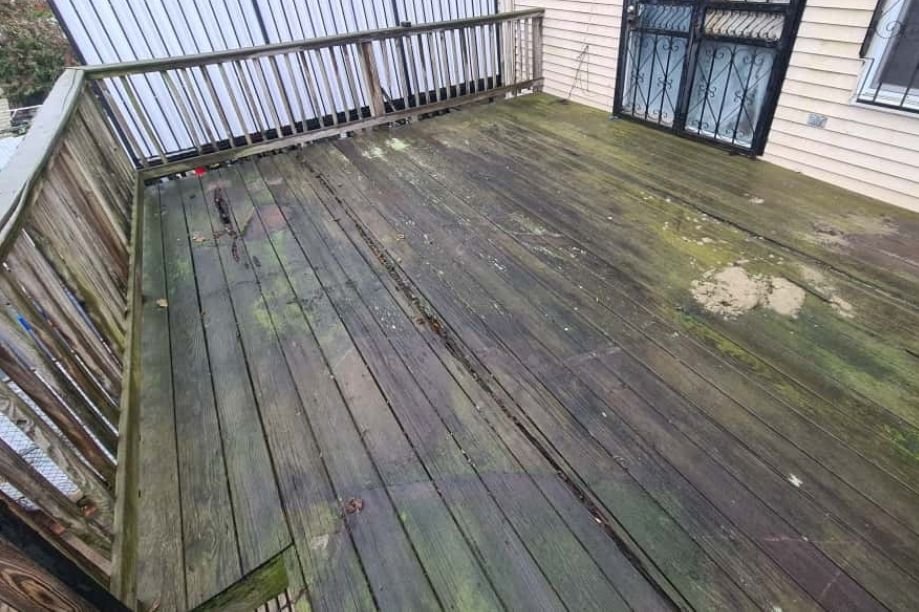
Why Deck Repairs in the Bronx Can’t Wait
Your deck is more than just a place to sit outside. For homeowners, landlords, and property managers across the Bronx and surrounding New York neighborhoods, it is a structural component of your home, a safety feature for your family, and a direct contributor to your property’s value.
The problem is that deck damage is often slow and silent. By the time most homeowners notice something looks wrong, the damage underneath is already significant — and far more expensive to fix than it would have been caught early.
According to Best Pick Reports (2023), deck collapses can be deadly and wood can deteriorate more quickly than you might think. Knowing the 5 signs your deck needs repair is not just about protecting your investment. It is about keeping your family, your tenants, and your guests safe.
At Best Construction Choice Inc, we have inspected and repaired hundreds of decks across the Bronx, Riverdale, Pelham Bay, Fordham, Mott Haven, Throggs Neck, Co-op City, and every surrounding neighborhood over the past 15 years. In this guide, we share exactly what to look for — and what to do about it.
Important: Current regulations recommend that any deck over ten years old should be inspected based on current safety codes (Kona Contractors, 2023). If your deck is 10+ years old and has not had a professional inspection, now is the time.
How Weather in Bronx NY Affects Deck Longevity
Before we get into the 5 signs your deck needs repair, it is worth understanding why Bronx decks face such a demanding environment. This context matters enormously for homeowners who want to understand the urgency of catching problems early.
The Bronx experiences a full four-season climate — hot, humid summers regularly pushing above 90°F and winters that drop well below freezing. This creates a relentless cycle of thermal expansion and contraction that puts intense stress on every component of your deck, from the surface boards all the way down to the concrete footings.
According to Kona Contractors (2023), extreme temperature changes tend to dramatically impact the stability and structure of deck bases. Colder climates with regular freeze and thaw conditions can cause concrete footings to heave into the soil, destabilizing the entire structure above. Pressure-treated wood absorbs moisture in the ground, and that moisture rots wood over time.
For wood decks specifically — including the cedar and pressure-treated decks common throughout Bronx residential properties — the combination of summer UV exposure, fall leaf and moisture accumulation, winter freeze-thaw stress, and spring rain creates a cycle of deterioration that shortens the lifespan of any deck that is not consistently maintained.
Understanding this environment makes the 5 signs your deck needs repair even more critical for Bronx homeowners to recognize.
#1 – Wood Rot and Soft, Spongy Boards
This is the most urgent sign your deck needs repair — and the one most likely to cause a serious injury if ignored.
Wood rot is not just a cosmetic issue. Once it takes hold in structural components like joists, beams, and support posts, the integrity of your entire deck is compromised (Custom Design & Build LLC, 2025). The deck above can look perfectly fine while the structure beneath it is quietly failing.
How to Test for Wood Rot Right Now
Take a screwdriver and gently press the tip into the wood — especially around the ledger board (where the deck connects to your house), joists, and posts at or near the ground. According to Exteriors by Hutcherson (2025), if the screwdriver sinks in easily, you are dealing with rot. This is a sign the deck’s strength is significantly compromised.
Also walk slowly across your deck while paying close attention to how it feels underfoot. Seal-a-Deck (2025) recommends feeling for any spongy or loose boards as you walk, and looking for signs of moisture damage such as curled edges, warping, and soft boards. Mold and mildew on the surface are also visible early indicators of moisture damage working its way into the wood.
Where to Check for Rot on a Bronx Deck
- Ledger board: Where the deck attaches to the house. This is the most common failure point and creates both a safety and water-intrusion risk.
- Support posts: Most wood-boring insects start feeding from the bottom up, so check the base of each post near the ground (Seal-a-Deck, 2025).
- Joists and beams: The horizontal framing underneath the deck surface. Inspecting these requires looking under the deck, which most homeowners never do.
- Board surfaces: Look for splintering, discoloration, and softness — all visual signs of dry rot working through the board (Seal-a-Deck, 2025).
Why This Matters in the Bronx
According to Webfoot Home Improvements (2025), wood rot can weaken the wood to the point where it is more likely to break or collapse, create openings that allow pests and moisture to enter and cause further damage, and make the deck surface slippery and dangerous to walk on. In the Bronx’s wet winters and humid summers, rot spreads faster than in drier climates — which is why annual inspection is not optional.
Safety Alert: Fixing rotted wood costs $200 to $500 on average for parts and labor, according to HomeAdvisor (2025). But if rot reaches structural joists or posts and is left untreated, a full deck replacement may be necessary — costing $4,000 to $16,000.
#2 – Loose, Wobbly, or Damaged Railings
Loose railings are one of the most visible and most dangerous signs your deck needs repair — especially on elevated Bronx decks.
Railing posts should be tightly fastened to the deck and should not wobble or be unsteady under pressure (Kona Contractors, 2023). A quick test: stand at the railing and apply firm lateral pressure with both hands. Any movement at all is a problem that needs immediate attention.
What Loose Railings Really Mean
A railing that moves is not just a loose bolt. According to Custom Design & Build LLC (2025), if railings move when you lean on them or sections feel unstable, it is a sign the fasteners or posts are deteriorating. This is especially common with older wood decks where the connections have loosened or the wood around them has weakened. In most cases, reinforcing a failing railing is only a temporary fix if the core structure is also damaged.
For Bronx homeowners and landlords with elevated decks — which are common on multi-story properties across the South Bronx, Concourse, and Highbridge neighborhoods — a loose railing is a liability issue, not just a maintenance issue.
Signs Your Railings Need Professional Attention
- Railings that visibly move or sway under normal pressure
- Rotted or rusted railing posts at the base where they connect to the deck
- Missing balusters or spindles (gaps that create fall hazards, especially for children)
- Rails that have pulled away from the house or support posts
- Extensive rust on metal railing components — which may indicate the need for full replacement rather than repair (Kona Contractors, 2023)
The Cost to Repair
According to HomeAdvisor (2025), railing repairs cost $500 to $4,000, depending on the material, extent of damage, and whether posts or balusters also need replacement. Angi (2025) notes that replacing deck railings specifically costs $35 to $210 per linear foot, depending on the material selected.
#3 – Sagging, Sinking, or Uneven Deck Structure
If your deck looks uneven, feels like it bounces when you walk on it, or appears to be pulling away from your house, stop using it and call a professional immediately.
According to TruNorth Decking (2025), noticeable signs of sagging, leaning, or wobbling in your deck are indicators that the structure is deteriorating, and these issues must be addressed as they can cause serious safety concerns.
What Causes a Deck to Sag or Sink in the Bronx?
The most common culprit in the Bronx is the freeze-thaw cycle. According to Kona Contractors (2023), concrete footings can crack or even drop in colder climates, and freeze-thaw conditions cause concrete to heave into the soil. Extreme temperature changes dramatically impact the stability of these bases.
Additional causes include:
- Shifting soil or drainage issues beneath the footings (Exteriors by Hutcherson, 2025)
- Failing ledger board connection — if the deck is pulling away from the house, this is a major structural and water-intrusion emergency (Masterpiece Outdoor Living, 2025)
- Deteriorated posts or beams that can no longer carry the load they were designed for
- Improperly sized support beams — a common issue on older Bronx decks that were never built to the current code
The Bounce Test
Walk deliberately across your deck, especially toward the center and edges. According to Custom Design & Build LLC (2025), if your deck feels like it “bounces” when you walk across it or certain areas are visibly sagging, it is time for a closer look. A sagging deck is not just uncomfortable — it is a red flag for potential collapse.
Also stand across the yard and look at your deck from a distance. Is it tilted in one direction or pulling away from your house? According to Seal-a-Deck (2025), if you observe this, you may have a serious structural problem and should call a decking company immediately.
⚠️ For Landlords and Property Managers: A sinking or sagging deck on a rental property is a liability issue. If a tenant or guest is injured on an unsafe deck structure, the property owner may face serious legal consequences. Do not delay professional inspection.
#4 – Cracked, Splintered, or Warped Deck Boards
Cracked and splintered boards are among the most visible signs your deck needs repair — and they signal more than just a cosmetic problem.
According to EnviroBuild (2025), exposure to rain, sunlight, and temperature changes causes wood to deteriorate over time, leading to structural weakness and slipping hazards. When boards lift, lever upward, or warp significantly, they create tripping hazards and weaken the overall safety of the structure.
Differentiating Normal Wear from Dangerous Damage
A few minor surface cracks are normal with age and weather. But according to Exteriors by Hutcherson (2025), if your boards are deeply cracked, splintering, or feel brittle underfoot, repair or replacement may be your safest and most practical option.
Look specifically for:
- Boards pulling away from the frame — a sign that the underlying structure may also be failing
- Cupping or bowing — when the edges of a board curl upward, typically caused by moisture imbalance
- Widespread surface splintering — creates barefoot injury hazards and signals accelerated wood breakdown
- Boards lifting or levering upward — according to EnviroBuild (2025), this is a clear sign of structural weakness that could be due to moisture absorption, poor installation, or natural aging
- Soft spots underfoot — press firmly with your foot; any “give” suggests moisture damage beneath the surface board
Don’t Forget the Stairs
Stairs that have become unsafe are serious red flags, particularly for the safety of your family (EnviroBuild, 2025). Whether due to rotting wood, warping, or general wear, compromised stairs pose significant risks and increase the chance of trips, slips, or falls. If your deck’s stairs are no longer stable or functional, address the issue promptly — in many cases, a full stair replacement is necessary to restore safety.
Cost to Address Board Damage
According to HomeAdvisor (2025), the average material cost for cedar deck board replacement is $3 to $7 per square foot. Most homeowners spend between $866 and $3,587 nationally on deck repairs, with an average cost of around $2,227. In higher-cost markets like the Bronx and NYC, expect labor and materials to be toward the higher end of these ranges.
#5 – Rusted, Missing, or Corroded Fasteners and Hardware
Fasteners are the silent backbone of your deck — and when they fail, the entire structure’s integrity is at risk.
This is one of the most overlooked of the 5 signs your deck needs repair, because homeowners rarely look closely at hardware. But according to Kona Contractors (2023), when hardware is missing or eroded, there is a huge problem. Nuts and bolts hold everything together. The more rust you find on the metal pieces that connect one part to another, the more dangerous your deck’s condition.
What to Look For
- Protruding nails: Deck nails that have worked themselves upward over time are a surface injury hazard and indicate the wood has expanded and contracted enough to push the fastener out (Seal-a-Deck, 2025)
- Rusted screws or bolts: Surface rust is cosmetic, but deep corrosion that has eaten through the fastener shank means the connection it was making is failing
- Any screws that no longer hold the framework together are clear signs that the internal structure is weakening (Kona Contractors, 2023)
- Corroded joist hangers or post anchors — these metal connectors carry significant structural loads and corroded connectors must be replaced immediately
- Missing fasteners — gaps where fasteners should be present always indicate the deck needs professional attention
Why Bronx Climate Makes This Worse
New York City’s coastal-influenced humidity and repeated wet-dry cycles accelerate metal corrosion significantly. Older Bronx decks built with non-galvanized or inadequately coated hardware are particularly at risk — and in many cases, the corrosion is happening in hidden locations under the deck surface where it is invisible without a proper inspection.
According to TruNorth Decking (2025), with advancements in fastener technology — particularly for composite and PVC decking — the risk of loose or missing fasteners has been significantly reduced. This is one reason why an upgrade to composite materials is worth considering when replacing an aging wood deck in the Bronx.
Common Deck Problems in the Bronx Area
Beyond the 5 signs your deck needs repair covered above, Bronx homeowners and landlords should also watch for these frequently occurring issues:
- Insect damage: According to EnviroBuild (2025), small holes clustered together often indicate insect activity — pests burrow into wood, compromising structural integrity. Regular inspections help catch this early before damage becomes too extensive.
- Mold and mildew buildup: Common in shaded areas of Bronx backyards with limited air circulation. Mold makes surfaces slippery and accelerates wood breakdown.
- Water pooling on the surface: Indicates the deck’s drainage slope is inadequate or that boards have warped to create low spots. Standing water dramatically accelerates rot.
- Ledger board water infiltration: Water getting into cracks between the deck and house can cause mold, rot, and structural damage to the home itself (Webfoot Home Improvements, 2025).
- Deck pulling away from the house: A serious warning sign that the ledger board connection is failing — this creates both a structural collapse risk and a water-intrusion pathway into your home’s framing (Masterpiece Outdoor Living, 2025).
DIY vs Professional Deck Repair: Which Is Better?
This is one of the most common questions homeowners across the Bronx ask — and the honest answer depends entirely on the type and extent of the damage.
When DIY Is Appropriate
Minor, cosmetic repairs are generally within reach for a capable DIY homeowner:
- Tightening loose screws or replacing missing fasteners on surface boards
- Replacing one or two surface deck boards that are clearly damaged but not indicative of structural problems
- Cleaning, power washing, and resealing a structurally sound deck
- Spot-treating surface mold and mildew
When You Must Call a Professional
According to Best Pick Reports (2023), when it comes to verifying your deck’s safety and structural integrity, cutting corners is not a good idea. Professional repair is required — and often legally required in NYC – for:
- Any structural repairs involving joists, beams, posts, or footings
- Ledger board issues or signs the deck is pulling away from the house
- Widespread wood rot in structural components
- Sagging, sinking, or bouncing deck symptoms
- Railing failures on elevated decks
- Any work requiring a NYC Department of Buildings permit
According to TruNorth Decking (2025), if you are unsure whether damage has made your deck unsafe, call a professional to check. They will also be able to offer a solution that will get your deck’s structural integrity back to a safe level.
In the Bronx and throughout NYC, most permitted structural repairs require a licensed General Contractor. Attempting to make structural repairs without proper licensing can result in fines and mandatory removal of the work by the NYC Department of Buildings.
Best Construction Choice Inc offers free deck inspections and estimates for Bronx homeowners. Call +1 203-391-4261 and let our 15-year team tell you exactly what your deck needs – no obligation.
Cost of Deck Repairs in Bronx NY: What to Expect
Understanding repair costs helps Bronx homeowners and landlords make informed decisions quickly.
National Averages (2025 Data)
According to Bob Vila (2024), citing data from Angi and HomeAdvisor, the average cost to repair a deck nationally is around $2,019, with a typical range of $859 to $3,321. HomeAdvisor (2025) similarly reports most homeowners pay $2,227 to fix a deck, with a range of $866 to $3,587, or roughly $3 to $20 per square foot.
Specific Repair Cost Ranges
| Repair Type | Cost Range (National) |
|---|---|
| Rotted wood repair | $200 – $500 |
| Railing repair | $500 – $4,000 |
| Railing replacement (per linear ft) | $35 – $210 |
| Stair anchor repair (per step) | $15 – $40 |
| Deck board replacement (cedar) | $3 – $7 per sq ft |
| Full deck repair (structural) | $850 – $3,500 |
| Pest/termite treatment (deck) | $200 – $600 |
| Deck demolition | $5 – $15 per sq ft |
| Full deck replacement | $4,000 – $16,000 |
Sources: HomeAdvisor 2025, Angi 2025, Bob Vila 2024
The Rule of Thumb: Repair or Replace?
According to HomeAdvisor (2025), if repairs cost more than half the cost of a full deck replacement, rebuilding is often the smarter investment. A new deck not only resolves all current issues but also resets your maintenance timeline and — if you choose composite materials — dramatically reduces future maintenance costs.
Bronx Cost Note: Labor and material costs in New York City are consistently above national averages. Best Construction Choice Inc will provide you with a clear, itemized estimate specific to your Bronx property at no charge. Call +1 203-391-4261 to schedule.
Routine Inspection Checklist for Deck Owners
Use this checklist at least twice a year — ideally in early spring and again in the fall — to catch the 5 signs your deck needs repair before they become expensive emergencies.
Surface Boards
- Walk across deck feeling for spongy, soft, or loose boards
- Look for visible cracks, splits, cupping, or boards pulling away from frame
- Check for mold, mildew, or discoloration
- Look for protruding nails or surface fasteners
Railings and Stairs
- Apply firm lateral pressure to every railing section — zero movement acceptable
- Check all baluster connections and look for gaps
- Test each stair step for stability and signs of rot
- Look for rust or corrosion on metal railing components
Structural Components (Look Under the Deck)
- Press screwdriver into joists, beams, and posts — no sinking acceptable
- Check post bases at ground level for rot and insect damage
- Look for signs of sagging or uneven beam alignment
- Check joist hangers and post anchors for rust and corrosion
Foundation and Ledger
- Stand back and look for any visible tilt or lean in the deck structure
- Check where the deck meets the house — no gaps, no pulling away
- Look for water staining on the house wall above the ledger board
- Check concrete footings for visible cracking or heaving
Hardware
- Look for missing, rusted, or severely corroded fasteners throughout
- Check all bolt connections at beam-to-post and joist-to-ledger connections
- Replace any hardware showing deep corrosion immediately
Seasonal Maintenance Tips for Deck Owners in Bronx NY
Staying ahead of the 5 signs your deck needs repair means building a seasonal maintenance habit specific to the Bronx climate.
Spring (March – May)
- Inspect the entire deck after winter. The freeze-thaw cycle is your deck’s biggest annual stress test.
- Power wash the surface to remove winter grime, mold, and mildew buildup.
- Check all fasteners and tighten or replace as needed.
- Apply a fresh coat of stain or sealer if the wood has lost its water-repellency (the bead test: water should bead on a well-sealed deck).
Summer (June – August)
- Clear debris such as leaves and dirt from between boards — trapped moisture accelerates rot.
- Do not drag heavy furniture across the deck — this damages surface boards and can stress fastener connections.
- Check for any boards that may have warped or cupped due to heat and humidity.
Fall (September – November)
- Clear leaves promptly — decomposing organic material holds moisture against the wood and accelerates rot.
- Conduct your second annual inspection using the checklist above.
- Address any repairs before winter — water in existing cracks will freeze and expand the damage significantly.
Winter (December – February)
- Remove snow with a plastic shovel — metal shovels scratch and gouge deck surfaces.
- Do not use rock salt or calcium chloride directly on the deck — these chemicals accelerate wood deterioration and metal corrosion.
- After each freeze-thaw event, check that footings have not visibly shifted.
How to Extend the Life of Your Deck
Beyond catching the 5 signs your deck needs repair early, these preventive measures help Bronx homeowners get maximum years from any deck:
- Seal annually: A quality UV-resistant penetrating stain and sealer protects against both sun and moisture — the two biggest enemies of wood decks in New York.
- Ensure proper drainage: Decks should have a slight pitch away from the house. Make sure no area allows water to pool.
- Maintain clearance from soil: Direct contact between wood and soil is the fastest pathway to rot. Ensure posts are properly elevated on concrete footings with adequate clearance.
- Trim nearby trees and shrubs: Overhanging branches deposit organic debris and reduce airflow, keeping deck surfaces wet longer after rain.
- Schedule a professional inspection every 2–3 years: Even well-maintained decks develop hidden issues that only a professional eye catches. According to Best Pick Reports (2023), if you have purchased a home with a deck of unknown history, do not take a wait-and-see approach — a reputable contractor can inspect the structure and tell you exactly what you are dealing with.
Best Materials for Durable Decks in Bronx NY
When your deck repair reveals significant damage, upgrading your deck material at the same time is worth considering. Here is a quick reference for the most common options in the Bronx market:
| Material | Lifespan | Maintenance Level | Best For |
|---|---|---|---|
| Pressure-Treated Wood | 15–20 yrs | Medium (annual seal) | Budget-conscious homeowners |
| Cedar | 15–20 yrs | Medium-High | Aesthetic preference for natural wood |
| Composite (Trex, TimberTech) | 25–50 yrs | Very Low | Landlords, low-maintenance seekers |
| PVC Decking | 25–50 yrs | Minimal | High-moisture environments |
For the Bronx’s freeze-thaw climate, composite decking has a significant structural advantage. According to a source cited by Best Construction Choice Inc’s own Spring Deck Planning Guide (2025), composite boards do not shrink or expand as natural wood does in cold weather, which minimizes the risks of expansion and contraction damage — a critical advantage in a freeze-thaw climate.
Finding a Reliable Deck Repair Contractor in Bronx NY
Not every contractor who offers deck repair in the Bronx brings the same level of experience, licensing, and integrity. Here is how to protect yourself:
What to Look For in a Deck Repair Contractor
- Licensed and insured: In New York City, deck repair contractors performing structural work must hold a General Contractor License and an HIC (Home Improvement Contractor) License from the NYC Department of Buildings.
- Verifiable local experience: Ask how many deck projects they have completed in the Bronx specifically. Local experience means familiarity with NYC permit requirements, Bronx building stock, and the specific climate challenges of the area.
- Clear written estimates: Every contractor you speak with should provide cleanup costs in their estimate (Best Pick Reports, 2023). Be cautious of any contractor who cannot or will not provide a detailed written quote.
- References and reviews: Ask for a reference list from recent deck repair projects in the Bronx or nearby neighborhoods.
- Proof of insurance: Request certificates of general liability insurance and workers’ compensation. Never proceed without them.
Questions to Ask Before Hiring a Deck Repair Service
- Are you licensed by the NYC Department of Buildings for this type of work?
- Will this repair require a permit, and will you handle the filing?
- Is your estimate all-in, including cleanup and debris removal?
- What is your timeline from start to completion?
- Do you provide a written warranty on labor and materials?
- Can I see references from recent Bronx deck repair projects?
- What happens if you open up the deck and find damage worse than expected?
What to Look for in a Deck Repair Quote
A trustworthy deck repair quote from a Bronx contractor should include:
- A line-by-line breakdown of materials with specific product names and quantities
- Labor cost separated from material cost
- Permit fees (if applicable)
- Debris removal and cleanup
- A clear project timeline with start and estimated completion dates
- Payment terms that do not require full payment upfront
Red Flags: Be cautious of any contractor who is reluctant to furnish proof of insurance, avoids providing a written estimate, or asks for full payment before work begins (Best Pick Reports, 2023).
FAQ: People Also Ask About Deck Repair in Bronx NY
According to TruNorth Decking (2025), the decision to repair or replace comes down to the extent of the damage, the age of the deck, cost, and whether safety and structural integrity have been significantly compromised. As a general rule, if repair costs exceed 50% of what a full replacement would cost, rebuilding is typically the smarter investment. If your deck is more than 15–20 years old and showing multiple signs of deterioration, replacement is usually the better path.
Nationally, most homeowners pay $866 to $3,587 for deck repairs, with an average of around $2,227 (HomeAdvisor, 2025). In the NYC and Bronx market, labor costs are consistently above national averages. Specific repairs like railing replacement run $35–$210 per linear foot, and rotten wood repair costs $200–$500. Full deck replacement ranges from $4,000 to $16,000. Best Construction Choice Inc provides free, no-obligation estimates — call +1 203-391-4261.
At minimum, a self-inspection using a checklist should be done twice a year — once in spring after winter stress, and once in fall before winter arrives. A professional inspection is recommended every 2–3 years, or immediately if you notice any of the 5 signs your deck needs repair covered in this guide.
Is a wobbly deck railing dangerous?
Yes, absolutely. A loose railing is a serious safety hazard — particularly on elevated decks where a person could fall (Kona Contractors, 2023). Railing posts should be tightly fastened and should not wobble or be unsteady at all. If your railing moves under pressure, stop using that area of the deck and call a contractor immediately.
Can I DIY deck repairs in the Bronx?
Minor cosmetic repairs like tightening surface screws, replacing one or two surface boards, and cleaning are generally within DIY range. However, any structural repair – involving joists, beams, posts, footings, or the ledger board should be handled by a licensed professional. In NYC, structural deck work often requires a Department of Buildings permit, which requires a licensed contractor to file. Unpermitted work can result in fines and mandatory removal.
What is the fastest way to ruin a deck in New York?
The fastest way to shorten your deck’s life in the Bronx is to skip annual maintenance. Not sealing your wood deck annually allows water and UV damage to accelerate deterioration, and not clearing debris from between boards keeps moisture trapped against the wood year-round. The second fastest way is to ignore early warning signs – what starts as a $200 rot repair becomes a $4,000 structural repair if left untreated.
How long does a deck last in the Bronx NY climate?
A well-maintained wood deck (cedar or pressure-treated) lasts 15 to 20 years in the Bronx climate (Custom Design & Build LLC, 2025). Without consistent maintenance, that lifespan can drop to 10 years or less. Composite decking lasts significantly longer — 25 to 50 years — and is more resistant to the freeze-thaw cycles that are particularly hard on wood decks in New York.
Does deck repair require a permit in the Bronx NY?
It depends on the scope of work. Many localities do not require a permit for straightforward repairs like board or railing replacements (Homeyou, 2025). However, structural repairs, ledger board work, footing replacement, or any significant modification to the deck’s size or design almost always require a NYC Department of Buildings permit. Best Construction Choice Inc handles all permit filing for clients across the Bronx — call +1 203-391-4261 for guidance.
What are the most common deck problems in older Bronx homes?
The most common issues on older Bronx decks include: wood rot in posts and joists, corroded or missing fasteners, ledger board failure where the deck meets the house, loose railings, and sunken or cracked concrete footings from repeated freeze-thaw cycles. Homes built before the mid-2000s with decks that have never had a professional inspection are particularly at risk (Custom Design & Build LLC, 2025).
Why should I hire a professional for deck repair instead of a handyman?
Licensed deck contractors carry proper insurance, know NYC building codes, understand how to identify hidden structural damage, and can pull the required permits for structural work. A handyman performing unpermitted structural repairs could create liability issues for you as a homeowner and result in fines from the NYC Department of Buildings. For anything beyond surface cosmetic fixes, a licensed contractor is always the right choice.
Why Choose Best Construction Choice Inc for Deck Repair in the Bronx?
When you have spotted one or more of the 5 signs your deck needs repair, your next call matters. The contractor you hire determines whether your deck is fixed correctly, whether the work passes NYC inspection, and whether you are protected by proper insurance and warranties.
Best Construction Choice Inc is the Bronx’s trusted exterior home improvement and deck repair specialist – with over 15 years of hands-on experience across the Bronx and all surrounding New York neighborhoods.
What Sets Us Apart
- 15 years of Bronx-specific experience – we know the freeze-thaw conditions, the NYC DOB requirements, and the building stock of every Bronx neighborhood
- Full-service deck repair – from surface board replacement to structural joist repair, ledger board fixes, railing replacements, stair rebuilds, and full deck rebuilds
- Licensed and insured – all required NYC licensing, general liability, and workers’ comp insurance on every project
- Complete permit management – we handle all NYC DOB permit filing and inspection coordination, so you do not have to
- Free estimates – no-obligation quotes with clear line-by-line pricing before any work begins
- Serving all Bronx neighborhoods – Riverdale, Pelham Bay, Fordham, Mott Haven, Throgs Neck, Co-op City, Highbridge, Concourse, City Island, and all surrounding areas
- Broader home improvement expertise – in addition to decks, we specialize in roofing, siding, gutters, chimneys, concrete, masonry, skylights, and railings – so if your deck inspection reveals related damage to your home’s exterior, we can handle it all in one visit
We Serve Homeowners, Landlords, and Property Managers
We understand that a Bronx landlord managing a rental property has different needs than a homeowner planning a backyard upgrade. Whether you need emergency deck safety repairs before your next tenant inspection, a seasonal maintenance visit, or a full deck rebuild, Best Construction Choice Inc has the team, the experience, and the licensing to deliver.
Ready to Fix Your Deck in the Bronx? Let’s Talk.
Do not wait until a small repair becomes a structural emergency. If you have spotted any of the 5 signs your deck needs repair in this guide, or if your deck is 10 or more years old and has not had a professional inspection, now is the time to act.
Call Best Construction Choice Inc today for your FREE deck inspection and estimate: